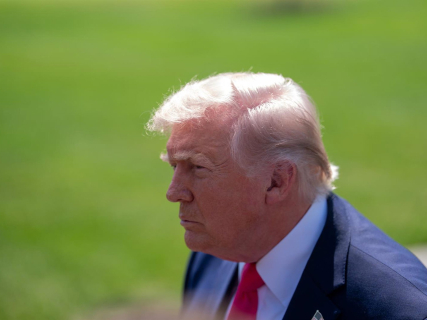
The former president of the United States, Donald Trump, has publicly backed Iran's announcement on the reopening of the Strait of Hormuz, although he has made it clear that Washington will maintain its naval pressure on Tehran. "Iran has just announced that the Strait of Hormuz is fully open and ready for total transit," Trump wrote on his social network, Truth Social.
However, shortly after he qualified his position. In a second message, the Republican leader has specified that the maritime passage “is completely open and ready for business”, but has warned that the US naval blockade “will remain in full force and effect” with regard to vessels linked to Iranian ports.
According to what has been explained, this measure will remain in effect until an eventual negotiation with Tehran is closed “100%”, a process that, he assures, “should go very quickly”. The positioning introduces a key nuance: global openness in appearance, but specific restrictions in practice.
Iran opens Hormuz amid truce in Lebanon
The reopening of the strait has been announced this Friday by the Iranian Foreign Minister, Abbas Araghchi, within the framework of the ten-day truce initiated in Lebanon. During that period, Tehran guarantees the "totally free" passage of commercial ships, in a gesture aimed at reducing regional tension and stabilizing energy markets.
The Strait of Hormuz is a key infrastructure: a substantial part of the world's oil transits through it, which makes any decision about its opening or closing a determining factor for the global economy.
Humanitarian crisis in Lebanon
Despite the truce, the situation on the ground remains critical. The World Health Organization has warned that Lebanese health services are “severely strained” after weeks of attacks.
Since March 2, 139 attacks against health infrastructures have been registered, with at least 91 dead and 224 injured. Only between April 10 and 16, 22 assaults were documented, with 19 paramedics deceased, 40 injured, and damage to 19 emergency vehicles.
The global balance reflects the magnitude of the crisis: more than 2,100 dead —including 168 children— and nearly 7,000 injured, many of them in serious condition. Hospitals are operating at 90-100% of their capacity, with critical shortages of supplies.