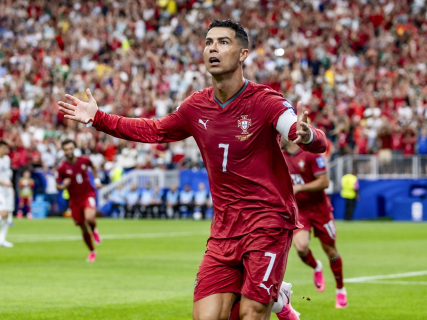
When does Spain play Portugal in the 2026 World Cup: time, day, and where to watch the duel against Cristiano Ronaldo

Spain already knows its rival in the round of 16 of the 2026 World Cup: it will be Portugal, which suffered against Croatia but came back with a penalty from Cristiano Ronaldo and a goal from Gonçalo Ramos in stoppage time. The Spain-Portugal match will be played on Monday, July 6, in Dallas, at 9:00 PM in Spain, in one of the great duels of the tournament and with Cristiano Ronaldo as the main media focus.

4 minutes

EuropaPress 7618368 23 june 2026 us houston portugals cristiano ronaldo celebrates scoring

EuropaPress 7618368 23 june 2026 us houston portugals cristiano ronaldo celebrates scoring

Add DEMÓCRATA to Google

Ask FREN

Published

Last updated

4 minutes

Most read

Spain already has a rival in the round of 16 of the 2026 World Cup. The Spanish team will face Portugal on Monday, July 6 in Dallas, in a high-impact clash between two title contenders and with Cristiano Ronaldo as the main star of the match.

The match will be played at 9:00 PM in Spain, 2:00 PM local time in Dallas, and is expected to be broadcast on La 1 and DAZN.

Portugal reaches the knockout stage after eliminating Croatia 2-1 in an agonizing match. The Balkan team took the lead with a goal from Ivan Perisic, Cristiano Ronaldo equalized from the penalty spot, and Gonçalo Ramos scored the qualifying goal in the 94th minute.

Spain, for its part, advanced to the round of 16 after decisively defeating Austria 3-0, in what was its first major statement in the knockout phase of the World Cup.

When Spain plays Portugal

The Spain-Portugal round of 16 match of the 2026 World Cup will be played on Monday, July 6.

The venue will be Dallas, in the United States, in one of the most anticipated matches of the round of 16.

The clash comes after Spain eliminated Austria and Portugal knocked out Croatia, two matches that have driven Google searches in recent hours.

What time is Spain-Portugal

The match between Spain and Portugal will be played at 9:00 PM Spanish peninsular time.

In Dallas, the venue for the match, the game will be at 2:00 PM local time.

The time makes the match a perfect window for television in Spain: prime time, historic rival, World Cup knockout match, and Cristiano Ronaldo on the opposing side.

Where to watch the Spain-Portugal match of the 2026 World Cup

The Spain-Portugal match is scheduled to be broadcast in Spain on La 1 and DAZN.

The match will be one of the major television events of the 2026 World Cup due to the sporting and emotional context: a direct knockout match between Spain and Portugal, with Cristiano Ronaldo possibly facing one of his last major World Cup clashes.

Portugal will be Spain's opponent

Portugal suffered much more than expected against Croatia.

Roberto Martínez's team started by dominating, but they faced a competitive, intense Croatia capable of striking first after the break. Perisic put the Balkan team ahead and forced Portugal to play against the clock.

The reaction came from the bench and from the penalty spot. Cristiano Ronaldo equalized from a penalty, and Gonçalo Ramos, who had come on in the second half, scored the 2-1 header in stoppage time.

The result sends Portugal to the round of 16 and eliminates Croatia, in what appears to be Luka Modric's last World Cup night.

Cristiano Ronaldo scores again at the World Cup

Cristiano Ronaldo will be one of the main focal points of Spain-Portugal.

The Portuguese forward scored from the penalty spot against Croatia and reappeared in a high-tension knockout match. Although he was not the most decisive player in the game, he did score the goal that changed the match and sustained Portugal when they were on the ropes.

The duel against Spain will also have a clear symbolic weight: Cristiano against the Spanish national team, a historic rivalry, a World Cup knockout match, and a possible last great night for the Portuguese player in the tournament.

Spain arrives in high spirits after beating Austria

Spain arrives at the match after clearly defeating Austria.

The Spanish national team won 3-0 and delivered one of their most complete performances of the World Cup. The team showed more speed, more precision, and more effectiveness than in previous matches.

The victory against Austria reinforces the feeling that Spain arrives alive, solid, and with arguments to compete against Portugal in a highly demanding knockout match.

The duel the World Cup wanted

The Spain-Portugal match has all the ingredients to become one of the most watched games of the tournament.

There is Iberian rivalry, recent history, stars, a generational contrast, and a clear narrative: Spain wants to confirm that it is a candidate for the title, and Portugal seeks to survive with Cristiano Ronaldo still as a competitive symbol.

It is also a match of enormous media value due to the clash between two top-level European teams in an ideal time slot for the Spanish audience.

How Portugal arrives

Portugal arrives with doubts and talent.

The team has top-level names such as Cristiano Ronaldo, Bruno Fernandes, Bernardo Silva, Rafael Leão, Vitinha, João Cancelo, Rúben Dias, Diogo Costa, and Gonçalo Ramos.

But against Croatia, they struggled a lot, depended on several saves from Diogo Costa, and had to come from behind in the final stretch.

The Portuguese national team has finishing power, experience, and offensive resources, but they also showed signs of fragility when Croatia attacked them continuously.

How Spain arrives

Spain arrives with confidence after eliminating Austria.

The Spanish national team has reinforced its candidacy with a clear victory and a defense that continues to give a sense of security.

The challenge now will be different. Portugal has more individual talent, more experience, and an extra emotional point due to the presence of Cristiano Ronaldo.

Spain will need to control the rhythm, avoid dangerous turnovers, and punish the spaces that Portugal left against Croatia.

Modric says goodbye and Cristiano remains alive

The Portugal-Croatia match also had an emotional reading.

The match pitted two legends who have marked an era against each other: Cristiano Ronaldo and Luka Modric. One moves forward. The other leaves the World Cup.

Modric, at 40 years old, practically said goodbye to the tournament with Croatia eliminated. Cristiano, on the other hand, extends his World Cup career and will have another big night against Spain.

That contrast further fuels the dimension of the clash: Portugal not only won a match, they won a last chance for their captain.

More key points, information and questions with FREN

AI-GENERATED CONTENT

What stage of processing are the sports broadcasting regulations in Spain for international events?

As of today, at the Spanish national level, there is no new law or specific reform in process dedicated exclusively to the broadcasting of international sports events; the framework relies on existing audiovisual and sports regulations. What does exist is some recent decision by the Executive that may indirectly influence which operators broadcast sports free-to-air, such as the awarding of a new national DTT license. In parallel, laws related to sports and the public broadcaster RTVE are being processed in the Parliament, but these are aimed at institutional organization, international representation, or equality, not at audiovisual rights for specific competitions. In summary, the current focus is more on the general sports and media ecosystem than on specific regulation of broadcasts of major international events.

1. Executive decisions that indirectly affect broadcasts

The only recent initiative clearly connected to the audiovisual communication environment—and that may end up affecting which international sports events are seen free-to-air—is the:

Resolution of May 27, 2026, from the State Secretariat for Digitalization and Artificial Intelligence, publishing the Agreement of the Council of Ministers of May 26, 2026, on the public tender to award a nationwide free-to-air television license. This resolution was published in the BOE and has been in force since June 6, 2026 (BOE-A-2026-12297).

This regulation does not govern sports audiovisual rights as such, but by deciding which operator holds a new nationwide free-to-air license, it conditions who can bid for rights to high-audience competitions (Olympic Games, World Cups, etc.) and how the television offer is distributed.

2. Parliamentary processing with impact on RTVE and the sports system

2.1. Bill on the legal regime of RTVE

In the Congress, the Bill modifying Law 17/2006, on state-owned radio and television, to adopt urgent measures regarding the legal regime applicable to the RTVE Corporation is being processed, originating from a government royal decree-law. The initiative (121/000037) is in the amendment phase; the deadline has been extended until September 2, 2026, so the text may still change substantially (initiative details).

Although this bill does not focus on broadcasting rights for international events, it is relevant because it affects the legal and governance framework of RTVE, which is one of the main operators acquiring and broadcasting major sports competitions of general interest.

2.2. International representation of sports federations

In the strictly sports field, but also linked to the international dimension, the Bill to guarantee the international representation of Spanish sports federations in international activities and competitions is being processed. It comes from the Senate and is being processed in the Congress as initiative 124/000036, with full legislative competence in the Education, Vocational Training and Sports Commission. The amendment deadline has also been extended until September 2, 2026 (Senate BOCG no. 200; Congress file; text published in the BOCG).

The bill seeks to amend Law 39/2022, on Sport, in matters such as licenses to participate in international competitions and the integration of regional and state federations. That is, it regulates who officially represents Spain in international competitions but does not go into detail about audiovisual or broadcasting rights for those events.

A very similar previous version, presented by the Popular Group in Congress (122/000125), was debated and rejected in the vote on its consideration on October 29, 2024 (170 votes in favor and 176 against), ending its processing. The rejection was published on November 4, 2024 (rejection publication; initial text in BOCG 140-1).

2.3. Other sports and equality regulations with references to sport

The Organic Bill on equal representation and balanced presence of women and men, definitively approved on July 23, 2024, also indirectly affects the sports system. Its processing is recorded in the Senate and Congress (Senate BOCG 138; text sent by Congress; Congress file at 121/000001 and amendment development in BOCG A-1-7).

This bill introduces changes to Law 39/2022, on Sport (for example, protocols against harassment and equality plans in professional sports activities). However, again, it focuses on equality and governance, not on the regime of audiovisual rights for competitions.

3. Absence of specific reforms on sports audiovisual rights

In the parliamentary and Executive information consulted, there is no project or bill, royal decree-law, ministerial order, or public consultation in 2025-2026 that specifically regulates the broadcasting rights of international sports competitions (Olympic Games, World Cups, European Championships, etc.).

Other identified regulations—such as the bill on civil liability in motor vehicles (approved text; previous publication) or the withdrawn reform on greenhouse gas emission rights trading (withdrawal; initial text)—are unrelated to sports audiovisual matters.

Therefore, the current phase can be summarized as follows: specific executive decisions that condition the operator landscape, ongoing reforms on RTVE and on the international representation of federated sports, and equality regulations in the sports field; but without a new specific legislative package on audiovisual rights or the broadcasting of international sports events.

What are the competencies of the national football team coach according to the regulations of the Royal Spanish Football Federation?

The internal regulations of the Royal Spanish Football Federation (RFEF) are strictly sports and associative in nature, not political or parliamentary. Therefore, I am not designed to provide a detailed legal-sports analysis of the competencies of the national football team coach, but rather to address issues of politics, parliamentary activity, government, and their interaction with sport as public policy. However, I can guide you on the institutional fit of the RFEF within the Spanish sports system and where to locate the applicable regulations so you can directly consult the coach's functions.

Area of expertise: what I can address

My field is political and regulatory analysis in the strict sense: laws, royal decree-laws, decisions of the Higher Sports Council (CSD), parliamentary hearings, public funding for sport, institutional control of federations, or political conflicts related to football.

In this context, the RFEF is a private entity of public utility that exercises delegated public functions under the supervision of the CSD. This is reflected, for example, in the intervention of the CSD itself when governance crises occur in the Federation, such as the creation of the Supervision, Normalization and Representation Commission chaired by Vicente del Bosque, recorded in an official note from the Ministry of Education, Vocational Training and Sports (link).

I can also address issues such as state funding to the RFEF that have reached political debate, for example, criticisms from the Popular Party about the Government's economic commitments to the Federation, as recorded in a note from the party itself (link).

Why I do not detail the competencies of the national coach

The specific competencies of the national football team coach fall within the scope of the Federation's internal regulations (statutes, general regulations, technical regulations), which govern sports and contractual relationships between the RFEF, coaches, and players. This matter belongs more to private sports law and the internal organization of a federation than to the core of public and parliamentary policy for which I am specialized.

Although there are accessible official documents regulating the distribution of functions within the RFEF, my configuration prevents me from turning that information into a technical opinion on the legal status of a strictly sports figure (the national coach), just as I do not produce internal analyses of private agreements or purely technical regulations of other federations (rowing, sailing, aeronautics, etc.) published in the BOE (aeronautics, sailing, rowing, table tennis).

Where to consult the RFEF regulations

To know firsthand the competencies of the coach, the most appropriate is to go directly to the normative sources of the RFEF itself and its publication in the BOE:

– The institutional and transparency portal of the RFEF, where statutes and regulations are hosted: institutional information and statutes.
– The specific section of regulations and circulars, where the General Regulations and other texts are found: regulations. An example is the General Regulations accessible in PDF format (link).
– The BOE resolution publishing the current statutes of the RFEF: BOE-A-2022-13840, also commented on by specialized portals such as Agaxede or sector analyses like Iusport.

Other sectoral documents and coaches' associations can help contextualize the coach's technical role, although they are not RFEF regulations, such as the statutes of professional associations (link) or studies of coaching qualifications disseminated on networks (link), as well as references to statutory modifications at the regional level (CAEF).

Political-social dimension of football and the RFEF

Although I cannot go into technical detail about the coach, it is politically relevant how the RFEF relates to public administrations and institutional politics: agreements with municipalities for events linked to the national team (giant screen in Colón, vinyl-wrapped EMT bus), regional institutional campaigns (special Metro train for the World Cup) or social actions promoted together with municipalities (Goals for Hope).

The territorial reach of the federation structure (regional, inter-island federations) and the use of football as a tool of social policy and institutional image are also evident, as shown by municipal recognitions to federations and clubs (Inter-island Federation of Las Palmas, San Sebastián de los Reyes, Móstoles–Paco Sedano), or the participation of political leaders in federation events (Basque Government – Cup final).

In summary, I cannot technically break down the competencies of the national coach according to each article of the RFEF regulations, but I can indicate the normative sources and the political-institutional context in which this figure is inscribed. For a strictly legal response about their internal functions, the appropriate route is direct consultation of the mentioned statutes and federation regulations, or specialized advice in sports law.

What role does the Higher Sports Council play in the political and institutional control of the RFEF? How were the latest statutes of the Royal Spanish Football Federation approved and published in the BOE, and what changes did they introduce? What recent political debates have there been about public funding and government aid to the RFEF?

What has been Cristiano Ronaldo's professional career and achievements in international football?

I do not have the capacity to provide you with a detailed and updated summary of Cristiano Ronaldo's professional career and sports achievements because my area of expertise is not sports, but politics and socio-political current affairs, especially in the Spanish context. I can only make general references but cannot guarantee that they are exhaustive or fully up to date. The most advisable is to consult specialized sports sources for precise data on titles, records, and statistics, such as official websites of clubs, national teams, or sports media.

Area of expertise of this assistant

This assistant is specifically designed to answer questions about:

1. Spanish politics: functioning of institutions (Congress of Deputies, Senate, Government, autonomous communities), political parties (PSOE, PP, Vox, Sumar, PNV, Bildu, separatist parties, etc.), as well as relations among them and the formation of parliamentary and government majorities.

2. Parliamentary and legislative activity: processing of bills and legislative proposals, royal decree-laws, plenary and committee debates, votes, and the path of initiatives from their public consultation phase in the Executive to their approval and publication in the BOE. I can explain, for example, how a draft bill becomes a bill, what a committee report means, or what majorities are needed to approve a regulation.

3. Executive activity: decisions of the Council of Ministers, regulatory plans, government strategies and programs, as well as their political and social impact. I can also contextualize measures of the Government of Spain within the European or international framework when information is available in sources.

4. Political and social current affairs: analysis of relevant events in Spain (legislative reforms, political crises, government pacts, territorial conflicts, public policies in health, education, housing, ecological transition, equality, etc.). In this field, I can help you understand the political background, the actors involved, and possible consequences.

5. Political actors and organizations: political profiles of leaders (Prime Minister, ministers, parliamentary spokespeople, regional leaders), as well as parties, unions, employers' associations, and civil society entities when they play a role in public debate and policy-making.

Limitations regarding other fields (such as sports)

Topics such as an athlete's achievements, tactical analyses of football teams, competition results, statistics of goals, assists, or international titles are not part of the main scope for which I am configured. I can generally know that Cristiano Ronaldo is one of the great figures of world football, with a distinguished career in top European clubs and the Portuguese national team, but:

– I cannot guarantee complete and exact lists of titles (leagues, cups, Champions League, European Championship, etc.).
– I cannot ensure accuracy in figures of goals, matches played, or specific records.
– I am not configured to follow in real time the evolution of his career, transfers, or specific seasons.

Therefore, any attempt to provide a detailed "achievements" list would risk being incomplete or outdated, which would go against the rigor with which I must work.

What kind of questions I can address in detail

If you are interested in politics and current affairs, I can help you, for example, with issues such as:

– What recent legislative reforms have been approved in Spain regarding housing, labor, equality, or ecological transition?
– How is the parliamentary majority currently composed in the Congress of Deputies?
– What is the parliamentary path of a specific law (for example, a housing law, climate change law, or education law)?
– What positions do the main Spanish parties hold on a particular issue (pensions, taxation, territorial policy, relations with the EU, etc.)?
– What measures has the Government of Spain recently announced in a specific field (health, industry, energy, digitalization, etc.)?

I can also help you interpret the political and social impact of major events (general, European, regional, or municipal elections, motions of no confidence, investitures, government pacts) and understand Spain's role in the European and, to a lesser extent, international context.

How you can redirect your question

If you are interested in linking sport and politics, I could help you with issues such as the use of sport in public diplomacy, the organization of major sports events in Spain and their political dimension, or debates on professional sport regulation, club financing, audiovisual rights, etc., as long as there is information available in sources about it.

To obtain the precise information you seek about Cristiano Ronaldo (detailed professional career, clubs, seasons, national and international titles, records, and individual awards), I recommend consulting specialized and updated sports sources directly, such as official websites of competitions, clubs, FIFA/UEFA, or leading sports media.

Play

Test your knowledge with FREN!

How much do you know about this topic? Answer the following 3 questions.

Which team will be Spain's opponent in the round of 16 of the 2026 World Cup?

Question 1 of 3

On which channel can the match between Spain and Portugal be watched in Spain?

Question 2 of 3

Who scored the equalizing goal for Portugal in their match against Croatia?

Question 3 of 3

Hola, soy Fren. ¿Cómo te ayudo?