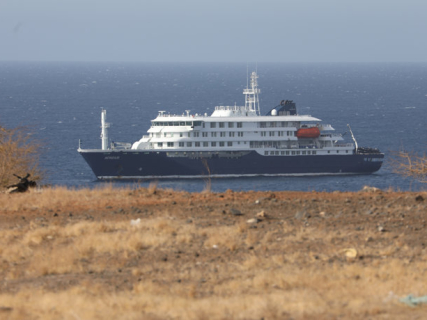

The health crisis linked to the hantavirus outbreak detected on the MV Hondius cruise ship continues to evolve while the World Health Organization (WHO) and Spanish authorities coordinate the response to the possible arrival of the ship in the Canary Islands. The vessel remains off the coast of Cape Verde with passengers and crew under medical surveillance.
The WHO has raised to seven the number of affected people related to the outbreak, including three deceased, one patient in critical condition, and several cases with mild symptoms. Of the detected cases, two have been confirmed by laboratory tests and the rest remain under investigation as suspected.
The ship transports about 150 people of different nationalities, including Spanish citizens. The situation has led to international coordination between the WHO, Spain, and other European health organizations to decide on the measures to be applied and the possible disembarkation on Spanish territory.
WHO investigates if there was human-to-human transmission
One of the most relevant elements of the last few hours is that the World Health Organization works with the hypothesis that person-to-person transmission could have occurred on the ship, although it insists that this type of contagion is extremely rare in hantaviruses.
The WHO's director of epidemic and pandemic prevention and preparedness, Maria Van Kerkhove, pointed out that the main hypothesis is that the first affected individuals were infected outside the cruise ship, during activities carried out in South America, especially in Argentina, where the so-called Andes virus circulates. This variant is the only one known with documented capacity for human-to-human transmission in certain close contacts.
According to the WHO, possible transmissions on board would have occurred between people with very close contact, such as partners or passengers sharing a cabin. The organization has also indicated that there is no evidence of the presence of rodents on the ship, which reinforces the hypothesis of an initial contagion prior to boarding.
Spain and Health coordinate the response
The Ministry of Health maintains permanent contact with the WHO and European organizations to evaluate the epidemiological situation of the cruise ship and decide on the measures to apply if it finally arrives in the Canary Islands.
Spanish health authorities have agreed to send epidemiologists to review the ship and analyze the situation before making definitive decisions about disembarkation. The coordination includes Sanidad Exterior and the Center for Coordination of Health Alerts and Emergencies.
The WHO has confirmed that it is working with Spain on the preparation of protocols for epidemiological research, disinfection, and risk assessment for passengers and crew. The organization considers that the risk to the general population remains low.
Canaries, possible cruise destination
The possibility of the MV Hondius docking in the Canary Islands remains on the table after Cape Verde rejected the disembarkation for health security reasons. The WHO has formally requested collaboration from Spain to facilitate the management of the outbreak and the treatment of those affected.
The forecasts indicate that the ship could head to the Canary Islands after the evacuation of the sick who need urgent medical attention. The specific destination is not yet finalized and will depend on the epidemiological evaluation and the sanitary conditions established by the Spanish authorities.
While investigations into this hantavirus outbreak continue, health authorities maintain isolation and monitoring measures on board the ship and are working to clarify the exact origin of the infections and the possible transmission chain recorded on board.