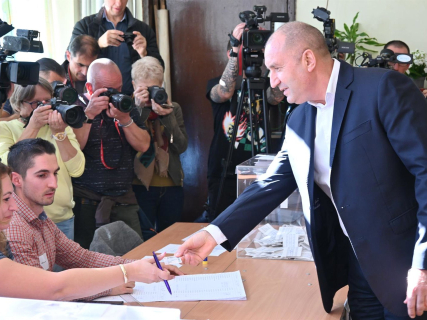

The early elections held in Bulgaria have left a result with a strong political impact in Europe. Former President Rumen Radev is emerging as the winner after prevailing in exit polls.
His coalition would have achieved around 37% of the votes, far ahead of the conservative GERB party, led by Boiko Borissov, which would remain at around 16%.
A Government Still to Be Negotiated
Despite the clear victory, Radev will need support to govern.
The scenario points to possible negotiations with the pro-European alliance Continue the Change-Democratic Bulgaria, although differences in foreign policy complicate a stable agreement.
Bulgaria thus chains its eighth election in five years, a reflection of prolonged political instability.
Clash with Brussels over Russia and Ukraine
Radev's rise generates concern in the European Union.
The candidate has criticized:
- Sanctions on Russia
- The sending of military aid to Ukraine
- Security agreements with Kyiv
Furthermore, he has defended a possible rapprochement with Moscow, appealing to historical, cultural, and religious ties.
A new focus of tension in Europe
The victory of the bloc led by Radev arrives at a delicate moment for the EU, after recent tensions with critical governments in Eastern Europe.
In Brussels, there is concern that Bulgaria may align itself in positions closer to Russia, altering the internal balance of the bloc.
High turnout and fragmented vote
One of the outstanding data points of the day has been the participation, higher than in previous elections.
However, the vote remains fragmented, which makes it difficult to form clear majorities and prolongs political uncertainty.
What can happen now
The immediate future depends on the negotiations to form a Government. The possible scenarios include:
- An Executive led by Radev with specific support
- A complex coalition with pro-European forces
- Or a new political deadlock