
The Iranian Executive has reiterated this Wednesday that it remains willing to engage in conversations with the United States about "the level and type of enrichment" of uranium within the negotiations to try to close a peace agreement, although it has remarked that it does not contemplate abandoning its atomic program, which it considers part of "its inalienable rights".
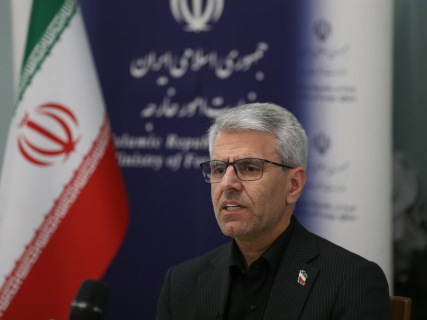
The spokesperson for the Ministry of Foreign Affairs, Esmaeil Baqaei, has recalled that "Regarding the level and type of enrichment (of uranium), Iran has always said that it is a negotiable matter, within the framework of the country's needs," and has insisted that "Iran's inalienable rights, including the peaceful use of nuclear energy, are an inherent right under the Nuclear Non-Proliferation Treaty (NPT) and cannot be denied."
In an appearance before the media, Baqaei has also pointed out that "even the director general of the International Atomic Energy Agency (IAEA) --in reference to Rafael Grossi-- has emphasized that claims that Iran is weeks or months away from acquiring nuclear weapons are not true", according to the official Iranian agency Mehr.
The spokesperson has blamed Washington for using alleged "concerns" about the Iranian nuclear program as "an excuse to exert pressure." "These contradictions are serious and unjustifiable not only for Iranian public opinion, but for the international community," he stated, emphasizing that "the Iranian nuclear program has been repeatedly confirmed by the IAEA, not only as a political position, but as a fact."
Regarding dialogue with the United States, Baqaei specified that contacts "have not yet reached the decision-making stage" and recalled that "in any understanding, including one on the nuclear issue, there are several components and multiple options."
The spokesperson added that "Due to the failure of the United States to fulfill its commitments in diplomatic processes and even the fact that military actions have been carried out, many previous understandings were abandoned" and pointed out that "it remains to be seen if negotiations continue and what option can finally be the basis of an agreement."
Baqaei's statements come after Washington has proposed to Tehran a 20-year pause in its uranium enrichment activities as a condition to move towards a peace pact, in a context in which both parties are trying to organize a second round of contacts after Saturday's failed meeting in Islamabad, capital of Pakistan.
"The United States has suggested a minimum of 20 years (for the suspension of those uranium enrichment works), with all kinds of restrictions," sources familiar with the proposal have indicated to Europa Press, ruling out that the White House is willing to lift sanctions in return, one of Iran's key demands, which claims its right to these activities under the NPT.
The talks in Pakistan between Iranian and American representatives, which concluded without consensus, were held a few days after both governments agreed on April 8 to a 15-day ceasefire with the aim of moving towards a pact that would end the aforementioned offensive, in parallel with efforts between Tehran and Washington to bring about a new nuclear agreement, after the United States unilaterally withdrew in 2018 from the pact signed three years earlier.