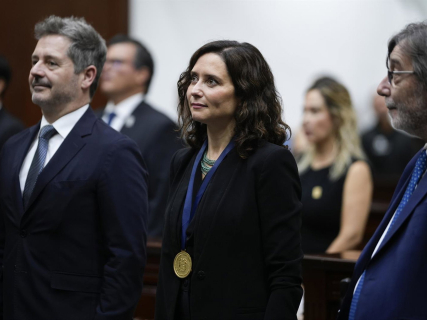

The controversy over Isabel Díaz Ayuso's trip to Mexico has added a new voice, this time from the country's institutions. The vice president of the Chamber of Deputies, Kenia López Rabadán, has publicly defended the Madrid president after the early cancellation of her agenda, criticizing the treatment received during her visit.
In a message disseminated on social networks, the Mexican leader has shown her support for Ayuso and has lamented the context generated around her presence. “I deeply regret the way she was treated on her visit to Mexico, by some characters who only seek to divide and incite violence,” she stated.
Criticism of political polarization
López Rabadán has framed the episode within a climate of political tension that, in his opinion, does not benefit the country. “Mexico does not need polarization,” he stated, further emphasizing that this situation occurs at a delicate moment marked by security problems affecting the population.
The leader has also defended reciprocity in relations between both countries, recalling that Mexican citizens in Spain receive respectful treatment.
Reclaiming Ties with Spain
In her message, the Vice President of the Chamber wanted to highlight the historical ties between Mexico and Spain. “Spain is in our blood, in our language, and in our surnames,” she stated, appealing to a shared relationship that, as she argued, should be placed above political differences.
An episode with political impact
The statements come after Ayuso decided to cancel part of her trip after denouncing an alleged boycott of her participation in the Platino Awards, amid a clash of versions with organizers and Mexican authorities.
The positioning of López Rabadán introduces one more element into the controversy and shows that the case has acquired a political dimension within Mexico itself, beyond the Spanish institutional sphere.