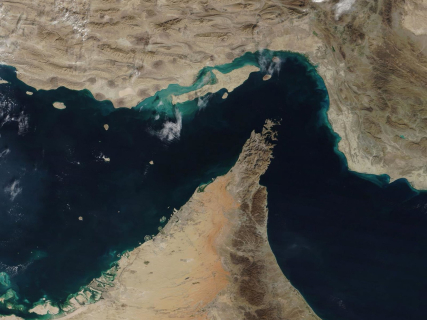
Iran has re-established navigation restrictions in the Strait of Hormuz after the United States decided to maintain the maritime blockade on Iranian ports despite the partial ceasefire reached between both parties. According to information gathered by Reuters, Iranian authorities are once again demanding that ships crossing the area request prior permission from the Revolutionary Guard and respect routes marked by Tehran.
The decision returns the pressure to one of the most sensitive points of world trade. The Strait of Hormuz connects the Persian Gulf with the Indian Ocean and is an essential route for Middle Eastern energy exports. Approximately one-fifth of global oil and a relevant portion of liquefied natural gas passes through this corridor.
Although several oil tankers and cargo ships have managed to cross in the last few hours, tension remains high. Washington maintains that the blockade will continue as long as there is no broader agreement on regional security and Iran's nuclear program. Tehran, for its part, maintains that this pressure violates the spirit of the truce and warns of new measures if the situation is prolonged.
Energy markets cautiously observe the pulse between both powers. Any prolonged interruption in Hormuz could translate into crude oil price hikes, increased maritime transport costs, and new turbulence for Europe and Asia, especially dependent on the supply from the Gulf.