Interior tenders for 47 million the services of the scrutiny for the general elections and stirs a possible electoral advance

This Monday, the General Directorate of Internal Policy published the bidding through which it will be possible to hold the national elections of 2027. Now it only remains to know whether President Pedro Sánchez will advance the elections or not.

2 minutes

Add DEMÓCRATA to Google

Ask FREN

Published

Last updated

2 minutes

Most read

The General Directorate of Internal Policy (DGPI), led by the Ministry of Fernando Grande-Marlaska, published a key tender this Monday for the upcoming elections. Being an open procedure contract, the average time it will take to be awarded is two to five months, although the estimate could vary depending on the number of companies that apply and the complexity of their proposals; the awarding criteria; the requirements for correction; and whether the companies submit appeals after the awarding proposal.

In any case, the beneficiary company must provide IT services for data collection that guarantees "the management of electoral information, the development of an informative web platform for the process, support services for the territorial Electoral Boards and the processing of the final results". The tender has a budget of 46,064,880 euros.

However, the path for the publication of the tender was already paved when, in May 2026, the Ministry of Interior resolved another tender for ballot boxes, envelopes, printed ballots, office kits for polling stations, voting booths, signage, and auxiliary material, awarding it to the companies Plasty SA and Gráficas Tartessos SL. The contract is divided into two lots and was approved with a budget of 1.42 million euros.

Plasty SA will provide the Executive with 35,300 ballot boxes, budgeted at 738,552 euros, while Gráficas Tartessos SL will be responsible for ensuring 582,159 office kits for polling stations (which includes paper, pens, etc.) for a value of 684,618 euros.

Moncloa does not foresee an electoral advance, for now

In any case, the President of the Government, Pedro Sánchez, does not currently contemplate advancing the general elections, despite the fact that some of his barons insist, as the President of Castilla-La Mancha, Emiliano García-Page, often does: "I ask Sánchez to be brave and call the general elections before May", he stated at an event a few weeks ago.

In any case, what Sánchez has ruled out is the "super Sunday", in which the general, regional, and municipal elections would be held simultaneously.
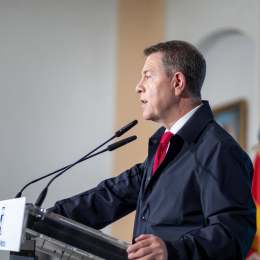
For now, the Executive rules out an electoral advance, at least until knowing the outcome of the General State Budgets (PGE) of 2027 that it seeks to push forward, despite currently lacking the support of the groups. However, the electoral advance of the general elections is convenient for its barons, as Page pointed out, since it would avoid dragging down a poor result in the municipal elections.

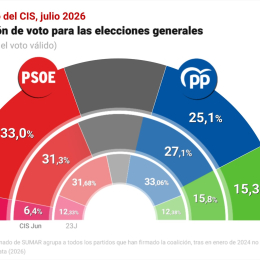
There is another viable option, but less guaranteed, for Sánchez to announce the electoral advance. According to the July barometer of the Sociological Research Center (CIS), the PSOE would obtain eight points more that would put it ahead of the PP. Thus, while Feijóo's party would obtain 25.1% of the votes, Sánchez's would come out with a comfortable majority of 33% of the state electoral support.

In light of this scenario, the president's party would have incentives for the electoral advance.
More key points, information and questions with FREN

AI-GENERATED CONTENT

What parliamentary deadlines and procedures would be necessary to bring forward the general elections in Spain?

In Spain, bringing forward the general elections is essentially a political decision of the Prime Minister, legally articulated through the power to dissolve the Congress, the Senate, or both Chambers and to call elections by Royal Decree. The Constitution concentrates the initiative in the Prime Minister and the formal role in the King, while the Cortes barely intervene: they are dissolved and their functions are replaced by the Permanent Deputations. The key deadlines are set out in the Spanish Constitution and developed by the LOREG, which regulates the call and the electoral process. There are important limits: it cannot be dissolved when a motion of censure is pending, nor can a dissolution be repeated before one year (except in the case of an investiture deadlock), nor during states of alarm, exception, or siege.

Constitutional framework of early dissolution

The power to bring forward elections is articulated through Article 115 of the Spanish Constitution:

  • Exclusive initiative: the Prime Minister, after deliberation of the Council of Ministers and under his exclusive responsibility, may propose the dissolution of the Congress, the Senate, or the General Courts.
  • King's intervention: the dissolution becomes effective through a decree issued by the King; this decree must set the date of the elections.
  • Endorsement: the acts of the King, including the dissolution, are countersigned by the competent authorities (in this case, the Prime Minister; in the automatic dissolution of art. 99.5, the President of the Congress).

Ordinary early dissolution does not require prior agreement of the General Courts: it is an Executive decision within constitutional limits.

Limits and exceptions to early dissolution

Article 115 CE itself sets two material limits to dissolution:

  • Motion of censure: the proposal for dissolution cannot be presented when a motion of censure is pending in the Congress.
  • Minimum interval: a new dissolution cannot take place before one year has passed since the previous one, except in the specific case of investiture deadlock under Article 99.5 CE.

Additionally, Article 116.5 CE adds a further limit: while the state of alarm, exception, or siege is declared, the Congress cannot be dissolved. If these situations occur with the Congress already dissolved or with an expired mandate, its powers are assumed by the Permanent Deputation.

Call for elections and role of the LOREG

The Organic Law of the General Electoral Regime (LOREG) develops how the call is formalized:

  • Elections to the Congress and Senate are called by Royal Decree.
  • Except in the case of Article 99.5 CE, the call Decree is issued with the countersignature of the Prime Minister, at his proposal, under his exclusive responsibility and after deliberation of the Council of Ministers.
  • In early dissolution, the Royal Decree of dissolution must also contain the call for new elections to the dissolved Chamber or Chambers.

The LOREG sets the specific deadlines between the call and the voting, as well as the campaign and scrutiny calendar, but those temporal details do not appear explicitly in the law excerpts available in the consulted sources. It is noted that the entire subsequent mechanism (candidacies, campaign, voting, scrutiny) is governed by that law.

Constitutional calendar after dissolution

Although the dissolution is early, once the elections are held, the general deadlines of Article 68 CE apply:

  • The Congress is elected for four years; the mandate ends after four years or on the day of dissolution (art. 68.4 CE).
  • After elections, the elected Congress must be convened within a maximum period of 25 days from their holding (art. 68.6 CE). This is a key milestone: it marks the date of constitution of the new Cortes.

Once the Congress is constituted, the investiture phase begins, regulated in Article 99 CE:

  • The King, after consultation with the groups and through the President of the Congress, proposes a candidate for the Presidency of the Government.
  • If in the first vote an absolute majority is not reached, a second vote is held 48 hours later, in which a simple majority suffices.
  • If within a period of two months from the first investiture vote no candidate obtains the confidence of the Congress, the King must dissolve both Chambers and call new elections, with the countersignature of the President of the Congress (art. 99.5 CE). This is an “automatic” form of early election due to parliamentary deadlock.

Role of the Cortes and the Permanent Deputations

Once the Chambers are dissolved or their mandate has expired, the Permanent Deputations of the Congress and the Senate (regulated in the Constitution and in the Congress Rules and the Senate Rules) continue exercising certain functions until the constitution of the new Cortes. Among others, they safeguard the powers of the Chambers and assume competencies linked to decree-laws or exceptional states, as provided in the Constitution.

In summary, there is no classic “parliamentary procedure” to bring forward the general elections: the core is an act of the Prime Minister and the King (dissolution and call by Royal Decree), subject to specific temporal and political limits, after which the electoral calendar set by the LOREG and the subsequent process of constitution of the new Cortes and investiture of the Government are activated.

Could you detail the typical calendar (with approximate days) from the signing of the dissolution decree until the constitution of the new Cortes? What practical differences are there between a “discretionary” early election under Article 115 CE and a dissolution due to investiture deadlock under Article 99.5 CE? How exactly do the Permanent Deputations act during the period in which the Cortes are dissolved due to an early election?

What are the powers of the Prime Minister in calling general elections according to Spanish legislation?

In the Spanish constitutional system, the Prime Minister has a central power in proposing and executing the early dissolution of the General Courts and in calling general elections, but this power is surrounded by formal controls (King's intervention, deadlines, form of the call) and is combined with cases of “automatic” dissolution provided in the Constitution. The basic regulation is found in the Spanish Constitution and in Organic Law 5/1985, of the General Electoral Regime (LOREG). The political initiative to bring forward elections corresponds to the Prime Minister, but the call is materialized through a royal decree of dissolution and call signed by the King and published in the BOE. Additionally, the Constitution itself provides a specific dissolution mechanism when investiture fails, in which the Prime Minister does not intervene.

Constitutional framework of powers

The Spanish Constitution attributes to the Government the direction of internal and external policy and the whole executive action (articles of Title IV, visible in the excerpt indicating that “The Government directs internal and external policy, the civil and military Administration and the defense of the State”). Within that political direction lies the power to propose the dissolution of the General Courts and the early election, which is legally articulated through a royal decree of dissolution and call signed by the King.

At the same time, the Constitution sets the ordinary duration of the Chambers' mandate. The consulted text states that “the mandate of the Deputies ends four years after their election or on the day of dissolution of the Chamber” and, in parallel, it is established that “the Senate is elected for four years” and that the senators' mandate also ends after four years or on the day of dissolution. This frames the Prime Minister's power: he can anticipate the end of that period by proposing dissolution.

Call for elections and deadlines (LOREG)

The procedural specification of that power is found in the LOREG. Article 42, according to the extracted text, distinguishes two main scenarios in elections to the General Courts:

  • Early dissolution at the initiative of the Prime Minister: when the Prime Minister “makes use of his power of early dissolution expressly provided for in the legal system”, the call decrees are published the day after their issuance in the BOE and “enter into force the same day of their publication”. These decrees set the date of the elections, which “will be held on the fifty-fourth day after the call”.
  • Call at the ordinary end of the mandate: if the Prime Minister does not use early dissolution, the call decree is issued on the twenty-fifth day before the expiration of the Chambers' mandate, published the next day in the BOE, and the elections also take place on the 54th day after the call.

In both cases, the Prime Minister politically drives the royal decree and submits it for the King's signature, who formally dissolves the Chambers and calls the elections through that normative act.

The Constitution itself adds a key deadline after the vote: the consulted excerpt establishes that “the elections [to the Congress] will take place between thirty and sixty days from the end of the mandate. The elected Congress must be convened within twenty-five days following the holding of the elections”. Thus, the Prime Minister's decision to trigger an early election sets off a closed chain of constitutional and organic deadlines.

Automatic dissolution due to investiture failure

Alongside the discretionary dissolution driven by the Prime Minister, the Constitution provides for an automatic dissolution scenario linked to the investiture procedure. Article 99.5, reproduced in the consulted text, establishes that if “after the period of two months from the first investiture vote, no candidate has obtained the confidence of the Congress, the King shall dissolve both Chambers and call new elections with the countersignature of the President of the Congress”. In this scenario:

  • The dissolution is not the result of a political decision of the Prime Minister, but a constitutional automatism due to the impossibility of investing him (or another candidate).
  • The countersignature does not correspond to the Prime Minister, but to the President of the Congress, which underlines the parliamentary nature of this mechanism.

The LOREG has been adapted to this scenario through Organic Law 2/2016, which introduces a specific additional provision on the “automatic call of elections under the provisions of paragraph 5 of Article 99 of the Constitution”. This norm details the temporal and technical fit of the call when the dissolution is imposed by the lack of investiture, not by the Prime Minister's decision.

Relation with the vote of confidence and motion of censure

The power to bring forward elections is inserted in a system of political responsibility of the Government before the Congress. The consulted constitutional text indicates that “The Prime Minister, after deliberation of the Council of Ministers, may submit to the Congress of Deputies a vote of confidence on his program or on a declaration of general policy” and that confidence is understood to be granted if a simple majority votes in favor. Immediately after, the following article begins by stating that “The Congress of Deputies may demand the political responsibility of the Government…”, introducing the motion of censure.

These mechanisms do not directly modify the formal steps of the call for elections (which continue to be governed by the Constitution–LOREG combination), but they politically condition its use: the loss of parliamentary confidence may cause the Government's dismissal and the opening of a new investiture process, which, if it fails, leads to automatic dissolution and the call of new elections under the terms of Article 99.5.

Could you explain in more detail what exactly Article 99 of the Constitution says about investiture and how it can end in automatic dissolution? What practical differences are there between an early dissolution decided by the Prime Minister and dissolution due to investiture failure? Within what specific deadlines do an electoral campaign and the constitution of the new Cortes take place after the call for general elections?

What has been Emiliano García-Page's political trajectory and to which party does he belong?

Emiliano García-Page is a politician from Castilla-La Mancha belonging to the Spanish Socialist Workers' Party (PSOE), of which he is one of its main territorial leaders. His career has developed at three levels: municipal (in Toledo), regional (Castilla-La Mancha), and national (as senator), and since 2015 he has been President of the Junta de Comunidades de Castilla-La Mancha, a position he has maintained after his re-elections in 2019 and 2023. Additionally, since 2012 he has held the secretary generalship of the PSOE of Castilla-La Mancha and has established himself as one of the most influential —and critical— voices within Spanish socialism, as detailed in his profile on Demócrata and his institutional profile as regional president.

Political affiliation and organizational positions

García-Page has been a member of the PSOE since his youth, after passing through the Socialist Youth, and has developed practically his entire career within this party, as reflected in his biographical profile on Wikipedia and various biographical sketches, such as that of ModeloCurriculum. Organizationally, his main current position is Secretary General of the PSOE of Castilla-La Mancha since 2012, also confirmed by his stakeholder profile, where he appears as Secretary General of “PSOE Castilla-La Mancha”.

This dual condition —regional party leader and regional president— explains why many media analyses consider him one of the most relevant socialist barons. At the federal level, he appears recurrently in reports about internal PSOE debates, such as those collected by the newspaper Demócrata in pieces focused on his criticism of Pedro Sánchez's leadership and the debate about bringing forward general elections (article about his request for early elections; subsequent analysis).

Institutional trajectory

Municipal stage in Toledo

His public career began in the Toledo City Council, where he was a councilor between 1987 and 1993 and deputy mayor between 1991 and 1993, according to his biography on Wikipedia and biographical portals such as ModeloCurriculum. After various positions in the regional environment, he returned to local politics as mayor of Toledo, a responsibility he held from 2007 to 2015, a period widely cited in his profile on Demócrata and in various biographies in several languages (Catalan version, Galician, French, Portuguese, Italian).

Positions in the Government of Castilla-La Mancha

Alongside his municipal trajectory, García-Page held various posts in the Junta de Comunidades de Castilla-La Mancha during the socialist governments of José Bono and José María Barreda: he was spokesperson of the regional Government and minister in several departments (Public Works, Social Welfare, and Institutional Relations), as summarized in biographical profiles such as those of Infobae or the profile of CMMedia.

In 2011 he was appointed regional senator for Castilla-La Mancha, a position he held until 2015, as recorded in his official Senate profile (senator profile). From 2015, after running as a candidate for the regional presidency, he also became a deputy in the Cortes of Castilla-La Mancha, a representation he maintains associated with his successive majorities.

President of the Junta de Comunidades de Castilla-La Mancha

Since 2015, García-Page has been President of the Junta de Comunidades de Castilla-La Mancha, a responsibility in which he has been re-elected in 2019 and 2023. His status as incumbent president appears both in the regional institutional agenda (where he is listed as head of the Executive in multiple public events: for example, economic conferences, events with Eurocaja Rural, or celebrations of Gypsy Day, accessible through the institutional agenda platform and other dates such as June 6, 2026 or May 12, 2026), as well as in political analyses published by Demócrata.

Recent polls, such as the one released by Idus3 for the regional PSOE and analyzed in this Demócrata article, suggest that García-Page would maintain an absolute majority in the Cortes of Castilla-La Mancha if regional elections were held now, reinforcing his role as one of the most electorally solid socialist barons.

Internal role in the PSOE and national projection

In recent years, García-Page has gained national prominence for his criticisms of Pedro Sánchez's strategy and for his defense of a more classical PSOE on institutional and territorial issues. Demócrata has repeatedly covered this facet: in pieces where he denounces the “rigging” of the 2016 Federal Committee (analysis about the “rigging”), in reports about his request for early elections (debate about a possible “super Sunday”) or in chronicles about his clashes with the Ferraz leadership (interview where he states that the majority of the PSOE agrees with him, analysis about the future of the PSOE “after Sánchez”).

Other media have highlighted his profile, both from a biographical and personal perspective (Infobae report, profile in AS, chronicle in eldiario.es) as well as from national economic and political forums (participation in Nueva Economía Fórum, report on his early vocation).

In summary, Emiliano García-Page is a PSOE leader with a long trajectory linked to Toledo and Castilla-La Mancha, who today combines the regional presidency with the secretary generalship of the regional PSOE and a growing weight in the internal debate of Spanish socialism.

What major political clashes has Emiliano García-Page had with Pedro Sánchez within the PSOE? How have García-Page's electoral results in Castilla-La Mancha evolved from 2015 to today? What specific criticisms does García-Page's management receive from the PP and Vox in Castilla-La Mancha?

Play

Test your knowledge with FREN!

How much do you know about this topic? Answer the following 3 questions.

What is the budget allocated by the Ministry of the Interior for the tender of electoral scrutiny IT services?

Question 1 of 3

Who has ruled out holding a 'super Sunday' election?

Question 2 of 3

What percentage of state electoral support does the latest CIS barometer give to the PSOE?

Question 3 of 3

Hola, soy Fren. ¿Cómo te ayudo?