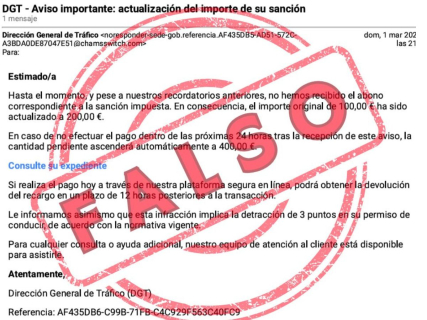

Messages warning of a supposed pending traffic fine are circulating massively again and the General Directorate of Traffic (DGT) has issued a new warning to prevent citizens from falling for one of the most widespread digital scams in recent years.
Through a publication disseminated on the social network X, the DGT has recalled that numerous cybercriminals are using false messages that impersonate the organization's identity to try to obtain users' personal and banking data.
🚨Alerta #FRAUDE🚨
— Dir. Gral. Tráfico (@DGTes) April 27, 2026
🎣La #DGT NO envía notificaciones de sanciones por #email o #SMS solicitando el pago de multas. Los únicos canales de comunicación son a través del correo postal📬 o de la Dirección Electrónica Vial #DEV, previo registro. #Phishing pic.twitter.com/s11Gyxonhd
The scam is based on a technique known as phishing, an online fraud system through which attackers send emails or SMS that appear to come from official entities to induce the victim to make a payment or provide sensitive information.
How the fake fine scam works
According to the DGT's Cybersecurity Department, the messages usually warn of a supposed pending traffic fine and use formulas that seek to generate urgency or fear so that the victim acts quickly.
The attackers include links that redirect to fraudulent pages designed to imitate the official DGT website. Once there, the user is asked for personal and banking information to supposedly complete the fine payment.
From the DGT they make it clear that official sanctions are not communicated through links sent by SMS and recall that notifications are made solely by postal mail, through the Electronic Traffic Address (DEV) or through the TESTRA/TEU edictal bulletin board.
Also the National Cybersecurity Institute (INCIBE) has warned on several occasions about campaigns of this type and has explained that cybercriminals carry out mass mailings in the hope that some victims will enter their data.
What to do if the message has been received
The INCIBE recommends not opening suspicious links or downloading attached files sent from unknown numbers or addresses. In case of having received one of these messages without interacting with it, the organization advises:
- Delete the SMS or email.
- Block the sender.
- Report the incident through your notification channels.
If the user has already entered their personal or banking details, the recommendations are more urgent:
- Contact the bank immediately.
- Save screenshots and evidence of the fraud.
- Report to the National Police or Civil Guard.
- Ask for help from INCIBE's assistance line 017.
The DGT also recommends distrusting messages with threats, very short deadlines, or immediate discounts, common elements in this type of fraud.