Messi donates 80,000 euros to help rebuild the Sierra Oeste of Madrid after the fires

The president of Madrid publicly thanks the gesture of the footballer while the donation campaign continues in progress for the affected municipalities.

1 minute

Messi incendios madrid

Messi incendios madrid

Add DEMÓCRATA to Google

Ask FREN

Published

Last updated

1 minute

Most read


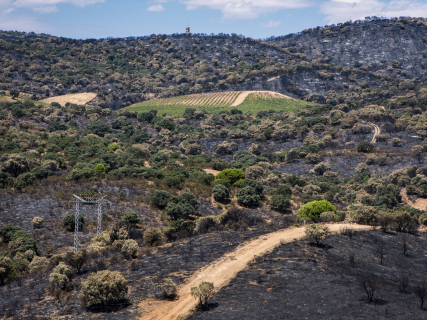
The footballer Leo Messi has donated 80,000 euros to contribute to the reconstruction of the Sierra Oeste of Madrid after the forest fire that devastated nearly 30,000 hectares and affected 17 municipalities in the region. This was announced on Tuesday by the president of the Community of Madrid, Isabel Díaz Ayuso, through her social networks.

"Leo Messi has donated 80,000 euros for the reconstruction of the Sierra Oeste of Madrid. I want to thank him and tell him that the people of Madrid hope to welcome him soon to give him the applause he deserves," wrote the Madrid president.

The Community keeps a donation campaign open

The Community of Madrid launched a website to channel the economic contributions from citizens and companies aimed at those affected by the fires recorded in the Sierra Oeste.

The platform allows donations to be made via bank transfer, account charge, credit card, or Bizum and has been developed in collaboration with CaixaBank, an entity that provides both the infrastructure and the means of payment to manage the solidarity contributions.

17 affected municipalities

The fire affected a total of 17 municipalities in the Sierra Oeste, where more than 56,000 residents live. The towns included in the affected area are Aldea del Fresno, Cadalso de los Vidrios, Cenicientos, Chapinería, Colmenar del Arroyo, El Escorial —due to the evacuation of the hamlet of Peralejo—, Fresnedillas de la Oliva, Navalagamella, Navas del Rey, Pelayos de la Presa, Robledo de Chavela, Rozas de Puerto Real, San Martín de Valdeiglesias, Santa María de la Alameda, Valdemaqueda, Villa del Prado, and Zarzalejo.

The donation campaign, in which Messi has participated, remains open with the aim of raising funds to contribute to the recovery of the municipalities affected by one of the most serious forest fires recorded this summer in the Community of Madrid.


More key points, information and questions with FREN

AI-GENERATED CONTENT

What is the status of the reconstruction process of the Sierra Oeste de Madrid after the fires?

The reconstruction process of the Sierra Oeste de Madrid is already in an initial post-emergency phase: the fires are controlled and extinguishing, practically all evacuees have returned, and specific plans for cleaning, financial aid, and environmental regeneration have been launched. The affected perimeter is around 27,000 hectares, with a strong impact on Mediterranean forest, livestock, and roads. The Community of Madrid has arranged a package close to 100 million euros in housing, SMEs, self-employed, employment, roads, and landscape, coordinated through an Interdepartmental Reconstruction Commission. In parallel, the central Government has declared the area “seriously affected by a civil protection emergency” and has activated labor, fiscal, and civil protection aid for the victims.

Damage assessment and fire situation

According to the Community of Madrid, the large forest fire in the Sierra Oeste has burned an approximate perimeter of 27,000 hectares: 69% forest area, 11% scrub and grasslands, 7.5% crops, 4% infrastructures, and 8.5% other land uses, mainly affecting holm oak (43%) and pine (26%) in public and private forests of 17 municipalities, including Robledo de Chavela, Zarzalejo, and Valdemaqueda (Landscape Recovery Plan).

As of August 4, the Community has declared the Sierra Oeste fires controlled and in the extinguishing phase, allowing the return of all evacuated residents and lowering the emergency to Operational Situation 0 of INFOMA, as reported by Demócrata (fire control). Previously, more than 100 km of damaged roads had been progressively reopened (road reopening and road recovery).

Actions by the Community of Madrid

The extraordinary Government Council on July 29 approved nearly fifty actions for reconstruction, focused on 17 municipalities with more than 56,000 inhabitants (nearly fifty actions). Among the main lines:

  • Infrastructure and basic services: 20 million from the PIR Reserve Fund for cleaning, repair, and reconstruction of municipal infrastructures and restoration of basic services (urgent PIR actions). These works have already begun, with containers, heavy machinery, and waste removal in towns like Pelayos de la Presa and Robledo de Chavela (start of cleaning and damage analysis).
  • Political coordination: creation of an Interdepartmental Commission for the Reconstruction of the Sierra Oeste, initially valid for one year extendable, responsible for developing the Recovery Plan, coordinating measures, and monitoring its execution (Interdepartmental Commission).
  • Housing: urgent aid with an allocation of 30 million, including temporary relocation and up to 100% rent coverage for 12 months for those who have lost their homes (housing aid). Demócrata details that the Community will cover a full year of rent for these families (economic and fiscal shield).
  • SMEs and self-employed: 15.2 million in direct aid for companies in commerce, services, and industry (direct aid to SMEs), with grants up to 10,000 euros, complemented by a special Avalmadrid guarantee line, which will also allocate 1% of its results to forest repopulation in the most damaged areas (Avalmadrid guarantees and 30 million plan against fires).
  • Local employment: 2 million for the priority hiring of unemployed people in environmental recovery and public space tasks, aiming to link reconstruction and population retention (hiring unemployed).
  • Livestock and primary sector: emergency contract of one million euros for feeding and veterinary assistance, more than 394,000 kilos of forage and 60,000 liters of water for 5,500 heads of cattle (support for livestock farmers, and extended coverage in visit to Sierra Oeste and in Demócrata news such as aid to livestock farmers, 300 tons of forage and 75,000 kilos delivered).

Reforestation and environmental recovery plans

The environmental axis is the Landscape Recovery Plan, which foresees “defense infrastructures” against future fires (vineyards, grasslands, agricultural plantations), provision of vines and traditional crops, six wildlife feeding points, and reinforcement of water points (Landscape Recovery Plan). From September, emergency actions will be carried out: cutting burned vegetation, removing debris in safety strips, sowing in pine forests, and anti-erosion measures (firebreaks, terraces, straw mulching), especially on the slopes of the San Juan and Picadas reservoirs.

The Community will evaluate natural regeneration before promoting massive forest repopulations and has announced that PEPAC and FEADER 2026-2027 aid will subsidize restoration projects, silvicultural treatments, repopulations, plantation protection, and improvement of forest tracks and water points (details of European aid). Additionally, Avalmadrid will link part of its profits to forest repopulation (guarantees and repopulation).

Central government and municipalities

At the state level, the Council of Ministers has declared numerous territories severely affected by civil protection emergencies due to fires between March and July 2026, including those in the Community of Madrid, Ávila, and Toledo, which motivated the declaration of a national interest emergency (211 affected areas). This is complemented by a royal decree-law with a package of labor, fiscal, and social protection aids linked to this declaration, covered both in the Government aid package and in the analysis of the Official State Gazette of July 30 and in the sectoral explanation about the new extraordinary emergency benefit (extraordinary aid to workers and measures for self-employed).

The municipalities of Robledo de Chavela, Zarzalejo, Valdemaqueda, and other affected towns actively participate in defining priorities. The Community of Madrid has held specific meetings with their mayors to guarantee essential supplies and organize the deployment of pick-up vehicles, street cleaning, and debris removal (meeting with mayors). Meanwhile, Post-Fire Attention Points (PATI) and social and health devices have been enabled to accompany residents' return (social measures and PATI).

Short and medium-term outlook

In summary, the extinguishing emergency is practically overcome, but reconstruction and ecological regeneration have just begun and are projected for at least one or two years ahead. The Interdepartmental Commission will meet weekly to monitor plan execution (reconstruction commission), while housing, employment, business, and agriculture aid are deployed and the first forest restoration campaign is prepared from autumn. All this is complemented by additional Community measures and operations such as the sale of real estate assets to strengthen funds allocated to Sierra Oeste, explained by Demócrata in pieces like the sale of the Chamberí penthouse to “help in reconstruction” and the global 100 million plan (penthouse sale for reconstruction, political justification of the operation and details of the sale and fund destination).

What specific requirements must families meet to access housing aid in Sierra Oeste? How will it be decided in which areas there will be forest repopulation and which species will be planted after the fire? What role are local agricultural and livestock organizations playing in designing the reconstruction of Sierra Oeste?

What are the competencies of the President of the Community of Madrid in emergency management and reconstruction?

The President of the Community of Madrid is the highest political authority in the autonomous community regarding civil protection and emergencies, but her specific competencies are mainly articulated through civil protection laws and the role she exercises at the head of the Government Council. In severe emergencies, she can request the declaration of national interest and ask the central Government for delegation of the direction of actions. Additionally, the autonomous Government, which she presides over, approves the strategy and main civil protection plans and defines recovery and reconstruction measures within its competencies. Operational management falls to the competent Ministry and the Madrid 112 Security and Emergencies Agency, but under the political direction and coordination of the Presidency.

Basic legal framework

The starting point is the Statute of Autonomy of the Community of Madrid, approved by Organic Law 3/1983 (Statute of Autonomy) and amended by Organic Laws 2/1991 (LO 2/1991), 10/1994 (LO 10/1994), and 5/1998 (LO 5/1998). The Statute regulates the figure of the President, her relationship with the Assembly, and the power to direct Government action, including civil protection policy and disaster response. Although the recovered provisions focus on confidence motions, votes of no confidence, and Assembly dissolution, they imply that the Presidency is the executive branch's center of direction.

At the state level, Law 17/2015, of July 9, on the National Civil Protection System (Law 17/2015) sets the cooperation framework between the State and Autonomous Communities, reinforced by constitutional jurisprudence (e.g., Sentence 58/2017, STC 58/2017, and appeal 1880-2016, unconstitutionality appeal). This law does not detail specific functions of the Madrid president but establishes that communities participate “at the highest level” in state coordination bodies, which in practice is channeled through the Presidency and the competent minister.

Competencies in emergency management

The central autonomous regulation is Law 5/2023, of March 22, creating the Integrated Civil Protection and Emergency System of the Community of Madrid (Law 5/2023, BOE; Law 5/2023, BOCM). Its articles reveal several key functions of the Presidency:

  • Relationship with the State in large-scale emergencies: Article 21 establishes that when an emergency “exceeds the response capabilities of the Community of Madrid, the Presidency of the Community [...] may request the Government of Spain [...] the declaration of national interest.” In catastrophes declared of supra-community interest or in a state of alarm, the Presidency may request delegation of the direction and coordination of emergency actions within the regional scope, according to state legislation.
  • Political direction of the Integrated System: although the law assigns technical competencies to the competent Ministry and the Madrid 112 Security and Emergencies Agency, the preamble describes that the current civil protection and emergency organization depends on the Government Council (e.g., citing Decree 191/2021 on the Ministry's structure), which the President chairs.
  • Approval of autonomous planning: Law 5/2023 foresees that the Civil Protection Strategy and the Territorial Civil Protection Plan of the Community of Madrid (PLATERCAM) are approved by Government Council agreement, as are special plans and autonomous action plans. PLATERCAM was approved by Agreement on April 30, 2019 (Territorial Plan), and there is also a Special Flood Plan (INUNCAM) approved in 2020 (INUNCAM Plan).

In summary, the President does not directly manage operations but leads the activation of major political decisions (requesting national interest declaration, assuming or delegating direction) and heads the body that approves and reviews planning instruments later applied by technical services.

Competencies in the recovery and reconstruction phase

Law 5/2023 dedicates a section to the recovery phase, understood as the set of measures to “restore normality in the affected area.” In cases without a state declaration of “area seriously affected by a civil protection emergency,” it foresees that the Community of Madrid may establish “appropriate recovery measures, within its competencies,” including recovery programs and sectoral aid. These decisions are articulated through Government Council agreements, again under the political direction of the President.

When there is a state declaration or instruments like Royal Decree-law 10/2021, urgent measures for storm Filomena (RDL 10/2021) or orders developing labor and Social Security aids linked to Law 17/2015 (Order TES/443/2022, Order TES/1223/2021, Order ISM/707/2021), the Community must coordinate with the State and municipalities to channel funds and execute works and aid, a task involving political impetus and representation by the Presidency.

Other recent Community of Madrid regulations, such as Law 16/2023 on institutional simplification (Law 16/2023), Law 10/2022 on financial autonomy (Law 10/2022), or state agreements and royal decrees on financing emergency system improvements (e.g., Royal Decree 960/2022 on 5G communications for emergencies, RD 960/2022), indirectly affect the Community's capacity to plan and finance reconstruction, where the President acts as the ultimate responsible for political and budgetary strategy.

Overall, the President's competencies in emergency management and reconstruction are mainly political direction, institutional representation, and strategic decision-making (national interest declarations, plan approval, promotion of recovery measures), while daily execution is carried out through the competent Ministry, Madrid 112 Agency, and other autonomous and local administrations.

In which state civil protection coordination bodies does the Community of Madrid participate, and what role does the autonomous Presidency have in them? What exactly does the Territorial Civil Protection Plan of the Community of Madrid (PLATERCAM) foresee about who directs emergencies within the region? What types of aid and reconstruction actions can the Community of Madrid approve when there is no state declaration of an area seriously affected by a civil protection emergency?

What requirements must citizens or companies meet to make donations through the platform enabled by the Community of Madrid?

The official information available about the new donation platform of the Community of Madrid for those affected by the Sierra Oeste fires is very limited. We know it is a website enabled as a “single and secure channel” to channel contributions from citizens and companies, allowing donations by transfer, direct debit, card, or Bizum, and that the payment infrastructure is provided by CaixaBank at no cost to the Administration. Beyond this, neither the official note nor political reports detail additional specific requirements (prior registration, documentation, minimum amounts, etc.), so no further conditions can be rigorously specified.

What the Community of Madrid says exactly

The key reference is the official note “The Community of Madrid opens a website to channel donations to those affected by the Sierra Oeste fires”. From that text, these essential elements emerge:

  • Donor subject: it explicitly mentions “citizens and companies,” without further nuances. It does not distinguish by residence, company size, or sector.
  • Purpose of donations: contributions are destined to the affected by the fires that have hit 17 municipalities of Sierra Oeste.
  • Nature of the platform: defined as a “single and secure channel” to make contributions “simply,” centralized on a single Community of Madrid website.
  • Accepted payment methods: the platform allows donations via bank transfer, direct debit, card, or Bizum.
  • Technical support and cost: the initiative is articulated “together with CaixaBank,” which provides the platform and payment means, “so the initiative does not entail any cost for the Community of Madrid.”

The note itself clarifies that the portal is “currently under construction,” so fine operational details (form fields, checks, certificates, etc.) are not included in the publicly available text.

Requirements that can be deduced and information limits

From this institutional communication, some de facto requirements can be extracted, although not formulated as a formal list:

  • Ability to operate with the enabled payment methods: the citizen or company must have a bank account, card, or Bizum to complete the donation through the platform.
  • Intention to donate to the specific cause: the website is specifically conceived for reconstruction and support to Sierra Oeste victims; it is not a generic donation platform for the Community of Madrid.
  • Use of the official channel: the contribution must be made through the page enabled by the Community of Madrid, not through informal channels, if it is to be integrated into this public mechanism.

However, there are important aspects about which there is no public information in the consulted documentation:

  • It is not detailed if there are specific identification requirements (mandatory NIF/NIE/CIF, contact data, etc.), although it is reasonable to think the form will request the minimum information to execute the payment.
  • It does not mention if there is a minimum or maximum amount per operation, nor limits per donor.
  • It is not specified if the platform generates a receipt or donation certificate with fiscal effects, relevant for companies and also individuals.
  • It also does not indicate if there is differentiated treatment between national and foreign donors, or companies not based in Spain.

In parallel, the political coverage of this measure by media such as the newspaper Demócrata emphasizes the dimension of opportunity and criticism but does not provide technical details about platform requirements. For example, in the piece “Más Madrid accuses Ayuso of asking for donations after the fire…” it is explained that the president announces on the autonomous website “a new specific space to securely channel donations for the reconstruction of Sierra Oeste,” without adding additional conditions for citizens or companies.

Conclusion: what can be affirmed and what cannot

With the available information, the only thing that can be rigorously assured is that any citizen or company can make donations through the platform enabled by the Community of Madrid, using the four announced payment methods (transfer, direct debit, card, and Bizum), and that this portal acts as the official, unique, and secure channel, with technological support from CaixaBank and at no cost to the autonomous Administration.

There is no official data on other more detailed requirements (prior registration, required documentation, minimum amounts, issuance of certificates, associated tax benefits, etc.). To know these details, one would have to access the platform's form when fully operational or new explanatory notes that the Community of Madrid may publish. To date, no further information is available in the consulted sources.

Has the Community of Madrid clarified if it will issue tax certificates for donations made through this platform? How will the use of funds raised through the Sierra Oeste donation website be controlled and audited? What political criticisms have this donation platform and the recourse to private contributions after the fire sparked?

Play

Test your knowledge with FREN!

How much do you know about this topic? Answer the following 3 questions.

How many municipalities in the Sierra Oeste de Madrid have been affected by the mentioned forest fire?

Question 1 of 3

Which entity collaborates with the Community of Madrid to manage the donation platform?

Question 2 of 3

How much has Leo Messi donated to help with the reconstruction after the fire in the Sierra Oeste de Madrid?

Question 3 of 3

Hola, soy Fren. ¿Cómo te ayudo?