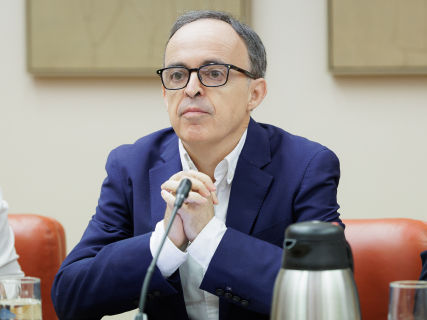

The Official State Gazette published this Wednesday the appointment of Juan José Ganuza Fernández as the new president of the National Commission of Markets and Competition, in replacement of Cani Fernández.
Ganuza assumes a six-year mandate at the head of one of the main regulatory bodies of the State. The CNMC oversees investigations into cartels and business abuses, major concentration operations, and regulatory decisions affecting electricity, gas, telecommunications, railways, and the audiovisual sector.
Economist specialized in competition and regulation
Juan José Ganuza is a professor of Economics and Business at the Universitat Pompeu Fabra, where he has developed nearly three decades of academic career.
His work has focused on competition policy, market regulation, digital economy, and public procurement. He has also directed the Competition and Market Regulation Division of Funcas and has regularly participated in studies and forums related to the activity of the CNMC.
His profile is mainly academic and technical, unlike other presidents of the regulator coming from the Administration or the legal bodies of the State.
Congress endorsed his suitability with the rejection of PP and Vox
The Economy Commission of Congress examined on July 14 the suitability of Ganuza and the new councilors proposed to partially renew the body.
The candidacy went ahead, although PP and Vox voted against questioning his political independence. Congress also endorsed the appointments of Carmen Balsa Pascual, Joan Capdevila i Esteve, and Marina Echebarría Sáenz as new members of the council.
The appointment corresponds to the Government after the parliamentary examination. The vote of Congress does not equate to a direct election of the president of the regulator.
What power does the president of the CNMC have
The president institutionally represents the CNMC, calls and directs the meetings of its plenary and coordinates the functioning of the body.
He does not decide alone on sanctions or authorizations. The resolutions correspond to the plenary or to the Competition and Regulatory Supervision chambers, made up of different councilors.
His ability to set priorities, organize internal work, and represent the body, however, gives him a decisive position in the orientation of competition and supervision policy.
What sectors does the CNMC control
The decisions made during Ganuza's term may affect:
Electricity and gas: tolls, networks, competition, and functioning of the markets; telecommunications: access to networks, conflicts between operators, and competition conditions; audiovisual sector: obligations of operators and compliance with audiovisual regulation; railway: access to infrastructure and competition between companies; postal services: market supervision and universal postal service; business competition: cartels, restrictive agreements, and abuses of dominant position; mergers and acquisitions: analysis of operations that may reduce competition.
The CNMC also prepares reports on regulatory projects and can challenge provisions or actions of administrations that create unjustified obstacles to competition.
The major challenges of the new president
Ganuza arrives at the regulator in the midst of a transformation of digital markets, with increasing business concentration and regulated sectors undergoing technological changes.
Among his main challenges are the oversight of digital platforms, competition in energy and telecommunications, control of concentrations, and coordination with European authorities.
The six-year term aims to strengthen the independence of the agency, as its members cannot be immediately re-elected for another term. The transition and appointments have been officially published in the BOE of July 22, 2026.