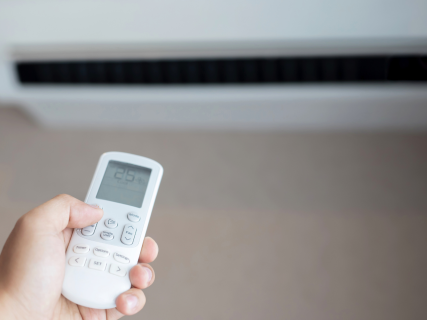

The air conditioning of a home does not always guarantee the same temperature in all rooms. During a heat wave, differences of up to four degrees can be recorded between different rooms, even when the air conditioning is running. The orientation of the windows, solar radiation, insulation, humidity, ventilation, or the use of appliances cause some rooms to accumulate much more heat than others.
This is noted in an analysis prepared by the company specialized in air conditioning Haier HVAC, which explains that, while the living room can be kept within a comfort range, bedrooms, kitchens, or offices can remain above 27 or 28 degrees for hours. According to their experts, knowing how heat is distributed within the home allows for improved comfort and a more efficient use of the air conditioning system.
The bedroom: accumulated heat during the day hinders rest
The bedroom is one of the rooms that most suffers from episodes of intense heat. During the day, walls, ceilings, floors, furniture, and even the mattress store temperature and release it slowly during the night, so the room can still feel warm even when it has cooled down outside.
To reduce this effect, the company encourages keeping blinds, curtains, or awnings closed during the hours of highest solar radiation and ventilating only when the outside temperature is lower than the inside. They also mention that the air conditioning can be programmed so that the room reaches a pleasant temperature gradually before going to bed, instead of selecting excessively low values.
The kitchen: a source of heat within the home
The kitchen has a particularity compared to the other rooms: in addition to the heat that enters from the outside, it also generates temperature from the operation of the oven, the cooking hob, the dishwasher, the refrigerator, and other small appliances.
To prevent that heat from accumulating, the analysis urges to limit the use of the oven and the hob during the central hours of the day, opt for cold or quick preparations, and always use the extractor hood while cooking. When the layout of the home allows it, it can also be useful to keep the kitchen temporarily separated from the air-conditioned areas to prevent heat from spreading to the rest of the house.
The bathroom: humidity increases the feeling of stuffiness
Although it is not always the hottest room, the bathroom can be especially uncomfortable during the summer due to the increase in humidity after a shower. That steam hinders the evaporation of sweat and causes a much more intense feeling of humid heat, especially in bathrooms with little ventilation.
Experts suggest shorter showers with cooler water, activating the extractor fan or opening the window during and after each use, and maintaining ventilation for a few additional minutes to expel the humidity directly outside before it spreads to the rest of the house.
The office: electronic devices also raise the temperature
Spaces designated for teleworking concentrate several sources of heat. Computers, screens, chargers, lighting systems, and other electronic devices increase the ambient temperature, an effect that is accentuated when the room is small or remains occupied for many hours.
To improve the climate control of this room, Haier HVAC indicates that it is beneficial to turn off equipment that is not being used, avoid direct sunlight on the work area, and promote air circulation. Using a fan can also help improve the feeling of comfort without needing to further reduce the temperature of the air conditioning.
The living room: a pleasant temperature does not mean the whole house is cool
The living room is usually the first room to reach a comfortable temperature because it is common for the main air conditioning unit to be installed in that area. However, that does not mean that the rest of the house is properly climate-controlled.
Specialists recommend checking that no furniture, curtains, or other objects obstruct the airflow and taking advantage, when possible, of opening certain doors to facilitate circulation to other rooms. In larger homes, a single unit may be insufficient to achieve a homogeneous climate control, so it may be advisable to resort to multisplit systems, ducted installations, or zone control solutions.
As summarized by Luis Miguel Martínez, Product Manager of Haier HVAC, before lowering the thermostat temperature it is advisable to analyze which rooms receive more solar radiation, where the main sources of heat are concentrated, and if the system distributes the air correctly.