
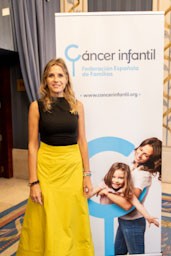
Childhood cancer survival rates continue to improve in Spain. Around 84% of diagnosed children and adolescents manage to overcome the disease thanks to therapeutic advances and the growing specialization of oncohematology teams. However, for the Spanish Federation of Childhood Cancer Families (FEFCI), clinical success must now be accompanied by a profound change in the healthcare, social, and educational support these patients receive once treatment ends.
This was the main message of the conference "Life after Discharge", recently organized by the Federation, in collaboration with Norgine, coinciding with Childhood Cancer Survivors Week. The protagonists were not healthcare professionals or associations, but the survivors themselves, who recounted firsthand the difficulties they continue to face when leaving the hospital.
"We are achieving almost 84% survival, but we need a context that accompanies that survival. Health, educational, and social services must adapt to this new reality because our children continue to need support long after discharge", states Verónica Ortiz, president of FEFCI, in an interview with Demócrata.
Living after cancer
Just a few decades ago, the main objective was to save the lives of children diagnosed with cancer. Today, without abandoning that priority, patient associations consider it essential to take a further step: to address the physical, cognitive, emotional, and social sequelae that can appear even years after treatment ends.
Survivors are calling for specific consultations, standardized protocols, and professionals to coordinate their follow-up during the transition to adulthood, a process that still shows significant differences between autonomous communities.
"The survivors themselves tell us that they need follow-up after hospital discharge, not only from a clinical point of view, but also psychological, educational, and social, because many sequelae appear in the medium and long term", explains Ortiz.
FEFCI reminds us that the increase in survival forces a rethinking of care organization. It is no longer enough to cure; it is also necessary to guarantee the best possible quality of life.
A diagnosis that completely changes life
The president of the Federation knows this reality from a dual perspective. In addition to representing the associations integrated into FEFCI, she is part of a board of directors composed entirely of parents of minors with cancer, which has also incorporated a survivor.
The disease erupts abruptly and transforms family life from the very first moment. "When you receive the diagnosis, life stops. Everything disappears and there is only one goal: for your son or daughter to survive and be cured", she summarizes.
From that moment on, months—and sometimes years—begin, marked by hospitalizations, complex treatments, continuous travel, and a significant emotional and economic burden for the entire family.
The inequality of the postal code
Despite the high level of the National Health System, FEFCI denounces that significant differences persist depending on the place of residence. The Ministry of Health approves common strategies and recommendations in the Interterritorial Council, but their development subsequently depends on each autonomous community, and even on each hospital. This situation causes access to certain programs or resources not to be uniform throughout the country.
"There are still many inequalities and we cannot access the same benefits according to the postal code in which we live. It is a reality that we continue to denounce because all children should receive the same care", says Ortiz.
Among these differences are survivor follow-up programs, certain psychological supports, social resources, or the availability of pediatric palliative care at home.
An inalienable demand
Precisely home palliative care constitutes one of the main historical demands of the Federation. Although its implementation has advanced in recent years, there are still provinces where these specialized teams are not available twenty-four hours a day or simply do not exist. The consequence is that some families cannot choose for their children to remain at home during the final phase of the disease.
"We cannot accept that there are still families who depend on where they live to receive pediatric palliative care. There are even situations where it seems you have to choose the time your child dies so they can be attended to. It is profoundly unjust", she denounces.
More research to cure better
The Federation also calls for an increase in investment in specific research on childhood cancer: although survival rates continue to increase, Ortiz recalls that the objective must now focus on developing less aggressive treatments that reduce future sequelae.
"We need to research more to achieve treatments that not only cure, but cure better and leave as few sequelae as possible. That must be the next big breakthrough", she maintains.
The head of FEFCI also recalls that each of the pediatric tumors has a reduced incidence, which makes it difficult to develop new drugs and finance specific projects.
Truly multidisciplinary teams
Another relevant area is that the needs of these families go beyond the strictly healthcare scope. The illness affects the employment of parents, the schooling of the minor, the mental health of siblings and caregivers, and, in many cases, the economic stability of the home. For these reasons, FEFCI insists on the need to consolidate multidisciplinary teams that integrate healthcare professionals, psychologists, social workers, educators, and Primary Care.
"It's not just a child who gets sick here; the whole family falters. That's why we need real multidisciplinary teams that work in a coordinated way inside and outside the hospital", she states.
Allegations to the PUME benefit draft
During the interview, Ortiz also refers to the recent draft modification of the benefit for the care of minors affected by cancer or other serious illness (PUME), a proposal that generated widespread rejection among patient organizations. FEFCI submitted allegations considering that some changes could harm families, especially those related to the occasional attendance of minors at school.
"That a child can attend classes some days does not mean that they have stopped needing continuous care or that their family can return to work normally. That is why we are asking for changes and we value that the Ministry has decided to halt the draft to prepare a new one", she explains. The Federation now trusts in actively participating in the development of the new regulatory proposal.
Families want to be part of the decisions
FEFCI participates in the National Health System's Cancer Strategy, collaborates with European and international organizations, and maintains constant dialogue with public administrations. However, Ortiz believes that associations' participation should occur from the beginning of regulatory processes and not solely during the public consultation periods. "We ask that families truly be at the center of decisions. We live this reality every day and can help design policies that respond to the needs of those living with childhood cancer", concludes Ortiz.
The increase in survival rates is one of the greatest successes of Spanish pediatric oncology. The challenge now is to ensure that this success is accompanied by comprehensive, equitable, and continuous care that allows children and adolescents who have overcome cancer to develop their life projects on equal terms, regardless of where they live, up to the age of 18.