
Sector Alarm alerts to everyday signals that can reveal that a home is empty
A delivery person leaves a package at the door. Someone calls the intercom to check a meter. The blinds have been in the same position for two days and the mailbox accumulates advertising. These are normal scenes, but together they can tell a lot about a home.
Each day small clues are left about when someone is at home and when they are not, either from outside or when organizing a delivery, repair, or visit. Although taken separately they may seem insignificant, together they can reveal routines.
Sector Alarm, a company specialized in home security and recognized as Leader in Service*, puts the spotlight on this less obvious part of home security: the information that is generated around the home.
According to the Crime Balance for the first quarter of 2026 of the Ministry of the Interior, between January and March 17,586 break-ins with force at homes were recorded in Spain, compared with 18,135 in the same period of 2025, a decrease of 3.0%. In addition, some police operations have found methods aimed at checking in advance whether there is activity in a home.
"This is not about distrusting the people who pass by our door or modifying our everyday life. What matters is being aware that our own routines also generate information. An isolated detail may mean nothing; several repeated details can end up outlining a pattern," explains Jenny Sofie Reneng, Operations Director at Sector Alarm.
The clues a house may be giving without realizing it
Sector Alarm proposes observing the home from outside and asking oneself what could be inferred from small everyday details that reveal absences.
1. The package that has been waiting too long. If it stays for many hours —or from one day to the next— it can indicate that no one has entered to pick it up. Scheduling deliveries, using pickup points, or relying on someone trusted helps to avoid it.
2. Schedules that work like a clock. Leaving and returning always at the same times can make the periods when the home is usually empty recognizable. It is not about changing routines, but about preventing the home from always reflecting the same patterns. Solutions such as Sector Alarm’s smart plug make it possible to schedule the on and off of connected devices, such as lamps, to simulate activity when you are not at home.
3. When the usual movement disappears. Daily walks for pets, visits from family members, or the habitual presence of cleaning staff, caregivers, or maintenance professionals are part of a home’s everyday activity. If these movements disappear for several days, they can also offer clues about a possible absence.
4. Social networks also reveal when you are not there. A photo from the airport, a real-time location, or posts during vacation can make an absence public. Avoid sharing travel plans in advance, limit who can see the posts, or wait to return to upload the photographs helps protect that information.
5. A door that shows something different. A thread, a mark, or an object placed in an out-of-the-way location may mean nothing, but the Fuerzas y Cuerpos de Seguridad have warned about the use of discreet elements to check whether a door opens. In the presence of suspicious signs, it is advisable to avoid manipulating them and to notify the authorities.
6. The technician who arrives when nobody expected it. In the face of an unplanned visit, checking in advance the identity of the professional and the company makes it possible to maintain control over who accesses the home. A simple confirmation call can prevent unauthorized access.
7. The building entryway also speaks about who is and who isn’t. Automatically opening the door phone can make it easier for strangers to access common areas from which they can observe doors, mailboxes, or movements. Identifying who requests access helps reinforce the building’s security.
If the first signs are outside, protection can also start outside
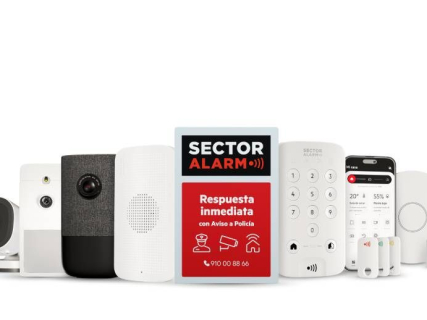
Protecting a home can also begin outside. Disuasive plaques form a first visible barrier that warns of the presence of a connected alarm system.
Sector Alarm has solutions that make it possible to detect and verify what happens before a possible access, such as the outdoor motion detector, with infrared sensors, and the outdoor HD surveillance camera, with night vision and real-time alerts.
At entry points, the detector of knocks, vibration, and opening makes it possible to detect impacts or opening attempts, while the motion sensor with camera obtains images in response to an alarm signal.
The portable voice unit allows you to communicate with the Alarm Receiving Center from different points in the home, while the smart lock makes access control easier. In addition, the Sector Alarm Mobile App allows you to manage the alarm and check the status of the home.
These devices integrate into the security system and are connected to Sector Alarm’s Alarm Receiving Center, which responds in less than 15 seconds* to signals of the highest priority.
"Protecting a home is not only about having the right technology, but also about having professionals available 24/7. At Sector Alarm, our team makes the difference due to its ability to manage any incident quickly and effectively, with an Alarm Receiving Center that responds in less than 15 seconds to signals of the highest priority" concludes Jenny Sofie Reneng.
Notes:
* Certamen Líderes en Servicio, category Security Systems, editions 2025 and 2026
* Average response time of CRA: less than 15" from when a signal of the highest priority is sent (SOS, robbery, coercion or intrusion). Source: Sector Alarm CRA data, 1st Semester 2026