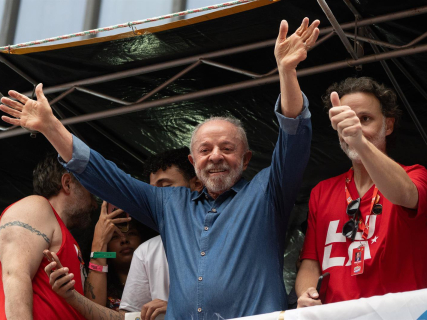

After Lula da Silva’s victory in Brazil’s presidential elections, the country has gone through a month marked by investors’ caution, who had already taken for granted a change in government. However, the progressive leader is trying to dispel market doubts through tighter control of public spending and the implementation of monetary policy measures.
According to a report prepared by "Economía XXI" and released by Europa Press, Brazil has experienced a sharp depreciation of the real, more than 18% against the US dollar. This setback has increased investors’ mistrust, both domestic and foreign, who had bet on continuity under Bolsonaro.
On November 18, the Senate gave the green light to a package of tax reform measures aimed at improving the balance of public accounts by up to 60,000 million reais (9.756 million euros) by 2027. However, the plan still has to clear its passage through the Chamber of Deputies before its final implementation.
With the aim of reactivating the inflow of foreign capital, Lula’s government proposes strengthening control over spending growth, including a cap of 2% per year on the real growth of public outlays when it is necessary to reach certain fiscal targets. According to "Bank of America," this framework of budgetary discipline could help bring back the capital flows that have left the Brazilian market.
The legislative proposal also includes cuts to certain tax incentives, restrictions on the use of some tax credits, and new tools to contain government spending, with the intention of underpinning the sustainability of public finances.
For its part, JPMorgan Chase has emphasized that Brazil accounts for around 20% of the world’s rare-earth reserves, an element of great geoeconomic importance for industries such as technology, electronics, electric vehicles, and projects linked to the energy transition.
This privileged position in critical raw materials could make it easier for the country to attract new industrial and technological investments from powers such as the United States or China, which have already sought to reinforce their presence in Brazilian territory to secure access to these resources.
Despite this, the level of interest rates continues to be a brake on investors, after the Central Bank of Brazil (BCB) decided on November 4 to keep the benchmark rate at 13.75%, bringing its monetary easing cycle to an end.
A cost of money so high can translate into a more expensive business financing, hold back the launch of new investment projects, make fixed-income products more attractive than the real economy, or increase the financing cost for the state itself.
REGAINING THE CAPITAL MARKET
After Lula’s victory over Bolsonaro, several companies have left the main index of the Brazilian Stock Exchange (B3). Since 2024, around 33 companies have exited the select group, representing a 9% reduction and contrasting with the performance of the rest of the markets in Ibero-America.
These exclusions are mainly due to the high level of interest rates, corporate acquisition operations, and depressed stock market valuations. In relation to this last factor, "Bloomberg" has pointed out that in September Brazilian shares traded at a 26% discount versus the average of Latin America.
The same outlet has indicated that equity investment funds recorded net outflows of more than 8,000 million dollars (7,295 million euros) between January and August 2026, which shows that Brazilian investors themselves have also been reducing their exposure to the stock market.