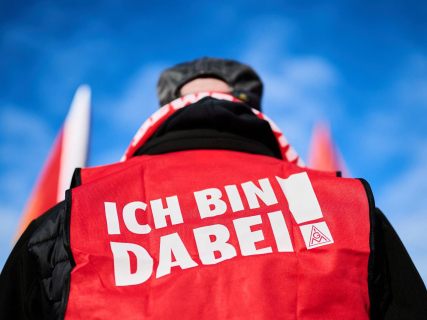

The German union IG Metall has decided to raise the stakes with the start of a series of 24-hour strikes in the metalworking and electronics industries. These new protests are added to the partial stoppages that workers have been carrying out for weeks in order to force an agreement that includes wage increases.
"Workers are outraged by the inadequate offer and the employers' lack of commitment to jobs and locations. Hundreds of thousands of fellow workers have made it clear in recent weeks: Employers must take on concrete commitments! If this fails, it will not be IG Metall's fault; our specific and binding proposals are on the table," IG Metall president Christiane Benner said.
The new strikes affect, among other companies, the automotive component supplier ZF in several of its plants, the Audi plant in Ingolstadt, and the BMW facilities in Munich-Milbertshofen. In the regions of North Rhine-Westphalia and the Center, the stoppages began in part already during the night shift, according to the German agency DPA.
IG Metall members have backed this new escalation of the conflict against what they consider a blockade by the companies at the bargaining table. The union is demanding a 5% wage increase, a profit-sharing system agreed in a collective agreement, and guarantees of job stability. The employers, for their part, reject these demands and are only proposing a revocable, one-off profit payment, and a wage increase of 1.3% that would not come into effect until the summer of 2028.
"It is clear that employers did not take the hourly warning strikes seriously. With this wave of warning strikes, employees, together with IG Metall, are exercising their rights, which are well protected, in a deliberate way. Obviously, employers are not going to grant greater job security or financial stability for free," IG Metall's collective bargaining director Nadine Boguslawski emphasized.
For the moment, no date has been agreed for the fourth round of talks and, until it takes place, IG Metall plans to continue with its pressure strategy through full-day strikes at several hundred workplaces spread across the entire country.