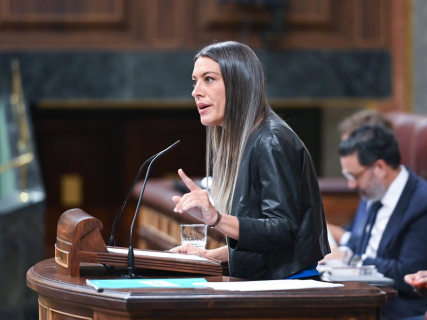

Junts per Catalunya has warned this Wednesday that it will not support, in the current terms, the decree law promoted by Sumar to extend rental contracts until 2028, considering that it is an "interventionist" initiative that "does not respect the competencies of Catalonia in housing matters."
The independentist formation maintains that the housing access crisis is "unsustainable" and that in the city of Barcelona rents rose again during the first quarter of the year, just like the average price of new contracts signed.
Despite this, Junts has warned the coalition government that it will not support the decree in the Congress of Deputies "if the measures that perpetuate occupations and do not protect either tenants or small property owners are maintained" or if the Executive does not incorporate the demands raised by the party.
According to the formation in a statement, "the interventionist policies of the Spanish government have not only failed to solve the problem, but have worsened it and have transferred it to municipalities where the problem was not as serious."
From Junts, they advocate for launching "concrete and balanced initiatives," including tax relief on rents for tenants and part of the mortgage payment for small holders, the recovery of savings accounts intended for home purchases, as well as incentivizing the construction of new developments and mobilizing the existing housing market.
In addition, they demand a substantial increase in public investment in housing, the unblocking of the law against occupation registered by Junts two years ago, and that the State assume the cost of social housing policies aimed at vulnerable people, instead of falling on small property owners.
The draft of the decree law has already been sent to parliamentary groups and the Executive's forecast is to approve it in the next meeting of the Council of Ministers.
Criticism from Podemos of the Sumar decree
Podemos has also positioned itself against the decree law promoted by Sumar, understanding that the reform of the Land Law represents a "red line" by altering the system of resources against urban planning instruments and the regime of cancellation of the registration of reversion rights over expropriated land.
The 'purple' party believes that these changes would allow for the retroactive legalization of illegal urban projects and reduce controls over future developments. In their view, they would also restrict the capacity of civil society to report possible urban irregularities.