
The 'prime' residential market prices in Spain will rise by around 4% in 2027, in a context of "greater stabilization" after a "greater balance" between supply and demand and a change in buyers' behavior, according to forecasts from Dils Lucas Fox.
The luxury real estate specialist says that the Spanish market faces the next fiscal year from a position of "solidity," although with a more contained pace of activity and with a different evolution depending on the segments, according to its new "Market Report 2027," related to the first half of 2026 and presented this Wednesday.
In particular, the firm anticipates that the total volume of home sales will stabilize between 650,000 and 700,000 transactions, levels that are "far above" historical records, and that market prices overall will continue to rise, but with a "more moderate" increase, between 5.7% and 7.4%. This behavior reflects a "persistent shortage" of supply, especially in the segment aimed at the average buyer.
"The increase in financing costs will probably moderate demand in the coming months, but the underlying mismatch between supply and demand will continue to favor price growth. In the high-end segment, where supply and demand are more balanced, it is more likely that prices will stabilize, with pinpoint adjustments in some areas," the firm analyzes.
Along these lines, it highlights that the Spanish market continues to stand out for the "large increase" in the price of housing compared with seven other European markets. Over the last five years, the value of properties in Spain has risen by 41% (only behind Portugal, with 60%), and prices rebounded by 12.1% in the second quarter of 2026 (compared with 16.5% in Portugal), according to Eurostat data.
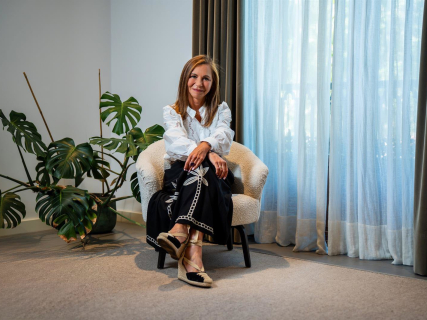
Looking ahead to 2027, "we expect the number of transactions to stabilize at levels clearly above the historical average and that prices continue to rise, although at a more moderate pace and in a more selective manner. International demand will continue to be one of the great drivers of the market, alongside growing institutional investment, especially in the 'living' sector and in the new formats of 'coliving', 'flexliving' or 'longevity living'," the CEO of Dils Lucas Fox, Paloma Pérez Bravo, has said.
"'Off-market' operations, cross-border capital flows and artificial intelligence will continue to transform the way real estate is acquired, valued and sold," he added.
International demand and concentration of luxury supply
On the other hand, the company estimates that international demand will account for between 16% and 18% of total transactions in 2027, with a greater role for buyers coming from the United States and the Middle East.
It also highlights that Málaga and Mallorca group together more than half of the national supply of luxury homes, with 27.8% and 25.3% of listings for properties worth more than 2.5 million euros, respectively. Madrid gains ground and already concentrates 13.2% of the supply — the largest increase in the high-end segment, close to 15% — placing it ahead of Barcelona, with 7%.
As for the most demanded type of housing, 53.9% of the transactions corresponded to apartments; 32.1% to houses and villas; 7.1% to penthouses; 4.6% to rural properties; and 1% to land, according to the company's data. By location, urban areas accounted for 39.2% of purchases and the coast for 33.1%, followed by peri-urban areas (10.3%), the islands (7.8%), the mountains (5.2%) and the rural environment (4.4%).
With regard to the destination of the acquisitions, 42% of buyers acquired the home as their primary residence, 38% as a second holiday residence, 12% as an investment and 8% for other uses.