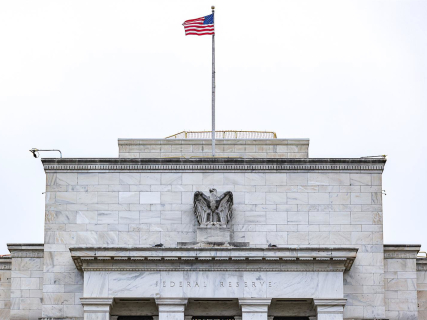

The president of the Federal Reserve Bank of New York, the head of the regional banks in the Fed system, John Williams, has emphasized that the latest data once again show the strength of the U.S. economy and labor market, and the obligation to keep acting to bring inflation to 2%, although, in his view, it is still not the moment to resort to drastic measures.
"The data indicate a fairly clear signal that the economy remains resilient and is strengthening; the labor market remains solid and is in a good position, but inflation, unfortunately, is not moving in the right direction," he said during a conference in New York.
Along these lines, the head of the New York Fed has pointed out that the most recent inflation figures reflect that not only is it still elevated, but it could be widening, with signs that it is no longer limited to energy or tariffs, "but also of services, housing, everything."
For this reason, Williams estimates that there is still a way to go to ensure that the inflation rate returns to the 2% target in a timely and lasting manner.
"I don’t think the situation requires drastic measures," the president of the New York Fed said, distancing himself from other voices on the Federal Open Market Committee that had left open the possibility of an increase in interest rates in December of up to half a percentage point.
In addition, he stressed that any eventual action by the U.S. central bank will depend on the evolution of the data, noting that the institution will meet again in January and at the subsequent scheduled meetings.
Last week, Christopher Waller, a member of the Board of Governors of the United States Federal Reserve (Fed), expressed support for raising the benchmark rate at the central bank’s December meeting and even considered an increase of up to 50 basis points in the price of money if inflation remains at current levels.
On October 28, the Federal Open Market Committee (FOMC, for its English-language acronym) of the United States Federal Reserve (Fed) decided to keep interest rates unchanged, preserving the target range between 3.75% and 4%, after the increase agreed upon at the previous meeting.