


At music festivals, attendees currently access drinks through token systems that remain stored on their wristbands for the entire duration of the concerts. A similar model is what the European Parliament intends to approve this Tuesday for the proposal of the digital euro. Lawmakers will unblock an initiative that had been frozen in the institution for years and which aims to develop a community digital payment system in the coming years with a dual objective: reducing dependencies on foreign providers and platforms and strengthening the stability and autonomy of the European financial system.
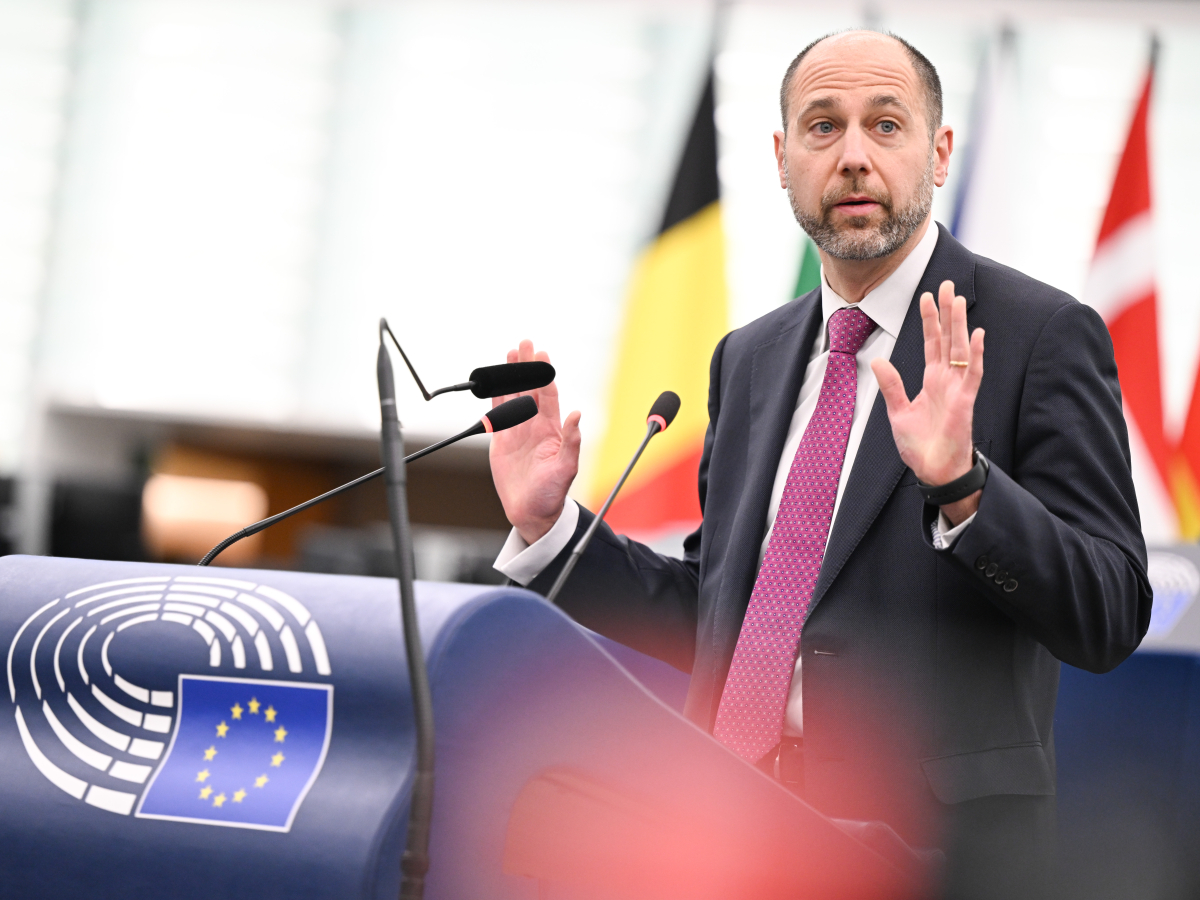
The proposal, led by the Spanish Popular Party MEP Fernando Navarrete, is not limited solely to the creation of a digital currency. The text proposes an action based on three fundamental pillars: safeguarding access to cash, introducing the digital euro, and regulating its cross-border provision within and outside the European Union. Furthermore, the legislative package distinguishes two modalities of use of this mechanism for citizens and companies, each with specific characteristics regarding privacy, operation, and supervision.
A digital version of cash
On the one hand, the offline system is conceived as a "tokenized" version of traditional cash. It will function through direct payments between devices, such as mobile phones or other enabled electronic media, even without an internet connection.
Navarrete assured this very week, during an informal meeting with journalists in Brussels, that the model will guarantee the highest levels of privacy and resilience, allowing transactions to be made even during crises, digital blackouts, or network failures. The logic behind this design is similar to that of physical cash: the monetary value resides directly on the user's device.
Featured story
How Trump's decision on Anthropic drives a digital revolution "Made in Europe"
6 minutes
Consequently, if the citizen loses said device, they will also lose the money stored on it, in the same way that happens when a wallet with banknotes is lost. Precisely because of this, lawmakers consider this modality to be the one that most closely approximates the traditional concept of cash.
On the other hand, the online model consists of an account-based system that requires a settlement infrastructure managed by the European Central Bank (ECB). Its implementation, according to the drafts of the parliamentary report, will be conditional. That is, it will only be fully deployed if there is no sovereign pan-European private solution capable of adequately covering the needs of the retail payment market.
This conditionality responds to a recurring concern in Brussels: to avoid the fragmentation of the European market and to ensure that public intervention does not end up discouraging private innovation or displacing solutions developed by the financial sector.
Legal tender throughout the eurozone
One of the most sensitive aspects of the negotiations in the European Parliament has been the consideration of the digital euro as a means of payment of legal tender. In practical terms, this implies that its acceptance for the payment of debts and economic obligations will be mandatory uniformly throughout the euro area, once the legislative process is completed and the corresponding infrastructure is in place.
However, both the European Parliament and the ECB have insisted that the digital euro will not replace physical banknotes and coins. Both forms of money will be considered equally important and will coexist within the European monetary ecosystem.
In fact, the proposal includes specific measures to preserve universal access to cash. Among these, the possibility of designating public entities, such as post offices or equivalent bodies, to distribute digital euros and provide basic services to people with limited digital skills, elderly citizens, or vulnerable groups with difficulties accessing advanced financial services stands out.
Limits to prevent massive deposit outflows
During the drafting of the text, lawmakers have also kept in mind one of the main risks identified by the banking sector: that citizens will massively withdraw their deposits from commercial banks to transfer them to the central bank through the digital euro.
To avoid this phenomenon, technically known as bank disintermediation, strict controls on the holding of digital euros will be introduced.
Among other measures, quantitative limits will be established on the amount of digital euros that a natural person can hold. These limits will be accompanied by a so-called cascade mechanism.
In this way, digital euro accounts may be linked to traditional bank accounts. If a received payment causes the user to exceed the maximum authorized holding limit, the excess will be automatically converted into conventional bank money and transferred to the linked account.
In addition, lawmakers stipulate that the digital euro will not bear interest, a decision aimed at ensuring that it is used primarily as a means of payment and not as an investment or savings instrument.
Even so, the system will allow payments to be made even when the available balance in digital euros is insufficient. In such cases, funds will be automatically mobilized from the associated bank account to complete the transaction, offering a seamless payment experience for the user.
Privacy as a central element
Privacy is another of the essential characteristics of the future European digital currency. In Brussels, there is a consensus that this aspect is not optional, but an indispensable condition for generating trust among citizens.
The offline model aims to offer a level of privacy comparable to withdrawing cash from an ATM. According to the text, neither the ECB nor the national central banks will be able to directly identify users or link their personal data to specific transactions.
Anti-money laundering and counter-terrorism financing controls will be applied at the user level, but not through individualized tracking of each digital monetary unit.
And how will it work in practice? Through a system of aliases and pseudonymization that will hide the user's identity during ordinary operations. Only in cases where there are well-founded indications of fraud or illicit activity, and upon request from the competent authorities, could this anonymity be lifted to facilitate investigations.
This balance between privacy and oversight is considered by negotiators to be one of the most delicate elements of the entire regulatory architecture of the digital euro.
Distribution through banks and payment providers
The new currency will be distributed through payment service providers, mainly banking entities, with which users will maintain the corresponding contractual relationship.
Basic services for individuals will be free of charge. Likewise, no merchant shall bear additional commissions for accepting digital euro payments compared to those they already pay for other comparable electronic payment methods.
With the aim of guaranteeing the technical interoperability of the system, manufacturers of mobile devices and electronic communications providers must allow access to technologies such as NFC (Near Field Communication) and to the so-called "secure elements" present in the devices.
This obligation aims to avoid situations of technological dependence on certain manufacturers or digital ecosystems and to ensure that the digital euro can be used universally in the European market.
International projection and single market
The legislative package also incorporates a specific regulation for the distribution of the digital euro in those Member States that do not yet belong to the euro area and in third countries.
The proposal contemplates cross-border interoperability mechanisms based on respect for the monetary sovereignty of other jurisdictions and on the progressive integration of the European single market for payments.
Negotiators consider that this international dimension will be key to reinforcing the role of the euro in the global economy and reducing European dependence on payment infrastructures controlled by non-EU actors.
Next legislative steps
The text, which is expected to be ratified this Tuesday in a parliamentary committee, would thus receive the necessary political endorsement to continue its processing during the plenary session scheduled for July.
Once this phase is completed, interinstitutional negotiations will open between the European Parliament, the Council of the European Union, and the European Commission with the aim of reaching a political agreement before the end of the year, according to various EU sources.
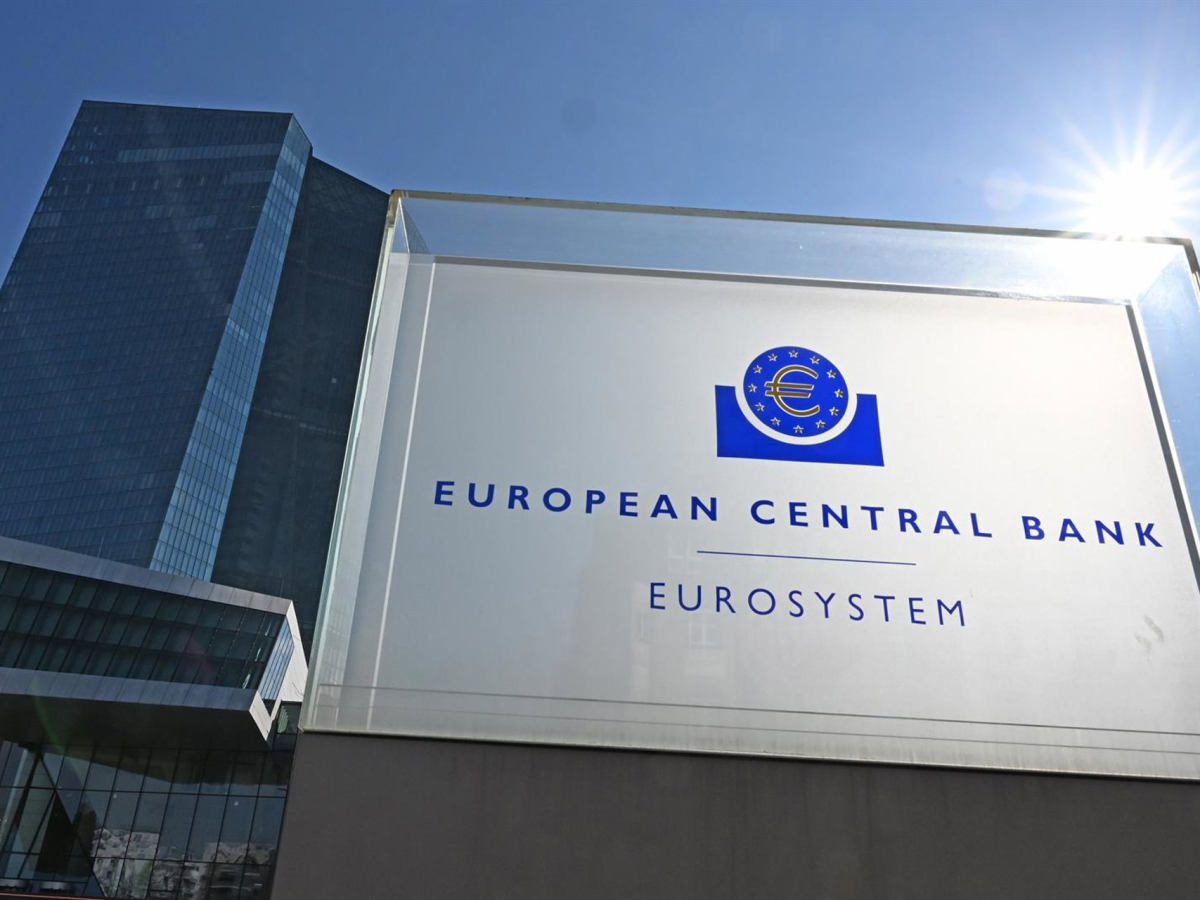
With the proposal driven by the European Parliament, Frankfurt would also act as the dispute resolution body between payment service providers to ensure consistent application of the future regulatory framework for digital cash throughout the Union.
Before any definitive issuance, tests will be carried out in controlled environments with real end-users to verify the correct functioning of the system, evaluate its security levels, and measure the user experience by citizens and businesses.
Finally, regarding the interchange and discount fees paid by merchants, the text provides for a transitional period of at least ten years before applying maximum limits strictly based on costs. The objective is to provide regulatory certainty to market operators and facilitate a gradual adoption of the new payment infrastructure.
If the timeline foreseen by the community institutions is maintained, the digital euro will take one of the most important political steps this summer since it began to be debated years ago in Brussels, bringing the European Union closer to the creation of what could become the largest public digital currency in the democratic world.