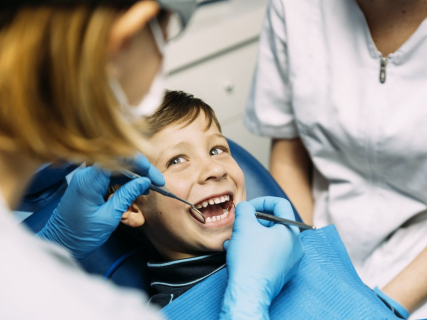

Coinciding with the celebration of Universal Children’s Day, which will take place on 20 November, the General Council of Dentists emphasizes the relevance of caring for oral health from the first months of life and, for this reason, advises that the first dental check-up be carried out during the first year.
The professional body warns that conditions such as cavities, gingivitis and bite disorders (occlusion) are still very common among children in Spain. This is reflected in data from the White Book Oral Health in Spain: Analysis of a Quarter Century: 16% of children between 3 and 4 years of age have cavities, and in the 5 to 6 years age group, the percentage of children with at least one decayed or filled temporary tooth rises to 31%, which amounts to around 242,000 children.
Against this backdrop, a particularly alarming fact is added: only two out of every 10 deciduous teeth affected by cavities are treated. The Collegiate Organization reminds that temporary teeth are key for chewing, articulating speech correctly, and preserving the space necessary for the proper eruption of permanent teeth. For this reason, it insists that any lesion in the temporary dentition must be evaluated and treated by a dentist when appropriate.
Among the main preventive measures against oral diseases, daily brushing with fluoride toothpaste stands out. However, they warn that "the figures reflect that this habit has not yet been sufficiently established among the child population." According to the White Book, only half of children brush their teeth at least twice a day. In addition, 60% of those who brush regularly spend less than two minutes, and between 40% and 60% of children aged 6 to 8 do so without the supervision of an adult.
"These circumstances highlight the importance of families’ involvement in the care of children’s oral health. Parents and caregivers must help children during brushing and supervise its correct performance, especially until the age of 8," explain from the Council.
On this line, the Consejo General de Dentistas advises brushing your teeth, at least, twice a day, using a fluoride toothpaste with 1,000 ppm of fluoride in children under 6 years old and 1,450 ppm from that age onward, adjusting the amount to each stage: a grain of rice up to 3 years old; the size of a pea between 3 and 6 years old; and a portion similar to a chickpea from then on.
In addition to cavities, gum disorders also carry a considerable weight in childhood. Available data indicate that 48% of minors show signs of gingivitis or tartar buildup, which reinforces the advisability of improving hygiene routines and attending regular checkups with the professional.
Beyond cavities and gum diseases, the development of the jaws and the alignment of the teeth are other factors that must be monitored during childhood. The Libro Blanco states that 22% of minors have moderate or severe malocclusion and that another 15% is in treatment to correct bite problems.
These alterations can, depending on their type and severity, compromise functions such as chewing and make effective oral hygiene difficult. For this reason, they add, “it is essential that the dentist supervise the development of the dentition and assess the need to carry out specific follow-up or to indicate orthodontic treatment”.
Likewise, they consider it important to monitor certain habits, such as prolonged thumb sucking, tongue interposition, or persistent mouth breathing, which may be associated with dentomaxillary developmental disorders and require an individualized assessment by the professional.
In any case, not all malocclusions require immediate intervention. It is the dentist’s job to determine the ideal time to start treatment, based on the characteristics of the alteration and the specific needs of each child patient.