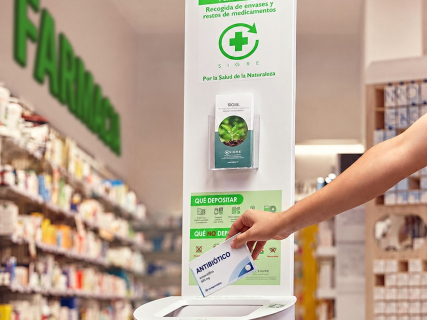

SIGRE has warned that keeping antibiotics for later reuse or disposing of them in the trash or down the drain can contribute to the emergence of bacteria resistant to these drugs. For this reason, it stresses that a medicine that is left over after completing a treatment "should not be kept in the medicine cabinet just in case" or disposed of improperly.
The entity emphasizes that "keeping leftover antibiotics to use them if similar symptoms appear again is a practice that can put everyone’s health at risk" and reminds that "not all infections require antibiotics, and not all of these medications serve to treat the same infections." "In addition, they are ineffective against viruses such as those that cause flu or colds," it has explained.
Coinciding with the European Day for the Prudent Use of Antibiotics, which is observed this Wednesday, 18 November, SIGRE points out that self-medication "can delay diagnosis and the appropriate treatment, lead to dosing errors, and favor the selection of resistant bacteria." For this reason, it stresses that it is essential to take these medicines "exclusively on a doctor’s prescription, following the doses, schedules, and duration of the treatment indicated, without sharing the leftovers with other people."
At the same time, since April, the Spanish Agency for Medicines and Health Products (AEMPS) has been adjusting certain antibiotic formats to current clinical recommendations, progressively withdrawing some large-size packages and replacing them with new presentations aligned with the usual length of treatments.
Environmental impact and bacterial resistance
SIGRE’s general director, Miguel Vega, has reiterated that "the proper management of leftover antibiotics is also important from an environmental point of view," and has specified that "when these waste products are thrown in the trash or down the drain, their active ingredients can reach soils and waters and, under certain conditions, favor the selection and spread of resistant bacteria." Preventing these compounds from reaching the environment in an uncontrolled manner "is another way to help prevent this problem," he added.
On this line, the organization cites a study published in 2025 in the specialized journal 'The Lancet Regional Health - Europe', which estimated that more than 173,000 infections by multidrug-resistant bacteria were recorded in 2023 in hospitalized patients and nearly 24,600 deaths occurred among those affected during the 30 days following diagnosis.
SIGRE recalls the interrelationship between human health, animal health care, and the balance of ecosystems, the basis of the 'One Health' (One Health) approach. "Resistant bacteria can circulate among people, animals and the environment, so decisions about how we use and dispose of antibiotics go beyond the individual sphere".
In this context, it points out that the 'National Plan against Antimicrobial Resistance (PRAN) 2025-2027', an interministerial strategy coordinated by the AEMPS, specifically includes the role of the 'SIGRE Points' and provides for measures to encourage the deposit of leftover antibiotics in these containers.
Lastly, after highlighting that three out of every four Spanish households already use the 'SIGRE Point' at pharmacies and that during 2025 around 5,400 tonnes of empty containers or containers with remnants of medicines were collected, 5.16 percent more than in the previous year, the entity advises reviewing the home first-aid kit at least every six months, not keeping expired medicines or remnants of treatments that have already ended, and always taking them, along with their packaging, to the 'SIGRE Point' of the pharmacy.