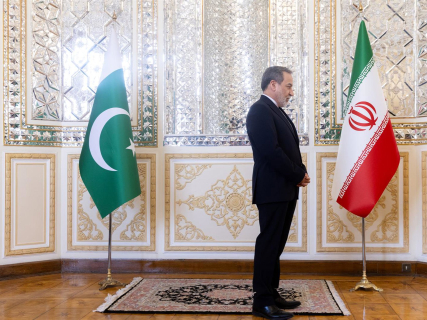

The Iranian Foreign Minister, Abbas Araqchi, assured this Friday that the preliminary understanding reached with the United States foresees the end of hostilities on "all fronts, including Lebanon," a scenario in which more than 3,700 people have already died due to the Israeli Army's offensive since last March 2. His words come after Israeli Defense Minister Israel Katz reiterated that Israeli forces "will not withdraw from the security zones in Lebanon, Syria, and the Gaza Strip."
"The Islamabad memorandum of understanding declares the end of the war on all fronts, including Lebanon. We have never forgotten Lebanon in this war, because Lebanon and (the Shiite party-militia) Hezbollah fought alongside the Iranian people, and we will never abandon them," he stated in an interview with the state television channel IRIB.
The highest official of Iranian diplomacy stressed that "the declared ceasefire" also covers Beirut and added that "under this agreement," the parties will assume "the commitment not to start a new war or use threats or force."
Hours earlier, Araqchi had published on his social media that the agreement in principle "has never been so close" and requested that, while the final details are being ironed out, the media avoid spreading "speculation about its content." He also insisted that Tehran will share "all details in due course."
The minister's statements come after the Iranian agency Mehr released Tehran's version of the 14 points that currently make up the draft document, conceived as an initial framework for moving towards a definitive pact.
According to this outline, Iran conditions any commitment on the release of its frozen assets, guarantees that Israel will not attack Lebanon, and the postponement of any negotiations on its nuclear program, as well as on the status of the Strait of Hormuz, among other elements, until 60 days after the signing.
This same Friday, the Israeli Defense Minister responded to these moves by stating on his official accounts that Israeli forces "will not withdraw from the security zones in Lebanon, Syria, and the Gaza Strip."
"The Israeli army will continue defending our borders and our citizens from the summit of Mount Hermon (occupied Golan Heights), the mountains of Lebanon, our regions in Samaria (West Bank) and most of the territory of Gaza against the threats of jihadist forces and organizations, after the lessons learned from the October 7 attacks," it indicated.
For his part, US President Donald Trump said on Thursday that he had decided to suspend supposed planned attacks against Iran, arguing that, after holding "highest-level conversations" with Iranian officials, all parties have given the green light to the "final points" of the agreement aimed at ending the war initiated by Israel and the United States' offensive against Iran more than three months ago.