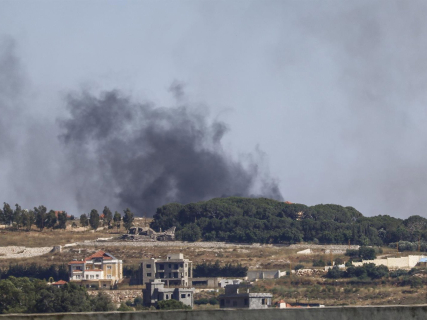


At least 47 people have lost their lives and 97 have been injured in a new series of airstrikes carried out by the Israeli Army against various towns in southern Lebanon, despite the memorandum of understanding signed between the United States and Iran to try to end the war in the Middle East.
The Lebanese Ministry of Health has detailed that, from last midnight until Friday afternoon, 47 deaths and 97 injuries have been counted. Among them are nine dead and 14 injured in a bombing of the town of Haruf.
The official, still provisional, toll also includes seven dead in Habush and six in Sharquié, as well as two fatalities in Qatrani and Jebchit and another in Abasiyé, according to the state news agency NNA. The count also incorporates four dead in Deir al Zahrani and three in Arab Salim, in addition to other towns in the south of the country.
For its part, the Israeli Army has admitted attacks against "Hezbollah terrorists and terrorist infrastructure in multiple areas of southern Lebanon" and has assured that the bombings "were launched after repeated violations of the ceasefire by Hezbollah."
At the same time, at least four Israeli soldiers, including a tank battalion commander, have died in an action attributed to the Shiite party-militia in southern Israel. The Army has identified the deceased officer as Dor Gedalia Ben Simhon and has added that "three other soldiers fell in combat" in the same attack, without disclosing their names for now.
Israeli Prime Minister Benjamin Netanyahu stated on Thursday that his country's forces will remain deployed in areas of southern Lebanon for "as long as necessary," after the military command made public a new map of its presence on the ground and ruled out any immediate withdrawal.
In parallel, the governments of Israel and Lebanon are holding talks on a possible agreement that would include the withdrawal of these troops. Both capitals demand the disarmament of Hezbollah, which resists doing so as long as the Israeli invasion continues, while Iran conditions the process on Israel's withdrawal and the cessation of its military operations, in line with the memorandum of understanding agreed with Washington.
In this context, the President of the United States, Donald Trump, expressed his support for a "total ceasefire" on "all fronts, including in Lebanon," after the Israeli government distanced itself from the agreement and reiterated that it does not consider itself bound by it.
That same Thursday, US Vice President JD Vance warned that Israel cannot guarantee its security "through violence" and argued that some sectors of the country opposed to the preliminary agreement with Iran have "panicked."
"My message to them would be twofold. The first is that Donald Trump is the only head of state in the world who currently has sympathies for the nation of Israel," he said. "If I were in the Israeli government's cabinet, I would not attack the only powerful ally I have left in the world," he concluded.
The growing tensions over Israeli operations in Lebanese territory, coupled with Tehran's warnings that these attacks violate the preliminary agreement with Washington and could derail the peace process, have had a new consequence this Friday: the cancellation of the meeting planned in Switzerland between representatives of both sides.