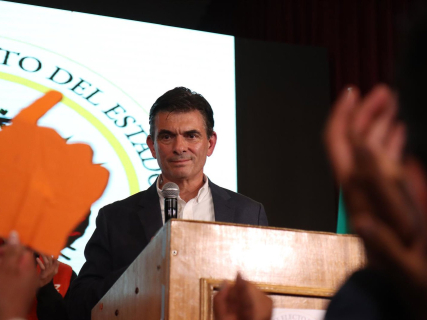

The president of Bolivia, Rodrigo Paz, announced this Sunday that in the last 24 hours more than 20 blockade points have been removed in various areas of the country, placing traffic disruptions at their lowest level since the start of the protests, an advance he attributes to recent dialogue spaces.
"In the last 24 hours, more than 20 blockade points were lifted in different areas of the country, thanks to the will to dialogue and find common paths towards the new order, leaving confrontation and conspiracy behind," the president stated in a message published on his social media.
The head of state also detailed that, over the past week, more than 34 million liters of fuel have entered the cities of La Paz and El Alto, a volume he described as "an encouraging sign that is helping to alleviate the supply" affected by the road paralysis.
"Our priority is to continue eliminating queues and restore tranquility to thousands of families," Paz emphasized.
Road blockades decrease after 44 days of conflict
A report from the Bolivian Road Administration (ABC), disseminated by the Bolivian News Agency (ABI), currently counts 68 active blockade points throughout the country, the lowest figure since the crisis began 44 days ago.
The document recalls that on Friday morning, 86 areas with traffic restrictions on various national roads were counted, indicating a significant decrease in the number of blockades.
According to the ABC, the department of Cochabamba continues to have the most blockades, ahead of La Paz, Potosí, Oruro, and Santa Cruz, although in different regions road sections have been gradually reopened in recent hours.
In parallel, authorities have announced that between May 12 and June 12, the Police seized more than 7 million bolivianos (about 875,000 euros) in seven operations. According to their investigations, these funds were directed to the leaders coordinating the marches and blockades.
During the interventions, messages on mobile phones and notes in notebooks with lists of participants and "authorizations" to travel on blocked routes were also found, issued by the Six Federations of the Tropic of Cochabamba, politically linked to former president Evo Morales.
The Government Manages to Get Oxygen to Hospitals in La Paz and El Alto
The escalation of tension and access difficulties have left numerous health centers with supply problems of basic inputs to maintain their activity.
Last Friday, the Ministry of Health of Bolivia reported that it had managed to transport around six tons of liquid medical oxygen to hospitals in La Paz and El Alto, despite the road blockades.
The Health Department assured that it will continue to monitor the situation to guarantee the "availability of strategic inputs, medicines, and critical resources" with the aim of "protecting the care of the population and ensuring the uninterrupted functioning of health services."
All of this takes place in the context of the indefinite strike promoted by the Bolivian Workers' Central (COB), the country's main union, and the road blockades led in part by peasant and rural organizations.
Initially, the protesters demanded improvements in their living and working conditions, in a country hit by a deep social and economic crisis in recent years. However, as the days have passed, they have hardened their stance and now include among their demands the resignation of President Paz.