

Iranian authorities have dismissed this Thursday holding in Switzerland the formal event that had been planned for the signing of the memorandum of understanding reached with the United States to end the conflict in the Middle East, although they do confirm a meeting between the negotiating teams in Geneva, on Swiss territory, to address the practical implementation of the pact.
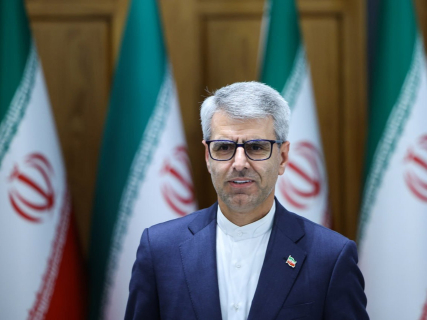
The spokesman for the Ministry of Foreign Affairs, Esmaeil Baqaei, has stressed in a statement that this step is only "the beginning" of the path to peace and has emphasized that, once the text has been digitally signed by the parties, "violating it would be more costly."
"At this time, the plan for the negotiating teams to meet in Geneva is still on, but the signing of the memorandum will be digital and there will be no ceremony as such in Switzerland," he specified, after Pakistan, the mediating country in the process, confirmed that the document has been officially signed by all parties involved, including Islamabad, and that, consequently, it will enter into force "immediately."
Baqaei, who has remarked that "only Iran and Oman are considered coastal states of the Strait of Hormuz," has also considered the signing process concluded and has highlighted that "nothing has been left out this time." "For us, the ceasefire and the end of the war in Lebanon were equally important issues, so in the first paragraph of the memorandum of understanding there are three mentions of Lebanon," he pointed out.
"Our work is now more difficult than before, because implementing international agreements is always much more difficult than making them derail, especially when we talk about parties that do not adhere to their commitments. The diplomatic apparatus, supported by the support of the people and trust in God, serves the welfare of our country," he added, emphasizing the complexity of the phase that is opening.
In this regard, he has detailed that the central objective of the text is to stop the war and "not to negotiate on the nuclear issue at this stage." "We must negotiate this and the lifting of sanctions in the 60 days following the date of implementation of the memorandum, which is now. It would be better if the negotiations concluded as soon as possible, but given the complexity of the matter, the 60-day period is reasonable and, if necessary, could be extended," he explained.
Management of the Strait of Hormuz and compensation
The spokesperson has confirmed that Tehran "will receive compensation for services rendered in the Strait of Hormuz", as the Islamic Republic had already been anticipating, and has indicated that this scheme and the agreements for the administration of the strategic passage "are already being developed". "We have initiated consultations with Oman and are also talking with other countries," he indicated.
"The management mechanisms are practically finalized with Oman and the security of maritime traffic will be guaranteed while maintaining the sovereignty of the Islamic Republic of Iran over the Strait of Hormuz. Iran and Oman are the only two riparian states of the Strait of Hormuz," he insisted.
Therefore, he stressed that "no opportunity will be missed to document, investigate and clarify the crimes committed against the Iranian nation. We monitor compliance with the other party's obligations without concessions. We will only fulfill our commitments if the other party fulfills theirs," he warned.
Nuclear material and dual language of the memorandum
Baqaei reiterated Tehran's position on atomic matters: "From the beginning, we have stated that enriched nuclear material will not be transferred out of Iran. Diluting enriched materials is not a new option. It has now been introduced as an option to block other alternatives, but transferring enriched nuclear material abroad is an unacceptable option for us," he pointed out.
Likewise, he pointed out that the memorandum of understanding has been signed in two languages: "This represents maximum transparency in the information we provide." "If the text were only in English, we could end up with inaccurate translations," he lamented, before demanding that the embargo on Iranian crude oil be definitively lifted.
"Iran must be able to sell its oil, have no problems with transportation or insurance, and also receive the proceeds from sales. The lifting of the Iranian oil embargo begins today and will continue during the negotiations," indicated Baqaei, who specified that, along with this, "simultaneously, the release of Iran's frozen assets, the reconstruction of damages, and the lifting of sanctions" have been addressed.
"We must be able to use our frozen assets whenever we want and use them for any purchase. Exhaustive negotiations have been held on this issue over the last two or three weeks. The United States is committed to removing all obstacles. We have negative experiences with the United States' failure to keep its promises in recent years regarding the release of goods belonging to the Iranian nation," he warned.
Warnings to Israel and regional scope of the pact
Regarding the situation in the region, Baqaei warned that "if the Zionist regime's attacks against Lebanon continue, they will constitute a violation of the other party's obligations in the memorandum of understanding." "We do not separate the United States from the Zionist regime, but their differences in methods and approaches are clearly evident," he stressed.
"The Zionist regime does not want to give the slightest opportunity to any diplomatic process. However, it is the responsibility of the United States to compel the Zionist regime to respect the commitments made to Iran in this document," he added, before emphasizing that "Iran defeated two nuclear powers that had the support of other countries," which, in his opinion, makes the country a "superpower."
Pakistan announced on Sunday that an agreement had been reached between the United States and Iran for a cessation of hostilities in the Middle East and the reopening of the Strait of Hormuz. However, the full content of the pact has not yet been made public, and the parties have different versions regarding the economic obligations arising from it and whether, ultimately, maritime traffic in the Strait of Hormuz will be under a coordinated management mechanism between Iran and Oman.