
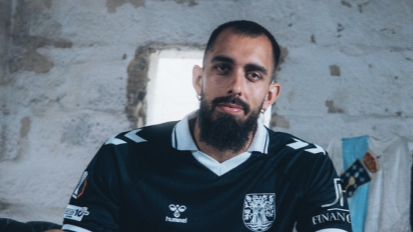
Borja Iglesias has been chosen as one of the men of the year 2026 by the magazine GQ Spain, which recognizes his sporting career and his commitment to different social causes. The Celta forward, known as the Panda, receives the distinction after being crowned world champion with the Spanish national team and while preparing a documentary about the team’s experience during the tournament.
The publication highlights his defense of empathy, freedom, and commitment beyond the playing field. In an interview granted on the occasion of the recognition, Iglesias has gone over his career and has said he feels satisfied with what he has achieved: "I don’t need more."
Why GQ has awarded Borja Iglesias
The magazine believes that the footballer has shown that professional sport also makes it possible to defend social values and participate in public debates.
Over the past few years, Iglesias has expressed his positions on issues such as discrimination and equality, even when his statements have generated controversy.
One of his most well-known decisions took place in August 2023, when he announced that he would not return to the Spanish national team while Luis Rubiales continued to serve as president of the Royal Spanish Football Federation.
What Borja Iglesias has said about his career
Recalling his career, the forward has recognized that he never imagined reaching that far professionally.
"Damn, what a career I’m having," he explained in the interview, evoking a reflection he had while heading to a training session.
He has also admitted that some of his public appearances have brought him personal consequences, although he says he does not regret having defended his convictions.
Borja Iglesias’ documentary about the World Cup
The forward has prepared an audiovisual project that captures the experience of the Spanish national team during the 2026 World Cup.
To do it, he traveled accompanied by two friends who documented different moments of the team’s camp and the competition.
The production aims to show lesser-known aspects of the tournament, especially the doubts, fears, and togetherness within the group that ended up winning the title.
The role of mental health in football
In the interview, Iglesias has also reaffirmed the importance of having psychology professionals within clubs.
The forward has highlighted Laura Centoira’s work at Celta and her contribution to the management of the personal and collective situations that arise during a season.
GQ’s recognition adds to a career that includes her time at Zaragoza, Espanyol, Betis and Celta, in addition to her recent international success with Spain.