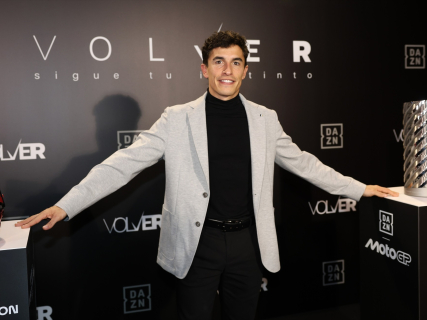
Marc Márquez announces his retirement from MotoGP at 33 years old and after winning ten world titles

Cervera’s pilot ends his career with ten world titles, eight of them in MotoGP. After overcoming years of injuries and reclaiming the crown with Ducati, he says goodbye to competition at the Gran Premio de Valencia

EuropaPress 7143441 marc marquez preestreno volver diciembre 2025 madrid espana nuevo

EuropaPress 7143441 marc marquez preestreno volver diciembre 2025 madrid espana nuevo

Add DEMÓCRATA to Google

Ask FREN

Published

Last updated

3 minutes

Most read

Hasta el día de las elecciones (29 de noviembre) se muestran los resultados de las elecciones generales anteriores, las del 23 de julio de 2023.

Resultados de las elecciones generales del 29N en directo

Elecciones generales del 23 de julio de 2023 · Congreso de los DiputadosSenado

Escrutado: 100,00 %Votantes: 24.952.447Participación: 66,59 %

Votos

PartidoEscañosVotosPorcentaje
PP1378.160.83733,06 %
PP: 137 escaños. Se presenta con estos nombres:
  • PARTIDO POPULAR (PP)131 escaños
  • PARTIDO POPULAR / PARTIT POPULAR (PP)5 escaños
  • PARTIT POPULAR / PARTIDO POPULAR (PP)1 escaño
PSOE1217.821.71831,68 %
PSOE: 121 escaños. Se presenta con estos nombres:
  • PARTIDO SOCIALISTA OBRERO ESPAÑOL (PSOE)85 escaños
  • PARTIT DELS SOCIALISTES DE CATALUNYA (PSC-PSOE)19 escaños
  • PARTIDO DOS SOCIALISTAS DE GALICIA-PSOE (PSdeG-PSOE)7 escaños
  • PARTIDO SOCIALISTA DE EUSKADI-EUSKADIKO EZKERRA (PSOE)5 escaños
  • PARTIDO SOCIALISTA DE ISLAS BALEARES-PSOE (PSIB-PSOE)3 escaños
  • PARTIDO SOCIALISTA DE NAVARRA-PSOE (PSN-PSOE)2 escaños
Vox333.057.00012,38 %
Sumar313.044.99612,33 %
Sumar: 31 escaños. Se presenta con estos nombres:
  • SUMAR10 escaños
  • SUMAR - EN COMÚ PODEM (SUMAR - ECP)7 escaños
  • SUMAR ANDALUCÍA (SUMAR)5 escaños
  • COMPROMÍS - SUMAR: SUMEM PER GUANYAR (SUMAR - COMPROMÍS)4 escaños
  • SUMAR GALICIA (SUMAR)2 escaños
  • SUMAR CANARIAS (SUMAR)1 escaño
  • SUMAR ARAGÓN1 escaño
  • SUMAR MÉS (MÉS PER MALLORCA-MÉS PER MENORCA-SUMAR)1 escaño
ERC7466.0201,89 %
Junts7395.4291,60 %
EH Bildu6335.1291,36 %
EAJ-PNV5277.2891,12 %
BNG1153.9950,62 %
CCa1116.3630,47 %
UPN152.1880,21 %
PACMA0169.2370,69 %
PACMA: 0 escaños. Se presenta con estos nombres:
  • PARTIDO ANIMALISTA CON EL MEDIO AMBIENTE (PACMA)0 escaños
  • PARTIT ANIMALISTA AMB EL MEDI AMBIENT (PACMA)0 escaños
CUP-PR099.6440,40 %
FO046.2740,19 %
NC-bc045.5950,18 %
PDeCAT-E-CiU032.0160,13 %
RECORTES CERO023.4210,09 %
PUM+J023.2900,09 %
PUM+J: 0 escaños. Se presenta con estos nombres:
  • POR UN MUNDO MÁS JUSTO (PUM+J)0 escaños
  • POR UN MUNDO MAIS XUSTO (PUM+J)0 escaños
  • BIDEZKO MUNDURANTZ (PUM+J)0 escaños
U.P.L.023.2010,09 %
EXISTE020.4400,08 %
EXISTE: 0 escaños. Se presenta con estos nombres:
  • TERUEL EXISTE - COALICIÓN EXISTE (EXISTE)0 escaños
  • ARAGÓN EXISTE - COALICIÓN EXISTE (EXISTE)0 escaños
PCTE013.3820,05 %
GBAI099380,04 %
SY096970,04 %
Adelante091910,04 %
JM+082930,03 %
ESCAÑOS EN BLANCO079860,03 %
XAV073620,03 %
BQEX058070,02 %
CJ056200,02 %
FE de las JONS046830,02 %
PAR041730,02 %
PCTC038750,02 %
ESPAÑA VACIADA031580,01 %
PH029020,01 %
ASTURIAS EXISTE EV023140,01 %
XH019310,01 %
VP019170,01 %
Zsi018430,01 %
VB017740,01 %
POR MI REGIÓN016980,01 %
AHORA CANARIAS-PCPC016740,01 %
PARTIDO AUTÓNOMOS014460,01 %
EVB014420,01 %
CpM012980,01 %
JxG012180,00 %
EV-PCAS-TC011840,00 %
PREPAL09640,00 %
Somos Cc09630,00 %
ALM08740,00 %
PCTG07020,00 %
F.I.A.05060,00 %
3e04840,00 %
Ud.Ca04630,00 %
ESCONS EN BLANC04620,00 %
GITV03660,00 %
PUEDE02690,00 %
EVC02650,00 %
LB02630,00 %
PCTE/ELAK02590,00 %
UNIDOS SI02530,00 %
+RDS+01650,00 %
CCD01530,00 %
FUERZA CÍVICA01150,00 %

Los partidos que se presentan con varios nombres van juntos: pasa por encima del ? para ver el detalle. Porcentajes sobre votos válidos. Resultados definitivos del 23J de 2023.

Escaños (350)

Mayoría: 176
PP: 137 escaños en 2023 (PARTIDO POPULAR: 131; PARTIDO POPULAR / PARTIT POPULAR: 5; PARTIT POPULAR / PARTIDO POPULAR: 1)PSOE: 121 escaños en 2023 (PARTIDO SOCIALISTA OBRERO ESPAÑOL: 85; PARTIT DELS SOCIALISTES DE CATALUNYA (PSC-PSOE): 19; PARTIDO DOS SOCIALISTAS DE GALICIA-PSOE: 7; PARTIDO SOCIALISTA DE EUSKADI-EUSKADIKO EZKERRA (PSOE): 5; PARTIDO SOCIALISTA DE ISLAS BALEARES-PSOE: 3; PARTIDO SOCIALISTA DE NAVARRA-PSOE: 2)Vox: 33 escaños en 2023Sumar: 31 escaños en 2023 (SUMAR: 10; SUMAR - EN COMÚ PODEM: 7; SUMAR ANDALUCÍA: 5; COMPROMÍS - SUMAR: SUMEM PER GUANYAR: 4; SUMAR GALICIA: 2; SUMAR CANARIAS: 1; SUMAR ARAGÓN: 1; SUMAR MÉS: 1)ERC: 7 escaños en 2023Junts: 7 escaños en 2023EH Bildu: 6 escaños en 2023EAJ-PNV: 5 escaños en 2023BNG: 1 escaño en 2023CCa: 1 escaño en 2023UPN: 1 escaño en 2023137121333120232023
  • PP 137
  • PSOE 121
  • Vox 33
  • Sumar 31
  • ERC 7
  • Junts 7
  • EH Bildu 6
  • EAJ-PNV 5
  • BNG 1
  • CCa 1
  • UPN 1

Simulador de Pactos

Pulsa los partidos para sumar sus escaños.Abrir el Simulador de Pactos

Los escaños más ajustados

Quién tiene el último escaño, quién le sigue y los votos que le faltan
  1. GironaJxCAT - JUNTSyPP285 votos

    El último escaño de Girona (el 6.º) es para JxCAT - JUNTS. Le sigue el PP, que necesitaría 285 votos más para quitárselo. Ver Girona ›

  2. CantabriaVOXyPP403 votos

    El último escaño de Cantabria (el 5.º) es para VOX. Le sigue el PP, que necesitaría 403 votos más para quitárselo. Ver Cantabria ›

  3. TarragonaJxCAT - JUNTSyPSC1247 votos

    El último escaño de Tarragona (el 6.º) es para JxCAT - JUNTS. Le sigue el PSC, que necesitaría 1247 votos más para quitárselo. Ver Tarragona ›

  4. AlbacetePSOEyVOX1412 votos

    El último escaño de Albacete (el 4.º) es para el PSOE. Le sigue VOX, que necesitaría 1412 votos más para quitárselo. Ver Albacete ›

  5. SalamancaPPyPSOE1495 votos

    El último escaño de Salamanca (el 4.º) es para el PP. Le sigue el PSOE, que necesitaría 1495 votos más para quitárselo. Ver Salamanca ›

Ver todas las provincias y el mapa

Provincias donde el último escaño cambiaría de manos con menos votos, con lo escrutado hasta ahora. Pulsa una para ver el detalle.

Senado

100,00 % escrutado
PartidoSenadores
PP120
PSOEPSOE: 73 senadoresSe presenta con estos nombres:
  • PSOE48
  • PSC12
  • PSdeG-PSOE4
  • PSE-EE (PSOE)4
  • PSN-PSOE3
  • PSIB-PSOE1
  • PSOE-SUMAR-EUIB-ARA EIVISSA1
73
EH Bildu4
EAJ-PNV4
ERCERC: 3 senadoresSe presenta con estos nombres:
  • ERC-ESQUERRES PER LA INDEPENDÈNCIA2
  • ERC1
3
Junts1
UPN1
A.H.I.1
ASG1

Los partidos que se presentan con varios nombres van juntos: pasa por encima para ver el detalle. Baleares y Canarias eligen sus senadores por islas.

Senadores (208)

Elegidos en las urnas
PP: 120 senadores en 2023PSOE: 73 senadores en 2023 (PSOE: 48; PSC: 12; PSdeG-PSOE: 4; PSE-EE (PSOE): 4; PSN-PSOE: 3; PSIB-PSOE: 1; PSOE-SUMAR-EUIB-ARA EIVISSA: 1)EH Bildu: 4 senadores en 2023EAJ-PNV: 4 senadores en 2023ERC: 3 senadores en 2023 (ERC-ESQUERRES PER LA INDEPENDÈNCIA: 2; ERC: 1)Junts: 1 senador en 2023UPN: 1 senador en 2023A.H.I.: 1 senador en 2023ASG: 1 senador en 20231207320232023
  • PP 120
  • PSOE 73
  • EH Bildu 4
  • EAJ-PNV 4
  • ERC 3
  • Junts 1
  • UPN 1
  • A.H.I. 1
  • ASG 1

Los senadores designados por los parlamentos autonómicos no se eligen en las urnas.

Mapa

Ganador por provincia

    CanariasCeutaMelillaAraba/Álava: PSE-EE (PSOE) 27,7 %Albacete: PP 39,9 %Alicante/Alacant: PP 36,7 %Almería: PP 40,9 %Ávila: PP 43,3 %Badajoz: PSOE 39,2 %Illes Balears: PP 35,6 %Barcelona: PSC 35,7 %Burgos: PP 40,6 %Cáceres: PSOE 38,9 %Cádiz: PP 34,8 %Castellón/Castelló: PP 35,2 %Ciudad Real: PP 40,5 %Córdoba: PP 37,9 %A Coruña: PP 43,1 %Cuenca: PP 39,8 %Girona: PSC 28,9 %Granada: PP 37,0 %Guadalajara: PP 36,3 %Gipuzkoa: EH Bildu 31,2 %Huelva: PP 36,4 %Huesca: PP 38,2 %Jaén: PP 37,3 %León: PP 36,9 %Lleida: PSC 29,5 %La Rioja: PP 45,6 %Lugo: PP 50,2 %Madrid: PP 40,6 %Málaga: PP 38,3 %Murcia: PP 41,2 %Navarra: PSN-PSOE 27,4 %Ourense: PP 50,0 %Asturias: PP 35,7 %Palencia: PP 42,0 %Las Palmas: PSOE 33,2 %Pontevedra: PP 39,7 %Salamanca: PP 46,9 %Santa Cruz de Tenerife: PP 35,4 %Cantabria: PP 42,1 %Segovia: PP 45,0 %Sevilla: PSOE 36,6 %Soria: PP 37,2 %Tarragona: PSC 32,9 %Teruel: PP 35,0 %Toledo: PP 37,8 %Valencia/València: PP 33,6 %Valladolid: PP 40,8 %Bizkaia: EAJ-PNV 26,9 %Zamora: PP 44,7 %Zaragoza: PP 36,0 %Ceuta: PP 38,8 %Melilla: PP 49,2 %

    Pulsa una provincia para ver sus resultados y elegir municipio.

    Mapa

    Partido con más senadores por provincia

    CanariasCeutaMelillaAraba/Álava: PSOE, 3 de 4 senadoresAlbacete: PP, 3 de 4 senadoresAlicante/Alacant: PP, 3 de 4 senadoresAlmería: PP, 3 de 4 senadoresÁvila: PP, 3 de 4 senadoresBadajoz: PSOE, 2 de 4 senadoresIlles Balears: PP, 3 de 6 senadoresBarcelona: PSOE, 3 de 4 senadoresBurgos: PP, 3 de 4 senadoresCáceres: PP, 2 de 4 senadoresCádiz: PP, 3 de 4 senadoresCastellón/Castelló: PP, 3 de 4 senadoresCiudad Real: PP, 3 de 4 senadoresCórdoba: PP, 3 de 4 senadoresA Coruña: PP, 3 de 4 senadoresCuenca: PP, 3 de 4 senadoresGirona: PSOE, 3 de 4 senadoresGranada: PP, 3 de 4 senadoresGuadalajara: PP, 3 de 4 senadoresGipuzkoa: EH BILDU-INDEPENDENTZIA EZKERRETIK, 3 de 4 senadoresHuelva: PP, 2 de 4 senadoresHuesca: PP, 3 de 4 senadoresJaén: PP, 3 de 4 senadoresLeón: PP, 3 de 4 senadoresLleida: PSOE, 3 de 4 senadoresLa Rioja: PP, 3 de 4 senadoresLugo: PP, 3 de 4 senadoresMadrid: PP, 3 de 4 senadoresMálaga: PP, 3 de 4 senadoresMurcia: PP, 3 de 4 senadoresNavarra: PSOE, 3 de 4 senadoresOurense: PP, 3 de 4 senadoresAsturias: PP, 3 de 4 senadoresPalencia: PP, 3 de 4 senadoresLas Palmas: PSOE, 4 de 5 senadoresPontevedra: PP, 3 de 4 senadoresSalamanca: PP, 3 de 4 senadoresSanta Cruz de Tenerife: PSOE, 3 de 6 senadoresCantabria: PP, 3 de 4 senadoresSegovia: PP, 3 de 4 senadoresSevilla: PSOE, 3 de 4 senadoresSoria: PP, 3 de 4 senadoresTarragona: PSOE, 3 de 4 senadoresTeruel: PP, 3 de 4 senadoresToledo: PP, 3 de 4 senadoresValencia/València: PP, 2 de 4 senadoresValladolid: PP, 3 de 4 senadoresBizkaia: EAJ-PNV, 3 de 4 senadoresZamora: PP, 3 de 4 senadoresZaragoza: PP, 3 de 4 senadoresCeuta: PP, 2 de 2 senadoresMelilla: PP, 2 de 2 senadores

    Pulsa una provincia para ver sus senadores y candidatos.

    Resultados definitivos de las elecciones generales del 23 de julio de 2023 (Ministerio del Interior). Mapas: Instituto Geográfico Nacional (es-atlas, CC BY 4.0). Demócrata.

    Marc Márquez has announced his retirement from the MotoGP World Championship at 33, just five days after winning his tenth world title at the Portuguese Grand Prix. MARCA has broken this Friday the news, confirmed also by AS, which places the announcement in the moments before the first practice sessions of the Valencia Grand Prix. The Cervera rider brings to an end one of the most successful careers in motorcycling, with eight MotoGP championships and two more in the lower categories.

    The decision comes after Márquez completed an extraordinary comeback to be crowned champion of 2026 with Ducati. The Spaniard had won his seventh MotoGP title in 2025, six years after the previous one, after overcoming a long run of injuries and operations that even called into question his continuation in the sport. Now he says goodbye as the rider who has matched Giacomo Agostini’s eight titles in the premier class.

    Marc Márquez’s last victory before his retirement

    His last win in a long MotoGP race came in the 2026 Malaysia Grand Prix, held at the Sepang circuit. That victory was part of the comeback with which he managed to recover more than a hundred points of deficit compared with his rivals for the title.

    During the second half of the season, Márquez also won in Hungary, the Czech Republic, Germany, Aragón, San Marino and Japan. His recovery in the standings culminated on 22 November in Portugal, where an eighth place was enough for him to certify the championship mathematically.

    The title arrived precisely at the second-to-last stop on the calendar, which allowed him to show up in Valencia with the World Championship already decided. The final race of the season is now the setting for his farewell.

    Marc Márquez’s record: ten world titles

    Márquez ends his career with ten world championships, eight of them in MotoGP. His first title came in 2010, in 125 cubic centimeters, and the second in Moto2, in 2012. A year later he debuted in the premier class and was crowned champion at 20 years old.

    His world titles record is as follows:

    • 125 cc: 2010.

    • Moto2: 2012.

    • MotoGP: 2013, 2014, 2016, 2017, 2018, 2019, 2025 and 2026.

    The Spaniard has also notched up more than a hundred Grand Prix victories across the three categories, in addition to numerous records for precocity and consecutive wins.

    Who is Marc Márquez: from Cervera to the history of motorcycling

    Born in Cervera (Lleida) on February 17, 1993, Marc Márquez began competing in the World Championship in 2008. His progression was rapid and, after winning the 125 cc and Moto2 titles, he made the jump to the official Honda team in 2013.

    His arrival in MotoGP was immediate and spectacular. He won his second race in the category and ended up being proclaimed champion in his debut season. In 2014 he added ten consecutive victories at the start of the championship and won the title again.

    Between 2016 and 2019 he strung together four more World Championships, establishing himself as the category’s main point of reference. His aggressive riding style, his ability to control drifts and his last-limit saves became some of his hallmarks.

    However, a serious fall in Jerez in 2020 changed his career. A fracture of the right humerus forced him to go through the operating room four times and opened a long period of recovery, to which other physical problems were added.

    After more than a decade tied to Honda, he decided to change teams in 2024 and signed with Gresini Racing, where he began competing with Ducati. His sporting recovery allowed him to achieve three victories that year and return to the official structure of the Italian brand in 2025.

    With Ducati, he was proclaimed world champion again in 2025 and repeated the success in 2026, completing one of the great comebacks of his career.

    Valencia, the setting for his farewell

    The announcement takes place during the Gran Premio de la Comunitat Valenciana, which is held from November 27 to 29 at the Ricardo Tormo Circuit in Cheste.

    Márquez had a contract with Ducati for the 2027 and 2028 seasons. In fact, the Italian team had publicly defended his continuity during the past few weeks, when the first speculations about an early retirement began to circulate.

    His decision brings an end to a career marked both by his records and by his ability to return to competition after injuries. He does it with the tenth world championship he has just won and after having recovered the first position in MotoGP for two consecutive seasons.

    More key points, information and questions with FREN

    AI-GENERATED CONTENT

    What are the procedures and deadlines for the early termination of a contract in MotoGP like Márquez's with Ducati?

    It is not possible to give you a precise and reliable answer about the specific procedures and deadlines for the early termination of a contract in MotoGP like Marc Márquez's with Ducati, because these are private contractual relationships between parties (rider, team, promoters, sponsors) governed by commercial contracts and, in many cases, by very strict confidentiality clauses. These details are not part of the institutional, political, or public regulatory scope in which I specialize.

    Nevertheless, I can explain in general terms, from a legal perspective, how these types of situations are usually structured in high-level sports contracts, without going into the specific case of Márquez or Ducati and without intending to describe their actual contract.

    1. Nature of the contract

    A MotoGP rider's contract with a team is, from a legal point of view, a private contract for the provision of professional services or of a labor/executive nature, depending on how it is configured. Usually:

    • It includes the duration of the relationship (for example, two seasons).
    • It regulates the obligations of each party (participation in tests and races, promotional activities, confidentiality, exclusivity, etc.).
    • It establishes the causes and mechanisms for early termination.

    2. Typical causes for early termination

    Usually, a combination of the following is considered:

    • Serious breach by one of the parties (for example, repeated failure to pay by the team, or serious breach of sporting or disciplinary obligations by the rider).
    • Mutual agreement between rider and team, usually linked to financial compensation or the waiver of certain claims.
    • Release clauses, which allow the contract to be terminated under certain conditions (payment of an amount, change of manufacturer, sporting results, etc.).
    • Force majeure or extraordinary changes that make the relationship impossible (very serious injuries, extreme regulatory changes, etc.), always under the terms agreed upon.

    3. Usual procedures

    Although each contract is different, the procedure usually follows this type of sequence:

    • Formal notification: the party wishing to terminate the contract communicates in writing (burofax, certified mail, or another agreed method) their intention to terminate or activate a release clause, citing the specific cause in the contract.
    • Correction or response period: many contracts provide a period for the other party to correct the breach, make allegations, or accept the termination. This period is usually days or a few weeks, but it totally depends on what was agreed.
    • Negotiation: in practice, in elite professional sports, a confidential negotiation almost always opens to agree on:
      • Financial compensations (indemnities, payment of pending salaries).
      • Confidentiality and public communication conditions.
      • Image and sponsorship aspects (use of past and future image, uniforms, brands).
    • Termination agreement (settlement agreement): if there is an agreement, a document is signed that includes:
      • That both parties consider the contract terminated on a specific date.
      • The amounts that one or the other party pays and the deadlines.
      • Mutual waivers of future claims, except what is expressly maintained.
      • Confidentiality clauses and sometimes non-compete clauses or limits on signing with certain rivals for a period.
    • Escalation to arbitration or courts: if there is no agreement, the following may be activated:
      • Sports or commercial arbitration mechanisms provided in the contract itself.
      • Or resort to ordinary courts of the country that the contract establishes as competent.

    4. Deadlines

    Deadlines are not set by a general “MotoGP contracts” rule, but by:

    • What the contract itself establishes (for example, minimum notices of 30, 60, or 90 days).
    • The prescription and expiration periods of the applicable legal system (commercial, labor, or civil, depending on the case).
    • The sporting calendars (season, reasonable window for the team to find a replacement or the rider to close another contract).

    In summary, to know exactly what the procedures and deadlines are in a specific case like Márquez's with Ducati, it would be necessary to know the text of the contract and any additional agreements between the parties, documents that are private. From my specialization in politics and public institutions in Spain, I do not have access to those private contracts nor is it my main area, although I can help you with regulatory or institutional issues related to professional sports if they affect the public sector (for example, subsidies, transparency regulations, or federation regulation).

    If you are interested in the general legal angle from the perspective of Spanish law (types of actions, possible liabilities, etc.), I can develop that in more detail, always on an abstract level and not linked to a specific contract.

    What are the functions and powers of Ducati's management team in managing contracts with riders?

    I cannot answer your question in detail because it is outside the scope for which I am designed. I specialize in Spanish politics and institutions, not in the internal governance structure of international private companies nor in the specific contractual management of sports teams like Ducati or any other motorcycle racing team.

    Specifically, I do not have a structured knowledge base or specialized tools about:

    • The specific internal organization of Ducati's management team (or Ducati Corse).
    • The specific functions of each position (CEO, team principal, sporting director, legal manager, etc.) within the company.
    • The internal processes of negotiation, signing, and management of contracts with riders or other team members.
    • The usual clauses of their contracts (duration, exclusivity, performance bonuses, image rights, termination, etc.).

    The most I could do, at a purely generic level and not specific to Ducati, would be to explain how the functions of a management team in any company or sports team are usually structured in terms of contracting:

    • Highest body (board of directors or senior management), which sets the general strategy, budget, and major decisions (for example, betting on a particular rider or sports project).
    • Sporting or team management, which identifies target riders, negotiates sporting conditions (role within the team, calendar, technical development, etc.) and submits proposals to management.
    • Financial management, which calculates the economic impact of contracts (salaries, bonuses, sponsors associated with the rider) and assesses their sustainability.
    • Legal advisory, which drafts, reviews, and closes contracts, ensures compliance with applicable regulations, and manages possible conflicts or terminations.
    • Marketing and communication management, which evaluates the impact of the rider's image on the brand and coordinates image rights, campaigns, and public appearances.

    However, that description would be generic and would not really answer what you ask about Ducati specifically, nor could I guarantee that it faithfully reflects their real structure and distribution of powers. For consistency with my field of work, I prefer not to present it as if it were an accurate description of the case you are interested in.

    I can help you, however, with topics related to:

    • Spanish politics and institutions (Government, Congress, Senate, regional parliaments).
    • Laws, royal decree-laws, bills, and their parliamentary processing.
    • Regulation of economic sectors (transport, sport, industry, energy, digital, etc.) in Spain.
    • Competences of different levels of government (State, autonomous communities, local entities).
    • Political and social debate in Spain on issues such as professional sport, taxation, sponsorship, image rights, or labor contracts.

    If you want to redirect your question towards something in this area, for example:

    • How professional athlete contracts are regulated in Spain.
    • What Spanish labor or tax legislation says about signings, bonuses, or image rights.
    • What rules affect the organization of sports competitions in Spain.

    I will be happy to help you with a detailed answer adjusted to Spanish regulations and institutions.

    What results has Ducati achieved in recent MotoGP seasons compared to other main teams?

    I do not have specialized information or tools to rigorously answer a sports question like the one you pose about Ducati's results in MotoGP in recent seasons, nor to compare them with other main teams. I am specifically designed to work with information of a political, institutional, and regulatory nature in Spain, relying on parliamentary databases, official bulletins, regulations, and political press.

    This means I cannot provide, for example:

    • Seasonal MotoGP rider or constructor rankings.
    • Statistics of wins, podiums, or poles by team.
    • Performance analysis between teams (Ducati, Honda, Yamaha, etc.).
    • Details of specific technical regulations of the MotoGP World Championship beyond their purely sporting dimension.

    On the other hand, I am prepared to help you with issues such as:

    • Spanish politics and parliaments: functioning of the Congress and Senate, law processing, types of initiatives (bills, legislative proposals, royal decree-laws, etc.), as well as information about regional parliaments.
    • Regulations and public policies: locating and explaining the content of laws, regulations, or decrees affecting economic sectors, citizen rights, or public services (health, education, energy, transport, housing, etc.).
    • Political and regulatory news: what has been recently approved, what is being debated in parliamentary sessions, or what plans and strategies a particular ministry or public body is promoting.
    • Political and institutional actors: profiles of public officials (ministers, deputies, senior officials), their parliamentary activity, and, in general, their role within Spanish institutions.
    • Elections and programs: comparative analysis of electoral programs for the general elections of November 29, 2026, what parties have promised and done in various public policy areas, always from an objective perspective and without recommending a vote for any party.

    If you are interested in connecting the world of MotoGP with the area in which I can help, we could address topics such as:

    • Regulation of road safety or traffic competences (which indirectly affect motorcycling as an industry and sport).
    • Ecological transition and emissions policies in transport, including those that may impact motor sports competitions and motorcycle manufacturers.
    • Public initiatives for sports promotion or support for sporting events in Spain, if any are related to grand prix or sports facilities.

    To obtain the specific information you request about Ducati in MotoGP (constructor rankings, seasonal results, comparisons with other teams), I recommend consulting directly:

    • The official MotoGP website and its historical statistics.
    • Specialized motorcycling and world championship analysis pages.
    • Sports databases or official yearbooks from the FIM and the championship organizers.

    If you reformulate your query towards some political, regulatory, or institutional aspect related (for example, economic and regulatory impact of grand prix in Spain, public policies supporting motor sports, or European regulations applicable to the motorcycle industry), I will be happy to help you in detail in that area.

    Play

    Test your knowledge with FREN!

    How much do you know about this topic? Answer the following 3 questions.

    At which circuit did Marc Márquez announce his retirement from MotoGP?

    Question 1 of 3

    With which team did Marc Márquez win his 2025 and 2026 world titles?

    Question 2 of 3

    How many MotoGP titles has Marc Márquez won?

    Question 3 of 3