FIFA has suspended the one-match ban imposed on Folarin Balogun, a United States forward and the host nation's top scorer in the tournament. The decision allows the attacker to play in the round of 16 match against Belgium, scheduled for this Monday in Seattle.
Balogun had received a straight red card in the United States' victory over Bosnia-Herzegovina for a tackle on Tarik Muharemovic. The expulsion automatically entailed a one-match ban, but FIFA's Disciplinary Committee has decided to suspend the execution of the punishment for one year.
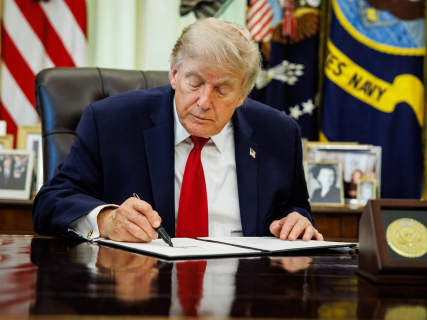
Trump reacted on social media with a direct message of thanks to FIFA, which he thanked for "doing the right thing" and correcting what he called a "great injustice."
Trump thanks FIFA for the decision
The President of the United States immediately celebrated the move.
Trump posted a message in which he thanked FIFA for reviewing the case and allowing Balogun to play in the match against Belgium. The statement elevated the news of a disciplinary decision to a matter of national pride in the midst of the World Cup hosted in North America.
The gesture comes at a particularly sensitive time: the United States is fighting for a place in the quarterfinals, and Balogun is one of its most decisive players.
Balogun will be able to play against Belgium
FIFA's decision completely changes the scenario of the United States-Belgium match.
Balogun was initially out of the match due to the straight red card received against Bosnia-Herzegovina. However, the organization has suspended the application of the ban and is placing him on a one-year probationary period.
This means that the forward is eligible to play, although if he commits a similar offense during that period, the suspension could be reactivated and added to any new punishment.
What exactly has FIFA decided
FIFA has not turned the red card into a non-existent one nor has it simply eliminated the disciplinary record.
What it has done is suspend the execution of the one-match ban. In other words, Balogun will not have to serve the punishment now and will be able to play against Belgium, but he will be under surveillance for a probationary period.
The decision is based on FIFA's disciplinary regulations, which allow for the total or partial suspension of the execution of a disciplinary measure for a specified period.
This nuance is important: it is not a complete sporting acquittal, but a conditional suspension of the ban.
Why He Was So Important to the United States
Balogun is the United States' top scorer in this World Cup.
The forward has scored three goals and has become the team's main offensive reference. His absence would have been a huge blow to the host nation before facing Belgium in a direct elimination match.
The United States is looking to reach the quarterfinals of a World Cup for the first time since 2002. In their last major opportunities, they fell in the round of 16 against Ghana in 2010, Belgium in 2014, and the Netherlands in 2022.
Balogun's presence changes the game because it forces Belgium to defend deeper, gives depth to the American attack, and allows the team to maintain its main offensive plan.
The Red Card Against Bosnia
The controversy arose in the round of 32 match against Bosnia and Herzegovina.
Balogun was sent off for stepping on Tarik Muharemovic's ankle in an incident that was reviewed and punished with a direct red card. The decision generated protests from the American camp, where it was argued that the action did not have sufficient gravity to leave the forward out of a World Cup knockout match.
The expulsion did not prevent the United States from winning, as they won 2-0 and advanced to the round of 16. But it did open an immediate sporting crisis: their top scorer would be suspended for the most important match of the tournament.
The Trump Factor
Trump's intervention adds a political layer to the case.
The United States is co-hosting the 2026 World Cup, and the tournament has become a major image platform for the country. Every match of the U.S. team has a sporting, economic, and political interpretation.
The fact that the president publicly thanks FIFA for a disciplinary decision shows the extent to which the World Cup is seen as a national issue. It also fuels the debate about the relationship between FIFA, politics, and the host country.
There is no evidence that FIFA acted under political pressure. But Trump's reaction amplifies the controversy and places the Balogun case at the center of the World Cup conversation.
Belgium, the Rival That Already Eliminated the United States
The match against Belgium holds recent memories for the United States.
The Belgian team eliminated the Americans in the round of 16 of the 2014 World Cup, in a match remembered for Tim Howard's performance and the North American team's final resistance.
Now, twelve years later, the United States meets Belgium again in a World Cup knockout match. The difference is the context: this time it plays as host, with a more ambitious team and with Balogun available after FIFA's disciplinary turn.
Morale boost for the host
The news is a huge boost for the American locker room.
Losing Balogun would have forced the coach to change the attack at the most delicate moment of the tournament. Getting him back allows for maintaining automatisms and reinforces the confidence of a team that wants to take advantage of the home-field advantage.
It also changes the atmosphere around the match. What was a preview marked by the sanction now becomes a story of return, controversy, and challenge against Belgium.
The precedent that opens the debate
FIFA's decision may open a broader discussion about the use of disciplinary regulations during the World Cup.
Direct red cards usually carry at least a one-match suspension. But the organization has room to suspend the execution of certain punishments if it considers that there are circumstances to do so.
The problem is public perception. In a tournament of maximum exposure, any decision that benefits a host nation can be viewed with suspicion, even if it is provided for in the regulations.
That will be one of the debates of the coming hours: whether FIFA has applied an ordinary legal tool or if it has made an exceptional decision with enormous sporting impact.