
The veterinary authorities of the Junta de Castilla y León have communicated to the Ministry of Agriculture, Fisheries and Food the appearance of two additional outbreaks of Newcastle Disease in the municipal districts of Íscar and Megeces, bringing the total number of outbreaks registered in the province of Valladolid to 13.
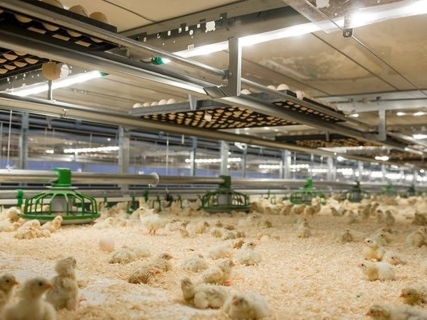
The first of these new outbreaks has been identified in a broiler farm located in Íscar (Olmedo region), very close to the other three outbreaks recently confirmed in this same municipality. The second has been detected in a pullet rearing farm in Megeces (also in the Olmedo region), about 9 kilometers from the aforementioned Íscar outbreaks, according to information from the Ministry collected by Europa Press.
With these confirmations, the count of Newcastle Disease outbreaks in the area rises to 13, distributed in Olmedo, La Pedraja de Portillo (two), Íscar (four), Montemayor de Pililla, Aldea de San Miguel, San Vicente del Palacio, Megeces, and Cogeces (two). In total, almost 1,028,000 birds are affected, including 286,946 broilers, 559,933 laying hens, and 181,000 pullets.
The broiler farm in Íscar, unvaccinated against this disease, has an approximate census of 38,000 broilers. The suspicion was reported on July 3 after an increase in mortality of 1.3 percent of the census was detected. This farm belongs to the same integrator as three other previously confirmed outbreaks.
In the case of the pullet rearing farm in Megeces, it was vaccinated against the disease with one dose and has about 181,000 pullets. The suspicion was also reported on July 3 upon observing an increase in mortality of 0.97 percent of the census. This farm is part of the same integrator as the farm involved in another of the outbreaks.
In both farms, the Official Veterinary Services (SVO) of the Junta de Castilla y León took samples that were sent to the Central Veterinary Laboratory (LCV) of Algete, the National Reference Laboratory for Newcastle Disease in Spain, where the presence of a velogenic strain of the virus has been verified by PCR.
The Veterinary Services have immediately implemented the measures contemplated in Delegated Regulation (EU) 2020/687 of the European Commission, including the immobilization of affected farms from the moment of suspicion and the carrying out of an epidemiological survey to determine the possible origin of the outbreak and the farms at risk due to the movement of people and vehicles.
Likewise, sanitary emptying of affected farms and the elimination of carcasses, feed, and other materials that may carry the virus are being carried out, all in an authorized treatment plant.
Restriction zone and virus analysis
In parallel, a restriction zone has been delimited around the focus. Within the 3 and 10 kilometer radii, 13 commercial farms with livestock are counted, of which eight were already included in other restriction zones linked to previous outbreaks.
Sources from the Ministry have indicated that the partial sequencing of the virus carried out by the Central Veterinary Laboratory of Algete confirms that the virus circulating in the province of Valladolid belongs to genotype VII.2, different from the one identified in the outbreaks in Valencia (genotype VII.1.1). This data would support the discarding of an epidemiological link between both outbreaks.
Recommendations and the role of vaccination
The Ministry has urged to intensify passive surveillance, both in poultry farms and in wild birds, and to communicate any suspicion of disease to the official veterinary services. It has also requested to reinforce biosecurity measures on farms, especially those aimed at preventing contact with wild birds, as well as sanitary prophylaxis measures, with the application of adequate vaccination programs against the disease.
Likewise, it has recalled that, although the vaccine does not protect "one hundred percent," it contributes to reducing the risk of infection in birds and reduces the amount of virus excreted by vaccinated and infected birds, which limits the possibility of virus dissemination to other farms.