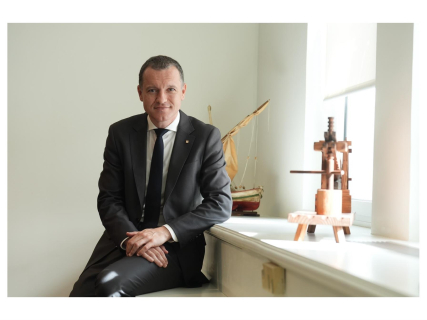










The Agriculture, Livestock, Fisheries and Food minister of the Generalitat, Òscar Ordeig, expects a “de-escalation” of the measures adopted to combat African swine fever (ASF) in the Collserola natural park (Barcelona), an episode that he has described as the most serious health crisis of the past two decades in Catalunya.
In an interview with Europa Press, the minister has detailed that contacts have already been maintained with the European Commission, the involved town councils, the technical teams and the scientific community, with the aim of setting out safety criteria that allow a “flexibility of the measures in a safe way”.
He has specified that “it could only be so if the good data is maintained, if capture forecasts in the tracking are maintained, and if there is no epidemiological data or data of positives that alters this schedule”.
According to Ordeig, this relaxation of the restrictions will be implemented “at the beginning of next year or at the end of this one” and will be applied gradually.
He has warned that “the crisis has not ended and we cannot take wrong steps,” and he has pointed out that, in a first phase, those areas where no positives have been detected for months could be reopened and that have been tracked in more than two occasions, which makes it possible to rule out the presence of contaminated remains.
He has emphasized that there are areas that can remain closed and others that cannot, and that wildlife moves between different spaces, so that the process “will not be for everyone and it will not be at the same time”.
POSITIVE BALANCE
Ordeig has given a favorable assessment of the management of the disease in Catalunya and has highlighted that “the whole country has responded in an exemplary, fast and effective way,” which has helped contain the focus and prevent its spread to other areas or to pig farming operations.
He has stated that 350 perimeter closures have been carried out and that the tracking work has made it possible to capture around 15,000 wild boars, of which 429 have tested positive.
In any case, the minister has stressed that, since August, “practically all the positives are from buried remains,” because the virus can remain active for months, but he has reiterated that there is no circulation among live animals.
TWO YEARS
Asked whether the PPA could be eradicated within two years from the start of the outbreak, Ordeig has recalled that this was the period they needed for Belgium and the Czech Republic to overcome their episodes, countries he has cited as a reference for good management.
He has detailed that, from the administrative point of view, once the last positive is detected, an additional year with no new cases will be necessary in order to be able to be declared a country free of the disease, which would involve the automatic reopening of all borders.
The councillor has added that, after a first phase of emergency response, a deployment of specialized teams has been launched, with advanced techniques and technological support, and with the collaboration of local police, Mossos d'Esquadra and Town Councils.
He has clarified that "it does not mean that we have to maintain the current situation for the year in which there should be no positives".
PORCINE SECTOR
Ordeig has acknowledged that the crisis resulting from the PPA "has had an effect" on the pig sector, with an immediate impact at the beginning of the outbreak, when all exports were halted.
He has recalled, however, that after that first phase regionalizations were agreed, and that in 80% of the destination markets it is possible to export all the pork meat from Spain and Catalunya except that coming from the zero zone, and in the case of China, all except that originating from the province of Barcelona.
The councillor has indicated that the harm to the sector has also been exacerbated by the increase in pork meat production in Brazil and China, and for this reason he has urged the Catalan food industry to bet on exports of higher added value to ensure its future viability.