









The University of Córdoba (UCO) has designed the specific BBCH scale for pistachio, a system that unifies the phenological monitoring of this crop and helps research personnel and producers to quickly and easily identify the stage of development in which the tree is.
As the UCO has reported in a note, pistachio is experiencing a notable boom, something that is evident in the strong expansion of its cultivated area. Pistachio plantations are multiplying and being established in increasingly diverse areas, with climates that are very different from each other.
To ensure proper growth and good production, pistachio requires long, hot summers, combined with cold winters that provide the necessary chill hours. When these climatic conditions deviate from the ideal pattern, accurately controlling the growth stages becomes key to ensuring satisfactory yields.
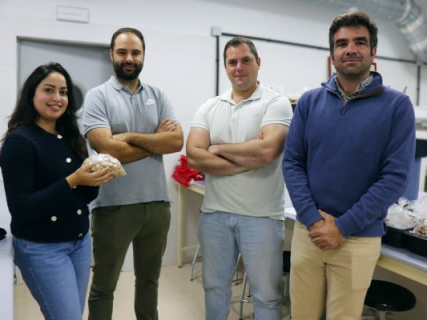
"For pistachio, we did not have a standardized scale to be able to follow the plant's development," explained the researcher Fatima Zahra Akhrif, who, together with researchers Pedro Valverde, Carlos Trapero and Antonio Pascual, from the Department of Agronomy at the University of Córdoba, has refined a tool that makes it easy to recognize the crop's phenological stage.
To fine-tune this tool, the team took the BBCH scale as a reference, widely used internationally to describe the growth of numerous crops. "We carried out a detailed characterization of the phenological growth stages of pistachio, including the five female cultivars 'Kerman', 'Sirora', 'Aegina', 'Larnaka' and 'Lost Hills', and two male cultivars, 'Peters' and 'Randy', because they are the most used," the researcher said.
The necessary information to describe in detail the different pistachio development phases was obtained after monitoring two consecutive seasons (2024 and 2025) on two holdings located in Córdoba and Sevilla, with weekly visits and up to twice per week during the critical flowering period. The study of this large volume of data made it possible to define the entire pistachio cycle in 56 phases, from germination to senescence.
In practice, the scale groups these phases into eight main states (such as germination, sprouting, or fruit development, among others) and into a series of secondary states that specify the exact moment at which the plant is within that main state, which can last for months.
As Fatima Zahra Akhrif explains, "on the scale we find a decimal coding system in which the first number refers to the main state of the plant and the second digit to that secondary state. Thus, 0.0 shows the vegetative buds, 5.0 the reproductive buds, and 9.9 the total loss of the leaves".
In addition, the scale incorporates illustrative images of each of the stages, which simplifies their recognition in the field and consolidates a common language that facilitates the comparison and exchange of data in a more uniform way.
Growing pistachios in Andalusia
"The need to adapt this scale arises from the lack of cold in some of the pistachio plantations in Andalusia," the researcher Carlos Trapero has put it in context. "Taking into account the lack of cold that we have in many areas of Andalusia where new plantations are being established in which we have to control very well the moment of flowering, to see if it is happening properly. What if flowering is not on time or not as it should be? Knowing the exact state of the plant's development allows the application of treatments that help it flower better".
From this work, data are also obtained that capture the chronology of these pistachio varieties under specific climatic conditions in Andalusia. This information will be key to advancing the development of new cultivars with lower cold requirements, which are currently being developed at the university.
For the researcher Pedro Valverde, the utility of the scale is evident: "we are going to use this tool a lot for monitoring and compiling data from the trials we have. Before, since we didn't have it, we had a complicated job homogenizing the description of the plant's phenological state; now, with the scale and the photos, data collection will be more objective and in a single language".