








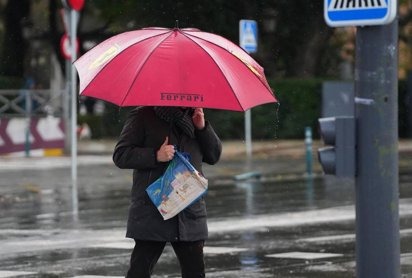
Catalonia wakes up after a night of floods and rescues: more than a thousand fire services

The storm leaves accumulations exceeding 200 liters per square meter in several municipalities. Surveillance continues over the rivers and the displacements, while the balance of the early morning is updated.

Add DEMÓCRATA to Google

Ask FREN

Published

Last updated

1 minute

Most read

Poder Digital · Carrera digital

La carrera digital de los candidatos

El Poder Digital de cada candidato a la Presidencia, de 0 a 100, desde junio · cambio en las últimas 4 semanas

30405060708090100julagoseptoctnovSánchez 93,8Montero 86,3Alvise 82,2Rufián 80,8Feijóo 79,1Abascal 78,4Colau 76,5Nogueras 58,0Valido 39,0
  1. 1Sánchez93,8▼ -0,2
  2. 2Montero86,3▼ -1,7
  3. 3Alvise82,2▼ -1,8
  4. 4Rufián80,8▼ -1,2
  5. 5Feijóo79,1▲ +0,1
  6. 6Abascal78,4▼ -3,6
  7. 7Colau76,5▲ +4,5
  8. 8Nogueras58,0▼ -4,0
  9. 9Valido39,0▼ -6,0

Pendientes de que su partido anuncie el candidato: Adelante, BNG, EH Bildu, EAJ-PNV y UPN.

Ver la carrera completa

Mide presencia e influencia en redes, no intención de voto.

WhatsApp Image 2026 09 17 at 16.57.40 (1)

Catalonia wakes up this Sunday after a night of floods, rescues, and numerous emergency interventions. The balance at first light exceeds a thousand services from the firefighters, while attention remains focused on the evolution of the rivers.

Until five in the morning, the cited accumulations reached 226 liters per square meter in Cabrils, 224 in Granollers, and 220 in Mataró. In Granollers, rescues of people trapped in vehicles in a flooded area also took place.

A morning of alerts for water in buildings and vehicles

The previous balance, closed at 03:00, counted 682 alerts to the Bombers for floods, with no serious injuries reported in the actions communicated up to that moment.

The incidents mainly affected ground floors, premises, roofs, and drainage systems. There were also interventions related to vehicles, trees, and elements of urban furniture. Only between two and three in the morning, 151 alerts had been received.

The figures describe different hourly cuts: they should not be added together nor confused with the total number of calls to the 112 emergency number. The early balance expands on that of the morning; it does not constitute a separate episode.

The improvement in rain does not immediately eliminate danger

The day begins with the need to monitor waterways and flood-prone areas. That the intensity of precipitation decreases at one point does not mean that the risk has disappeared downstream.

The restrictions announced for 20 counties were extended until 14:00 this Sunday. Before resuming activities or travel, it is necessary to check whether the authorities maintain, modify, or lift those measures.

What to check before leaving home

Those planning to travel should check the status of their route and the specific service they will use. Incidents may change during the morning, and a partial reopening does not equate to the normalization of the entire network.

In road travel, flooded crossings should not be crossed, nor should one approach streams to observe the rise. It is also advisable to avoid basements and parking lots affected by water ingress.

More key points, information and questions with FREN

AI-GENERATED CONTENT

What administrative procedures or emergency protocols must the autonomous authorities in Catalonia follow after severe flooding episodes?

After severe flooding episodes in Catalonia, the autonomous and local authorities must follow a chain of actions already established in civil protection regulations. This is mainly structured through the Llei 4/1997, de protecció civil de Catalunya (Legal Portal), the civil protection plans (including the special flood plan, operationally known as INUNCAT), and the rules on aid and subsidies such as ORDRE PRE/130/2023 (link).

1. General framework and types of plans

Llei 4/1997 defines civil protection as the set of actions to protect people, property, and the environment against situations of serious risk, disasters, and public calamities. It establishes an integrated system with several planning levels:

  • Civil Protection Plan of Catalonia (PROCICAT), of general territorial scope.
  • Special plans for specific risks (art. 18), including flood emergencies, declared of interest to Catalonia and approved by the Government.
  • Basic municipal emergency plans and municipal action plans, mandatory for municipalities with certain risks; they must integrate the provisions of the special plans.
  • Self-protection plans for centers and risk activities, coordinated with public plans.

All these plans must include, according to article 20 of Llei 4/1997, risk analysis, organization of operational services, plan application levels (situations of alert and emergency), activation procedures, measures for informing and protecting the population, and measures for urgent rehabilitation of essential services.

2. Activation and management of the flood plan (INUNCAT)

During the acute flooding episode, the Generalitat activates the special flood risk plan (INUNCAT), with different operational severity levels. For example, ORDRE PRE/130/2023 cites “floods, declared in operational situation 1 (INUNCAT)” in Alcanar (Tarragona) from September 1, 2021.

Once the immediate risk to people is controlled, the autonomous authorities must:

  • De-escalate and, if applicable, deactivate the plan, moving from emergency phases to normalization phases, following the application and activation level procedures provided in the plans.
  • Restore essential services (water, electricity, road access, communications), according to the urgent rehabilitation measures that the plans must contain.
  • Maintain operational coordination between the Generalitat coordination center and advanced command centers, as well as with the affected municipalities.
3. Coordination with municipalities and the General State Administration

Llei 4/1997 dedicates a chapter to inter-administrative relations and requires loyal collaboration between the Generalitat and local entities. After the floods:

  • Municipalities apply their basic and municipal action plans, incorporating the provisions derived from the special flood plan.
  • The Generalitat must provide technical support and assistance to municipalities in planning and emergency management.
  • Information is channeled to the State (for example, to the National Center for Monitoring and Coordination of Civil Protection Emergencies, CENEM) when the magnitude of the damage may justify state measures.

This coordination is relevant for the possible state declaration of a “zone seriously affected by a civil protection emergency,” a figure mentioned in ORDRE PRE/130/2023, which serves as a basis for certain aid lines.

4. Damage assessment and aid processing

After the most critical phase, an administrative stage begins focused on quantifying damages and channeling resources:

  • Technical damage assessment on municipal infrastructures, road network, equipment, and public services, with reports from local and autonomous technical services.
  • Collection and submission of information from municipalities to the Generalitat about the damages suffered, to support extraordinary aid requests and, if applicable, the proposal for declaration of a seriously affected zone.
  • Call and management of subsidies: ORDRE PRE/130/2023 approves the bases for subsidies aimed at repairing or restoring municipal infrastructures and road networks in municipalities declared seriously affected zones by civil protection emergencies (fires or floods).
  • These subsidies are framed within the state system regulated by Order HAP/196/2015, whose management in Catalonia is articulated through agreements between the General State Administration and the Generalitat.

The procedure includes the approval of calls, submission of applications by local entities, validation of repair projects, and shared financing with state funds transferred to the Generalitat.

5. Review and improvement of planning

Finally, Llei 4/1997 itself requires that civil protection plans incorporate a program of maintenance, updating, and review. After a severe flooding episode, the Generalitat and municipalities must:

  • Analyze the actual functioning of INUNCAT and municipal plans.
  • Update risk maps and resource inventories based on the event experience.
  • Introduce improvements in early warning protocols, population information, and self-protection.

Overall, the Catalan framework combines the activation of civil protection plans, multilevel coordination, and a post-emergency aid system to restore infrastructures and strengthen resilience against future floods.

What are the specific powers and functions of the Director General of Civil Protection of Catalonia in cases of flood emergencies?

The Director General of Civil Protection of Catalonia is the highest technical-political authority of civil protection in the Department of the Interior and, in flood emergencies, acts as one of the civil protection authorities of the Generalitat regulated by the Llei 4/1997, de protecció civil de Catalunya, within the organizational framework established by Decret 12/2023, de reestructuració del Departament d’Interior i Seguretat Pública. His powers are focused on planning, activation and direction of plans, interinstitutional coordination, and communication to the population.

1. Regulatory framework and position of the role

Llei 4/1997 designs the civil protection system of Catalonia: it defines basic actions, plans, competent authorities, and coordination mechanisms between Generalitat, county councils, and municipalities. Decree 12/2023 places the Direcció General de Protecció Civil as one of the management bodies of the Department of the Interior, responsible for civil protection policy and emergency planning and management in Catalonia.

When a significant flood occurs, the Director General performs his functions through the Generalitat's civil protection plans (special plans such as the flood plan and the pla bàsic de protecció civil de Catalunya), in coordination with the municipal and county plans foreseen by Llei 4/1997.

2. Planning and prevention against floods

From a preventive and planning perspective, Llei 4/1997 assigns civil protection authorities powers over:

  • Developing and maintaining civil protection planning, including the preparation of the Mapa de protecció civil de Catalunya, which identifies relevant risks (including floods) and serves as a basis for territorial and special plans.
  • Promoting and supervising the Generalitat's territorial and special plans and their integration with municipal and county plans, ensuring that flood risk is properly analyzed, sectorized, and prioritized.
  • Ensuring periodic updating and review of plans (art. 24 of Llei 4/1997), so that after new flood episodes, lessons learned are incorporated.
  • Inspecting resources and services associated with the plans (art. 25), to guarantee that infrastructures, communications, and operational capacities foreseen for floods remain operational.
3. Activation and direction of emergency plans

In the emergency phase, functions are mainly articulated through the figure of the director of the civil protection plan, regulated in article 27 of Llei 4/1997. In a flood episode, when the special or territorial plan designates the Generalitat as the competent authority, the Director General:

  • Formally declares the activation and deactivation of the plan, following the established procedure (art. 27.1 and 27.4): determining the emergency level, affected territorial scope, and mobilized resources.
  • Orders the constitution of the plan's emergency committee and the mobilization of action groups (firefighters, police forces, health services, etc.).
  • Orders immediate communication to the Centre de Coordinació Operativa de Catalunya (CECAT) and maintains monitoring of the episode's evolution.
  • Adopts and coordinates protection measures for the population (evacuations, confinements, service cuts, etc.), consistent with the scenarios and procedures foreseen in the flood plan.
4. Multilevel institutional coordination

Llei 4/1997 structures civil protection as an integrated system among Generalitat, county councils, and municipalities. In flood emergencies, the Director General:

  • Coordinates actions between municipal and county plans and the higher-level plan, ensuring coherence between local decisions (e.g., road closures, shelter activation) and the general strategy.
  • Manages the escalation of the episode to “emergència d’interès de Catalunya” when the magnitude requires it, activating the higher-level plan (art. 29) and reinforcing direction from the Generalitat.
  • Articulates the relationship with the General State Administration when the episode approaches national interest emergency cases, for requesting state resources and proper integration with the state civil protection planning.
5. Public information and media relations

Llei 4/1997 establishes that, in emergency situations, public and private media are obliged to collaborate with civil protection authorities, transmitting in a priority, immediate, and free manner the warnings and instructions provided.

In a flood, the Director General, as competent authority or plan director, is the one who:

  • Determines the official alert and self-protection messages to the population.
  • Indicates which media should be addressed and through which channels (radio, TV, social networks, sirens, etc.).
  • Ensures coherence and unity of the information issued under the denomination of civil protection authorities.
6. Recovery and system improvement

After the acute phase of the flood, the Director General promotes:

  • Evaluation of the episode and plan functioning, proposing revisions and improvements (art. 24).
  • Coordination of recovery actions within civil protection (cleaning, basic restoration, support to affected population), in collaboration with other departments and institutions.

Overall, his functions combine technical leadership, operational direction, and political coordination of the Catalan civil protection system against floods.

What autonomous and state regulations govern emergency management and firefighter actions in Catalonia in the face of natural disasters?

Emergency management and firefighter actions in the face of natural disasters in Catalonia rely on a dual framework: the basic state civil protection regulations and the Catalan autonomous regulations, which develop and exercise their exclusive competencies in the matter except in emergencies of national interest.

1. Main state regulations applicable in Catalonia

At the state level, the central piece is the Ley 17/2015, de 9 de julio, del Sistema Nacional de Protección Civil (text in BOE). This law:

  • Defines civil protection as a public service to protect people and property against emergencies and disasters of natural, technological, or human origin.
  • Configures the National Civil Protection System, integrating the State, autonomous communities, and local entities.
  • Establishes the distribution of competencies: the State sets the bases and assumes direction in emergencies of national interest; autonomous communities, including Catalonia, exercise their ordinary competencies in prevention, planning, and intervention.
  • Regulates planning through territorial and special plans (risks of floods, forest fires, technological risks, etc.), within which the participation of intervention and assistance services is articulated, including firefighter bodies.

As a key regulatory development, the Real Decreto 524/2023, de 20 de junio, por el que se aprueba la Norma Básica de Protección Civil (text in BOE), stands out, which:

  • Establishes a unified risk catalog that must be subject to civil protection planning, including those derived from natural disasters.
  • Sets the minimum content and common structure of civil protection plans (state, autonomous, and local), ensuring their cascading integration.
  • Marks the bases of coordination and efficiency of the actions of intervention and assistance services in emergencies (including firefighters and other emergency bodies), under principles such as single command, coordination, and specialization of functions.
  • Aligns with the State General Emergency Plan (PLEGEM) and foresees common operational phases to facilitate escalation between municipal, autonomous, and state plans.

Alongside these framework norms, there are specific state plans (for example, the State Civil Protection Plan for forest fire emergencies, approved by Council of Ministers Agreement and published by Resolution of October 31, 2014, BOE-A-2014-11493), which set common criteria for action and coordination with autonomous communities in certain natural risks.

2. Catalan autonomous regulations on civil protection and firefighters

In the Catalan scope, the Llei 4/1997, de 20 de maig, de protecció civil de Catalunya (Catalan Legal Portal) is the general reference law. Its main features are:

  • Globally regulates civil protection in Catalonia, understood as actions to protect people, property, and the environment against situations of serious collective risk, disasters, and public calamities.
  • Establishes the basic actions (forecasting, prevention, planning, intervention, and recovery) and planning instruments: territorial and special plans against specific risks (floods, forest fires, technological risks, etc.).
  • Configures the organizational structure of Catalan civil protection, with an integrated system articulating Generalitat, local entities, self-protection services, and volunteers, and defines civil protection authorities.
  • Foresees the integration of Catalan plans into the state system, respecting state competence in emergencies declared of national interest, but reserving to Catalonia the ordinary management of emergencies in its territory.

Specifically regarding firefighters, the key norm is the Llei 5/1994, de 4 de maig, de regulació dels serveis de prevenció i extinció d’incendis i de salvaments de Catalunya (consolidated text), later amended. This law:

  • Regulates the Cos de Bombers de la Generalitat, municipal fire prevention and extinction services, volunteer firefighters, and company firefighters.
  • Defines their functions: fire extinction and action before any accident or emergency situation to minimize personal and material damage, including natural disasters (floods, extreme snowfalls, earthquakes, forest fires, etc.).
  • Establishes the organization of the corps, principles of action, coordination with municipalities and other administrations, and the bases of its financing.

This framework is complemented by the Decret 276/2016, de 19 de juliol, de les funcions de guàrdia i del sistema de comandament dels serveis de prevenció, extinció d’incendis i salvaments de la Generalitat de Catalunya (link). The decree:

  • Details the guard structure, permanent availability, and different levels of operational command in emergencies.
  • Regulates the planning, management, coordination, and strategic supervision of emergencies from the Central Firefighters Room and territorial control rooms.
  • Organizes the operational, coordination, and support response to ensure a rapid, hierarchical, and effective intervention in all types of accidents and disasters.
3. Practical articulation in natural disasters

In practice, in the face of a natural disaster in Catalonia:

  • Civil protection plans foreseen by Law 4/1997 and developed according to the state Basic Standard (territorial and special plans against specific risks) are applied.
  • Operational direction falls on the bodies and commands established by Llei 5/1994 and Decret 276/2016 (guard structure, Central Firefighters Room, territorial commands, etc.).
  • If the emergency reaches the consideration of national interest, the state direction foreseen in Law 17/2015 comes into play, maintaining the intervention of Catalan firefighters but under a reinforced coordination scheme with the State and, if applicable, with the Military Emergency Unit and other national resources.

Overall, these norms ensure an integrated system in which the State sets the basic framework and Catalonia organizes in detail its civil protection and firefighter functioning in natural disasters.

Play

Test your knowledge with FREN!

How much do you know about this topic? Answer the following 3 questions.

What amount of precipitation was recorded in Cabrils during the night of floods?

Question 1 of 3

Until what time were the restrictions extended in 20 counties of Catalonia after the floods?

Question 2 of 3

In which locality were rescues of people stuck in vehicles in flooded areas carried out?

Question 3 of 3