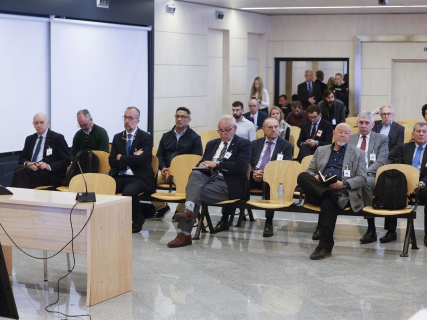

The trial for the so-called 'Operation Kitchen' has this week been set for sentencing after just over four months of oral hearings in the National Court (AN). The court, presided over by Judge Teresa Palacios, has heard during this time from more than a hundred witnesses, including police commanders, agents, investigators, and political leaders.
Throughout the sessions, the interventions that have attracted the most attention, aside from the defendants, have been those of former Prime Minister Mariano Rajoy, who appeared as a witness, and that of the former treasurer of the PP Luis Bárcenas, who has come forward as a harmed party in the case.
The procedure began in early April and concluded this week with the presentation of the final reports from the defenses. The lawyers for the accused have rejected the existence of the alleged "espionage" device that, according to the accusations, would have been promoted from the Ministry of the Interior under Rajoy's mandate to obtain documentation from Bárcenas about PP leaders and thus try to halt the investigation into an alleged opaque accounting in the party.
In contrast to that version, the lawyers have practically unanimously defended that there was no "criminal" paramilitary network, but rather a "legal" police action aimed at locating funds that the former treasurer, already under investigation by the judiciary, could be hiding abroad, as well as identifying possible front men.
For these facts, the Anti-Corruption Prosecutor's Office is seeking 15 years in prison for the former Minister of the Interior Jorge Fernández Díaz, his former Secretary of State for Security Francisco Martínez, the former Deputy Operational Director (DAO) of the National Police Eugenio Pino, and Commissioner Andrés Gómez Gordo.
The Public Prosecutor's Office also requests 19 years in prison, the highest sentence sought, for retired Commissioner José Manuel Villarejo. For Sergio Ríos, former driver of Bárcenas, it asks for 12 and a half years, and for the former head of the Internal Affairs Unit (UAI) Marcelino Martín Blas, two and a half years.
On the other hand, the Prosecutor's Office has requested the acquittal of Inspector José Luis Olivera and Inspectors José Ángel Fuentes Gago and Bonifacio Díaz Sevillano. The latter two were removed from the dock after the private prosecution, exercised by the Bárcenas family, and the popular prosecution, represented by the PSOE and Más Madrid, withdrew their writings against them.
While the accused have insisted that their actions were in accordance with the law —arguing, as Francisco Martínez's lawyer stated, that what would truly be criminal would have been not to investigate Bárcenas—, prosecutor César de Rivas defended that the trial has established the existence of "a criminal parapolice operation" aimed at "gathering" "compromising" information and "recordings" about PP leaders that the former treasurer might have kept.
Bárcenas' family lawyer argued, in the same accusatory line, that Interior launched 'Kitchen' because the information held by the former treasurer "could bring down Rajoy's Government." For its part, PSOE and Podemos placed Fernández Díaz at the "top" of what they described as a "criminal organization."
Rajoy and Bárcenas, two opposing narratives
Among the more than forty sessions held, two days concentrated the greatest media attention: those dedicated to the statements of Rajoy and Bárcenas.
One year and four months after leaving prison following his conviction in the 'Gürtel case', the former treasurer returned to the National Court, at the San Fernando de Henares (Madrid) headquarters, to answer the parties' questions.
During an interrogation lasting almost seven hours, Bárcenas confirmed that he commissioned a fellow inmate to destroy some audios related "to MR, who was Mariano Rajoy." According to his account, in those recordings, one would hear how the then leader of the PP would have torn an envelope containing information about the party's "off-the-books accounting."
The former treasurer also stated that 'Operation Kitchen' began "at the PP headquarters with the erasure of the hard drives of the computers" he used in his office, an action that, he said, would have been carried out by "the party officials at that time."
Rajoy, in his appearance, denied having destroyed the envelope referred to by Bárcenas and rejected the former treasurer's account. "That is absolutely false," he declared before the court.
Furthermore, the former president aligned himself with the defense's thesis by stating that what existed was "a police operation" that "fully complied with the law" and whose objective was to "take the money" from Bárcenas and "find out his front men."