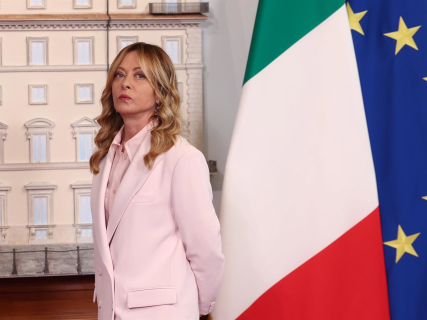
Can they expel Spain from the Schengen Area? These are the requirements and procedures

The statements of Giorgia Meloni and other European partners during the migration crisis in Ceuta have raised doubts about Spain's permanence in Schengen. Check what European legislation says, if there is an expulsion mechanism, and what measures member states can really adopt.

3 minutes

fotonoticia 20260621221240 1920

fotonoticia 20260621221240 1920

Add DEMÓCRATA to Google

Ask FREN

Published

Last updated

3 minutes

Most read

This past Thursday, hundreds of thousands of people of Moroccan origin launched themselves into international waters to cross the border between Spain and Morocco and thus enter Ceuta. The international community, but above all some European partners, have seen and categorized this act as a phenomenon of defenselessness of European borders and sovereignty. 
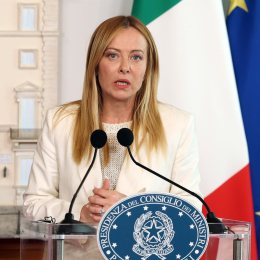
Beyond being an act that has overflowed border control, while Morocco turned a deaf ear, some European partners like Giorgia Meloni and the Finnish Foreign Minister, Mari Rantanen, have proposed to expel Spain from the Schengen Area, something that is legally impossible.

Beyond the political debate, the legal framework of the European Union establishes very specific rules regarding the functioning of this area of free movement and does not foresee a mechanism to expel a member state. In fact, the European response towards Spain has been to deploy FRONTEX to control the borders.

Can European partners expel a country from the Schengen Area?

No. Currently there is no procedure in the European treaties or in the Schengen Borders Code that allows for the expulsion of a state from the Schengen Area by decision of the other countries.

This means that, even if a government politically claims that measure or several states support it, there is no legal basis to execute it.

So, what can they do against Spain?

Although they cannot expel Spain from Schengen, states can temporarily re-establish controls at their internal borders when they consider that there is a serious threat to public order or internal security.

It is a possibility provided for by the Schengen Borders Code and that various European countries have already used in recent years for reasons related to terrorism, immigration, or major international events.

Currently, several states maintain reinforced controls at certain internal borders without this meaning abandoning Schengen.

What would have to happen for Spain to cease to be part of Schengen?

With the current regulations, only extraordinary scenarios would be possible, since there is no specific expulsion procedure.

In practice, the alternatives would be:

  • A modification of the treaties or of European regulations, approved in accordance with the procedures established by the European Union, that introduced a mechanism for suspension or expulsion. 
  • A voluntary exit of Spain from the Schengen system within a possible change in its relationship with the European Union, which is unlikely.

None of these scenarios can occur through a unilateral decision by another member state.

Can the European Union sanction Spain?

Yes, but not through expulsion from Schengen.

When a country seriously and persistently violates the fundamental values of the European Union, the procedure provided in Article 7 of the Treaty on European Union can be activated.

This mechanism allows, in extreme cases, to suspend certain rights of the affected state, such as its voting rights in the EU Council, but does not imply its expulsion from the European Union or from the Schengen Area.

What exactly is the Schengen Area?

The Schengen Area is the European zone in which systematic controls at internal borders between participating countries have been eliminated.

In exchange, states apply common rules on control of external borders, visa policy, police and judicial cooperation, and information exchange on security matters.

Currently, 29 European countries are part of Schengen, including most of the member states of the European Union and four associated countries that do not belong to the EU.

What is happening with Spain currently?

The statements made by some European leaders have no legal effects by themselves.

In any case, other states may decide to strengthen controls on people arriving from Spain if they consider that the circumstances provided by European regulations are met, but that does not mean that Spain ceases to belong to the Schengen Area.

More key points, information and questions with FREN

AI-GENERATED CONTENT

What is the legislative process required to amend European treaties and allow the expulsion of a Member State from the Schengen Area?

To legally introduce the possibility of expelling a State from the Schengen Area, it is not enough to amend regulatory-level rules: it would be essential to reform the EU Treaties (which currently do not contemplate expulsion from the EU or Schengen) and, in parallel, adapt the Schengen acquis and the Schengen Borders Code. This requires a Treaty revision procedure with unanimous agreement of the Member States and subsequent national ratification, as well as an EU legislative procedure to amend the derived legislation. In a country like Spain, the reform would also have to be authorized by the Cortes Generales and, if applicable, might even require a constitutional reform if it is considered to profoundly alter the conditions of integration.

(a) Revision of the EU Treaties

The legal basis is Article 48 of the Treaty on European Union (TEU), which provides two main routes:

Ordinary revision
  • Initiative: any national government, the European Parliament, or the Commission can propose amendments to the Treaties (TEU and TFEU).
  • Referral to the European Council: proposals are sent to the European Council, which decides by simple majority whether to examine the proposal and whether to convene a Convention (with representatives from national parliaments, governments, the European Parliament, and the Commission).
  • Convention and Intergovernmental Conference (IGC): the Convention, if created, formulates recommendations. On that basis, the European Council convenes an IGC among States that negotiates and agrees on the new Treaty text.
  • Approval by the European Council: the IGC concludes a text that must be approved unanimously by the heads of State or Government.
  • National ratification: the new Treaty must be ratified by all States following their internal constitutional law. Without unanimous ratification, it does not enter into force.

A clause enabling the expulsion of a State from the Schengen Area would substantially alter the balance of rights and obligations, so in practice it would have to follow this ordinary route, not the simplified one.

Simplified revision
  • It can only be used to amend certain parts of the TFEU (policies and internal functioning), without increasing the Union's competences.
  • The initiative lies with the European Council, which approves a revision decision unanimously, after consulting the European Parliament, the Commission, and, in some cases, the ECB.
  • The decision must also be ratified by all Member States according to their constitutional rules.

Since empowering the EU to expel a State from Schengen would affect fundamental rights of movement and the balance between States, it could hardly be considered a “technical” amendment suitable for this simplified procedure.

(b) Amendment of the Schengen acquis and the Borders Code

Schengen is currently integrated into EU law through accession decisions and derived legislation, especially the Schengen Borders Code. To introduce the “expulsion” of a State, it would be necessary to:

  • A new primary basis in the Treaties: expressly authorizing the Union to suspend or terminate a State's participation in Schengen, setting material conditions and procedural guarantees.
  • Reform of derived legislation: once the Treaty is amended, the European Parliament and the Council, through the ordinary legislative procedure, would adapt the Borders Code and related acts to regulate:
    • Reasons, steps, and prior evaluation (serious infringements, risks to public order, etc.).
    • Decision-making authority (usually the Council, possibly on the Commission's proposal).
    • Procedural guarantees and appeal routes (Court of Justice of the EU).

(c) Role of each institution and national parliaments

  • European Council: decides to open the Treaty revision, sets the negotiating mandate, and must approve the resulting text unanimously.
  • National governments: participate in the IGC, negotiate the content, and then assume political responsibility for internal ratification.
  • European Parliament: can initiate the revision, participates in a possible Convention, is consulted, and, in the derived legislation phase, is a full co-legislator along with the Council.
  • European Commission: can propose the reform, provides technical assistance, and will later propose reforms to the Schengen acquis.
  • National parliaments: participate in a possible Convention and, above all, are decisive in ratification, as they approve or reject the new Treaty according to each Constitution.

(d) Requirements of Spanish constitutional law

In Spain, ratification of a Treaty reform enabling the expulsion of a State from Schengen would go through several filters:

  • Authorization by the Cortes Generales: Article 93 of the Constitution requires an organic law to authorize the transfer or attribution of competences derived from the Treaty. Approval requires an absolute majority in the Congress.
  • Control of constitutional compatibility: if the new clause is understood to affect basic principles (for example, the essential content of fundamental rights or the very structure of the Union to which Spain belongs), a prior or parallel constitutional reform could be considered necessary.
  • Possible referendum: Article 92 allows a consultative referendum on political decisions of special importance, at the Government's proposal and Congress's authorization. It is not automatic but could be politically considered in a profound reform.

Only after overcoming these national phases could Spain deposit the instrument of ratification. As long as a single Member State does not ratify, the reform allowing the expulsion of a country from the Schengen Area could not enter into force.

What precedents exist in the EU of partial or temporary suspension of a State's participation in Schengen? How would Spanish institutions likely react to a concrete proposal to reform the Treaties to allow expulsions from Schengen? What practical consequences would the expulsion of a country from the Schengen Area have for a State and for Spain?

What are the competences and functions of the Council of the European Union regarding the suspension of rights of Member States?

The Council of the European Union plays a key, but not exclusive, role in the suspension of certain rights of a Member State: it intervenes mainly in the phase of establishing a “clear risk” of serious violation of EU values and, above all, in the final sanction phase, where it can suspend rights such as the voting right of the State itself in the Council. The legal basis is Article 7 of the Treaty on European Union (TEU), which sets out a stepped procedure. The Council always acts within an institutional triangle with the European Parliament and the European Council, which share different competences in this area. Suspension is exceptional and requires very reinforced majorities.

Legal basis and general context

The competence to suspend rights of a Member State is linked to the protection of the values of Article 2 TEU: respect for human dignity, freedom, democracy, equality, the rule of law, and human rights. Article 7 TEU establishes a mechanism in two main phases:

  • Preventive phase: detection and declaration of a “clear risk of serious violation” of those values.
  • Sanctioning phase: finding of a “serious and persistent violation” and possible suspension of rights.

The Council of the EU formally intervenes in both phases, but in coordination with the European Parliament and the European Council, which have their own competences (especially the latter in the sanctioning phase).

Role of the Council in the preventive phase (art. 7.1 TEU)

In the preventive phase, the Council can declare that there is a “clear risk of serious violation” of EU values in a Member State. Its main functions are:

  • Political initiative and deliberation: examines the situation of the Member State based on information from the Commission, the European Parliament, or other actors (such as the Council of Europe). In practice, it holds general debates and “hearings” with the affected State.
  • Hearing of the Member State: before adopting any decision, it must listen to the concerned State, which can present its arguments and commitments.
  • Adoption of the clear risk decision: it can adopt the decision that such a “clear risk” exists by a four-fifths majority of its members, after approval by the European Parliament.
  • Formulation of recommendations: along with that decision, the Council can issue recommendations to the affected State on measures it should take to reverse the risk.

This phase does not yet imply suspension of rights but places the Council in a central role of political pressure and ongoing supervision.

Role of the Council in the sanctioning phase (art. 7.2 and 7.3 TEU)

If the situation worsens, the sanctioning phase can be initiated. Here the distinction is:

  • Finding of serious and persistent violation: this decision is not taken by the Council of the EU, but by the European Council, unanimously (excluding the affected State) and with prior approval of the European Parliament.
  • Suspension of rights: once the European Council has found the violation, the Council of the EU is the competent body to decide which rights are suspended, by qualified majority.

Among the rights the Council can suspend are:

  • The voting right of the Member State in the Council itself, which is the most symbolic and relevant sanction.
  • Other rights derived from the application of the Treaties to the State in question, such as certain participations in bodies, programs, or benefits.

However, Article 7 TEU emphasizes that, even in case of suspension, the obligations of the Member State remain fully in force, including compliance with Union law and decisions of the Court of Justice.

Monitoring functions and possible lifting of sanctions

In addition to imposing suspension, the Council of the EU has monitoring functions:

  • Periodic review of the situation in the sanctioned State to check if violations are corrected.
  • Modification or lifting of suspension: the Council can decide, by qualified majority, to modify the scope of sanctions or lift them if it considers the causes have disappeared.

Thus, the Council acts not only as a punctual “sanctioner” but as a dynamic manager of the measure, adapting it to the evolution of the internal situation of the State.

Institutional balances and limits

The Council's competences are strongly conditioned by:

  • Higher majority requirements (four-fifths, qualified majority) reflecting the exceptional nature of the mechanism.
  • Political control by the European Parliament, which must approve key decisions, reinforcing the democratic legitimacy of the process.
  • Decisive intervention of the European Council to declare the serious and persistent violation, which limits the discretion of the Council of the EU in the most severe phase.

Overall, the Council of the European Union is the body that, in practice, operationalizes the suspension of rights of a Member State, but always within a framework of checks and balances and reinforced majorities designed to prevent arbitrary use of this competence.

What results did Spain obtain in the last European elections and how is it represented in the EU institutions?

In the last European elections, held on June 9, 2024, Spain elected 61 MEPs. The People's Party was the leading force with 22 seats, followed by the PSOE with 20; Vox obtained 6, and Sumar and the Ahora Repúblicas coalition got 3 each. Additionally, Se Acabó La Fiesta (3 seats), Podemos (2), and Junts (1) entered, completing the Spanish delegation. In other EU institutions, Spain is represented by a Commissioner with Vice-President rank (Teresa Ribera), by the Prime Minister and his ministers in the European Council and the Council of the EU, and had until 2026 a key position in the European Central Bank's leadership.

Results in Spain in the 2024 European elections

The official results of the European Parliament elections of June 9, 2024, are recorded in the agreement of the Central Electoral Board published in the BOE, which includes the distribution of votes and seats by candidacy and province (Central Electoral Board agreement in the BOE). This document confirms that:

  • Electors: 38,050,286
  • Voters: 17,652,007
  • Valid votes: 17,527,438
  • Blank votes: 124,655
  • Null votes: 124,569

The summary of seats by candidacy in Spain, according to journalistic data and cross-checking with the BOE, is as follows:

  • People's Party (PP): 22 MEPs, first force in Spain (Gaceta Médica, DiarioFarma).
  • PSOE: 20 seats, second force.
  • Vox: 6 seats.
  • Ahora Repúblicas (ERC–EH Bildu–BNG–ARA MÉS): 3 seats.
  • Sumar: 3 seats.
  • Electoral grouping “Se Acabó La Fiesta”: 3 seats.
  • Podemos: 2 seats.
  • Junts i Lliures per Europa: 1 seat.
  • Coalition for a Solidary Europe (CEUS, with PNV): 1 seat (referred to in the BOE and in analyses about the minimum threshold, for example in this analysis).

In total, nine candidacies obtained representation, “one more than five years ago,” highlights the newspaper Demócrata (Demócrata analysis). The same analysis emphasizes that the last seat was awarded to the PSOE by a quotient of 263,064 votes.

Spain's representation in the European Parliament

With this distribution, Spain has 61 MEPs in the 720-member chamber for the 2024‑2029 legislature, a figure confirmed by official sources of the European Parliament (EP note) as well as by several analyses from Demócrata (“Anatomy of the European Parliament 2024‑2029”, “Spanish MEPs in the parliamentary committees”).

According to these analyses:

  • The 22 PP MEPs join the European People's Party (EPP) Group, the largest in the chamber, where they form the second largest national delegation (Demócrata).
  • The 20 PSOE MEPs sit in the Progressive Alliance of Socialists and Democrats (S&D) Group.
  • The MEP from the PNV (CEUS), Oihane Agirregoitia, is in the liberal Renew Europe group (Demócrata).
  • The MEPs from the Se Acabó La Fiesta grouping are non-attached members, which in Spanish terms resembles a “mixed group.”

Demócrata also details the strong Spanish presence in parliamentary committees: Spain has 61 members distributed among 20 committees and 4 subcommittees, with several presidencies and vice-presidencies and three Spanish coordinators in the Petitions Committee (article on the Petitions Committee).

Spain's representation in the European Commission

In the current Commission chaired by Ursula von der Leyen, the Spanish representative is Teresa Ribera, who holds an executive vice-presidency and the portfolio of Clean Transition, as recalled by the Ministry of Foreign Affairs and Demócrata analyses (official fact sheet on the European Commission, 40-year balance report, 40th anniversary event). Additionally, Spain has a large group of senior officials in the Commission's directorates-general, analyzed in depth by the newspaper Demócrata (“The Spaniards who decide in the European Commission”) and by the recent appointment of Cristina Lobillo as Clean Transition advisor in von der Leyen's cabinet (profile of Cristina Lobillo).

European Council, Council of the EU, and ECB

As in all Member States, Spain is represented in the European Council by the Prime Minister and, in the Council of the EU, by its sectoral ministers; the sources consulted repeatedly note Pedro Sánchez's participation in high-level European meetings (Sánchez's balance, anniversary in the Cortes), although they do not detail each Council formation.

In the European Central Bank, Spain was represented until spring 2026 by Luis de Guindos, Vice-President of the ECB. His departure leaves the governing body without Spanish presence, and the Government has expressed its intention to maintain a “strong representation” in the institution, considering profiles such as Pablo Hernández de Cos, José Luis Escrivá, or Nadia Calviño for future replacements, according to various Demócrata reports (loss of weight in ECB and EBA, statements by Carlos Cuerpo, debate on the ECB presidency, profile of Hernández de Cos, interview with De Guindos).

Beyond the ECB, Spain has also held relevant positions in other institutions and agencies, such as the presidency of the European Banking Authority (EBA) with José Manuel Campa and the European Investment Bank with Nadia Calviño, which, according to Demócrata, is part of the “European economic board” where Spain seeks to maintain influence.

How were the 61 Spanish MEPs distributed among European political groups (EPP, S&D, Renew, The Left, Non-attached, etc.) after the 2024 elections? What concrete weight do Spanish MEPs have in the main committees of the European Parliament and what presidencies or vice-presidencies do they hold? How has Spain's representation in the European Central Bank and other EU financial institutions evolved from accession to today?

Play

Test your knowledge with FREN!

How much do you know about this topic? Answer the following 3 questions.

What does the Schengen Borders Code allow Member States to do in situations of serious threat?

Question 1 of 3

How many countries currently form part of the Schengen Area?

Question 2 of 3

What is the maximum sanction the EU can impose if a country seriously breaches fundamental values?

Question 3 of 3

Hola, soy Fren. ¿Cómo te ayudo?