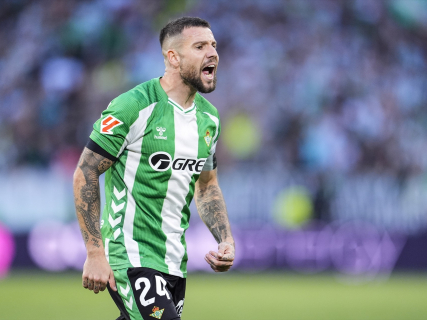

Real Betis footballer Aitor Ruibal has made one of the most direct reflections in Spanish sports on politics and society. In an interview with El País, the player has openly defended his right to express his opinion and has been clear about his position: “No party in Spain represents me. The only thing I am clear about is that I do not want the far-right governing”.
A footballer who doesn't want to shut up
Ruibal breaks with the usual discourse of neutrality in football. “I don’t buy into the ‘I don’t get involved because I’m a footballer’ thing,” he states, questioning those who avoid publicly taking a stance. For him, that stance is not neutrality, but a decision: “You don’t get involved because you don’t want to get into trouble.”
The player insists that athletes have a voice and responsibility: “If you say that, you are invalidating me,” he explains, making it clear that he is not willing to accept that football is a space separate from social debate.
Against homophobia and racism in football
One of the pillars of his speech is the denunciation of homophobia in stadiums, a reality that he assures to have experienced firsthand. After receiving insults from the stands for wearing painted nails, his response was direct: “Take that, homophobe”.
Ruibal does not dwell on the anecdotal and points out a structural problem: “I don’t understand why they insult us by calling us faggots. What does it matter if I am?”. Furthermore, he launches a reflection that points to a pending change in sports: “It would be cool if some big sports figure came out of the closet”.
“I position myself on the basics”
The footballer claims his involvement in social causes: “I take a stand on clear issues: against homophobia, against racism, and in defense of basic rights”. For him, it is not about partisan ideology, but about fundamental values.
Although he avoids aligning himself with political parties, he does set clear limits: his rejection of the far-right and his commitment to a more inclusive society.
Football as a reflection of inequality
Ruibal also addresses the social component of sport, denouncing economic barriers. He recalls that in his case he was on the verge of quitting football because his family could not afford it.
“It is unfair that there are young people who give up due to lack of resources,” he states. That is why he has decided to get directly involved by buying the club in his neighborhood, with a clear idea: to facilitate access to sports for all young people.
A different profile in Spanish football
In an environment where many players avoid speaking out, Ruibal takes an unusual stance. His discourse combines social criticism, political positioning, and personal experience, moving away from the classic profile of a footballer focused solely on sports.
His statements reflect an increasingly visible trend: athletes who break the silence and enter the public debate, something that, in his case, has a clear message: not staying silent is also a way of taking a stand.