
The European Commission does not desist in its effort to simplify those regulations that were deployed in recent years and that now, in the opinion of part of the Community Executive and numerous industrial sectors, could be hindering the competitiveness and economic growth of the continent. In this new political context, marked by the shift towards "regulatory simplification" and the search for greater strategic autonomy, the green agenda no longer occupies the same central space it had during the previous Community mandate. This became evident when Brussels presented its environmental omnibus package in December, an initiative aimed at making part of European ecological legislation more flexible and whose scope is now beginning to be specified with greater clarity.
Within this framework, the European Commission opened this Tuesday the public consultation process related to the directives linked to the protection of wild birds and habitats, two of the historic rules that underpin the Community policy for biodiversity conservation. “The initiative is part of the Commission’s simplification process, which aims to strengthen the EU’s competitiveness while safeguarding environmental, economic, and social objectives,” community sources defend.
What the Executive has in hand is, in practice, a review aimed at verifying if the regulation continues to meet the objectives of nature protection “in a profitable way”, an expression that in Brussels is beginning to gain weight in political language and reflects the attempt to balance sustainability, legal certainty, and economic growth. The review also takes place at a particularly sensitive time for European green policy, subjected to growing pressure from productive sectors, member states, and political groups who consider that part of the climate and environmental legislation has become an excessive administrative burden.
Administrative simplification and faster permits
The simplification will focus on several critical axes that the Executive has extracted from the concerns conveyed by stakeholders during recent months. Among the proposals already being studied is a new approach to streamline environmental assessments with the aim of accelerating permit granting procedures, particularly in strategic sectors such as renewable energies, infrastructure, or certain industrial projects.
Special attention will also be paid to simplifying the appropriate assessment procedure for the Natura 2000 Network sites, considered for years one of the most complex points from an administrative point of view. Numerous national governments and companies had been calling for a clarification of the applicable criteria and a reduction of the bureaucratic burdens associated with these procedures, especially in projects related to the energy transition.
In the same way, the Commission's legal services are exploring more agile procedures that are capable of adapting the annexes of the directives to scientific and technical progress, in addition to clarifying the exceptions in species protection. Brussels also seeks to improve the coherence of Community policies and simplify monitoring and reporting — the so-called regulatory monitoring — with the aim of achieving greater efficiency in the way Member States communicate their data.
The Reinterpretation of the Birds Directive
The current movement does not arise in isolation. In March, the Commission sent a document to the Member States clarifying the application of certain articles of the Birds Directive with the aim of facilitating certain sustainable economic activities. In that text, Brussels reminded the Twenty-Seven of the need for a legal framework prohibiting the deliberate killing or capture of birds, the destruction or damage of their nests, the collection of eggs in the wild, or the deliberate disturbance of species, especially during the breeding and rearing periods.
The key issue lies in the interpretation of the concept of “deliberation”, a legal element that has historically generated friction between environmental authorities and economic operators. According to the Commission's interpretation, an act is deliberate not only when it has the direct purpose of causing harm, but also when the perpetrator accepts the possibility that their actions may cause such damage and, even so, decides to continue with the activity.
One of the most relevant contributions of that document was the emphasis on preventive measures. In this way, if an economic activity —such as the construction of a wind farm, an energy infrastructure, or forest management— applies concrete and effective measures aimed at avoiding damage, any residual impact could be considered incidental and not deliberate. This interpretation opens the door to a more flexible application of the regulations without the need to formally modify the legislative core.
Repeals and exceptions under community control
In those cases in which it is not possible to avoid the damage through preventive measures, Brussels does allow Member States to authorize exceptions in special circumstances. However, for a derogation to be valid, the European Executive recalls that three strict conditions must be met.
On the one hand, it must be demonstrated that satisfactory alternatives do not exist capable of avoiding the damage. Furthermore, the exception may only be granted for specific reasons, such as public health and safety, air safety, the prevention of serious damage to crops, livestock or fisheries, the protection of flora and fauna, or for scientific research purposes.
Added to this is the obligation for authorizations to precisely detail the species affected, the permitted methods, the risk conditions, the responsible authorities, and the controls that will be carried out. Brussels wants to prevent derogations from becoming discretionary mechanisms or a path for generalized relaxation outside the Community legal framework.
Likewise, the guide prepared by the Executive detailed strategies to avoid collisions in wind farms and electrocutions on power lines, as well as the adaptation of harvest or logging seasons to protect nests using incentives linked to the Common Agricultural Policy (CAP). The use of bird-friendly glass in buildings and infrastructure was also recommended, along with measures to manage light pollution to reduce the impact on certain species.
Teresa Ribera: political balance
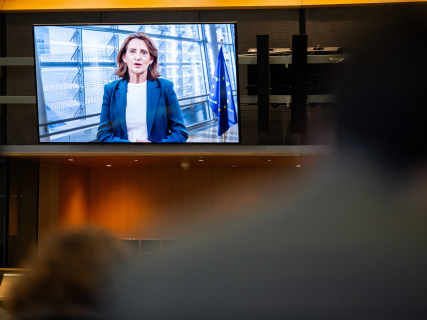
The Vice-President of the European Commission, Teresa Ribera, explained during the presentation of the omnibus package in December that “it is not easy to take so many things into account when trying to define an omnibus package”. “It is not easy for anyone to try to identify how we can respond to this demand for simplification while responding to this other demand for maintaining high standards,” the Spaniard sentenced.
The community leader then defended that within the Commission the idea is widespread that it is possible to “combine competitiveness and high environmental standards”, arguing that ecological protection also generates benefits in terms of public health, innovation, and resource efficiency. “It is our obligation,” stressed Ribera, who insisted that Brussels does not intend to enter into “a race to the bottom” in regulatory matters despite the political shift experienced during the start of the new legislature.
However, the internal debate within European institutions increasingly highlights tensions between those who defend keeping the legislative legacy of the European Green Deal intact and those who consider that part of the regulations approved in recent years must be reviewed to avoid negative effects on industry and investment.
The Deforestation Law, a symbol of the new political climate
One of the votes held during the past autumn in the European Parliament served to visualize the new political balance that is beginning to consolidate in Brussels. The debate on the delay in the application of the European Deforestation Regulation showed how the European right and far-right were able to join forces against one of the great regulatory “flags” promoted by the Commission during the previous term.
The regulation whose entry into force ended up being delayed affected products such as livestock, cocoa, coffee, palm oil, soy, wood, and rubber, as well as derivatives such as leather, chocolate, or furniture. The initial objective of the legislation was to oblige importing companies to guarantee, through geolocalization systems, that their supply chains had not generated deforestation in the places of origin of the raw materials.
After several postponements and two years of intense negotiations, the Community Executive had finally proposed its entry into force for the coming months. However, the member states ended up supporting a new extension under the argument of “regulatory simplification” and the need to give companies and administrations more time to adapt to the technical requirements of the regulation.
The decision was interpreted in Brussels as another sign that the current European political cycle has begun to partially shift the focus from climate ambition to industrial competitiveness, the reduction of administrative burdens, and economic security. A change in priorities that is beginning to transform the tone of Community policies and that threatens to reopen debates that just a few years ago seemed closed within European institutions.