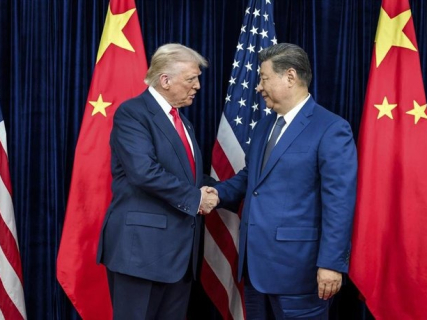

Donald Trump has begun his official visit to China with a very different tone than the one that marked a good part of the relationship between Washington and Beijing for years. At the start of his summit with Xi Jinping, the US president assured that the bilateral relationship will be "better than ever," in a gesture of clear diplomatic optimism in one of the most sensitive meetings on the international calendar.
The meeting between both leaders comes at an especially delicate moment for the two biggest powers on the planet. Trade tensions remain alive, Taiwan continues to be one of the most explosive points on the bilateral agenda and the war with Iran has added a new geopolitical front that has also entered the conversation.
Despite that context, the opening of the meeting has been marked by public messages of a positive tone and a visible willingness to reduce confrontation.
A change of tone after years of tension
For years, the relationship between the United States and China has been marked by tariff disputes, technological restrictions, controls on strategic exports, and a progressive political deterioration.
Trump turned the trade dispute with China into one of the cornerstones of his foreign policy in previous stages, with successive rounds of tariffs and openly confrontational rhetoric. Therefore, the message now sent in Beijing represents a significant shift, at least on the level of public discourse.
Among the central issues of this meeting are the extension of the current trade truce, the access of US companies to the Chinese market and the situation of strategic materials such as rare earths, fundamental for technological and defense sectors.
Also on the table is the US pressure for China to play some role in the crisis linked to Iran. The meeting also has a strong economic and business component. Trump has traveled accompanied by important US executives, reflecting the commercial weight of the bilateral relationship.
China arrives with a strengthened position
One of the elements that explain the tone of the meeting between Donald Trump and Xi Jinping is the relative position with which the countries they represent arrive at this summit. China maintains leverage in key sectors of industrial and technological supply, especially through the control of strategic minerals.
The United States, for its part, seeks commercial advances, political stability, and diplomatic results on several simultaneous fronts. That balance gives the meeting a strategic value much greater than the purely symbolic one.