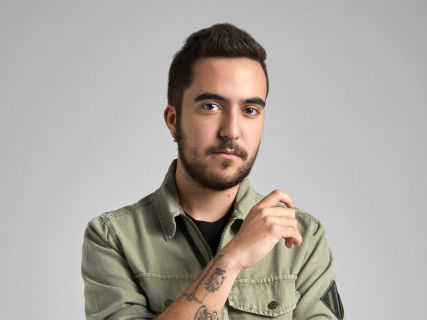

The Sevillian singer Francisco Javier Álvarez Beret, known artistically as Beret, was arrested this Thursday in Seville by the National Police for an alleged sexual assault and has been brought before the judicial authorities at the on-call court, which will have to decide on his legal situation.
The investigation is in its initial phase and no further details about the events have been released at this time.
From early YouTube videos to viral success
Before his arrest and becoming a regular name in Spanish music, Beret built his career from adolescence in Seville.
Born in 1996, he began writing lyrics at the age of 12, influenced by a wide variety of musical styles he listened to at home, from Melendi, Pablo Alborán or Extremoduro to international references like AC/DC or Eric Clapton.
His first contact with music was self-taught: he first wrote lyrics without a musical base and later began to record and publish them on YouTube, a platform that became the starting point of his career.
Success with "Lo siento" and artistic consolidation
The leap to popularity came with the song "Lo siento", an emotionally charged track that became a viral phenomenon among young audiences and placed him on the national music circuit.
Before that, he had already gained visibility with songs like "La vida misma" and "Dime quién ama de verdad", consolidating his own style, difficult to categorize between rap, pop, and urban ballad.
A career marked by mental health and musical evolution
In various interviews, the artist has admitted to having gone through episodes of depression and living with generalized anxiety disorder (GAD), a reality that has influenced the introspective nature of his lyrics.
His music, as he has defended on several occasions, does not respond to a single genre, but to the need to express personal emotions through songs.
From Prisma to Resiliencia: his musical maturity stage
In 2019, he released his first studio album, "Prisma", with 19 tracks under the Warner Music label, a work that explored themes from sadness to love or disappointment.
Three years later, he released "Resiliencia", an album on which he collaborated with artists such as Estopa, Omar Montes or Malú, consolidating his presence in the Spanish music industry.
In his career, he has also had the support of artists such as Morat, Lola Índigo, or Vanesa Martín, in a process of artistic growth that led him to become one of the most recognizable figures of national urban pop.