Tragedy in Magaluf: two dead and 24 injured in the fire of a residential building

Emergency services keep the investigation open to clarify the causes of the fire

1 minute

incendio magaluf

incendio magaluf

Add DEMÓCRATA to Google

Published

Last updated

1 minute

Most read

Two people have died and another 24 have been injured, including eight firefighters, in the fire that broke out in a residential building in Magaluf, in the Mallorcan municipality of Calvià.

The fire originated in a building located on Martín Ros García street and forced the deployment of a large emergency operation involving firefighters, health services, and security forces. The causes of the fire have not yet been officially communicated.

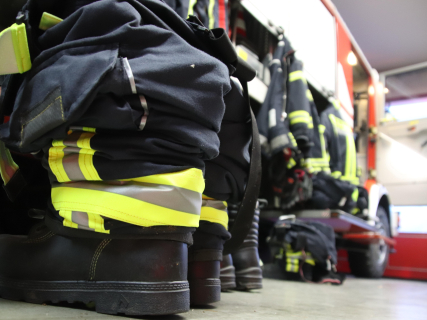
According to information provided by emergency services, a total of 24 people were injured during the incident. Among those affected are eight firefighters who participated in the extinguishing and rescue efforts.

Four of the injured had to be transferred to hospital centers. Two of them were evacuated to Son Llàtzer Hospital and another two to Son Espases University Hospital, both in Palma.

The fire caused a significant mobilization of emergency resources in one of Mallorca's main tourist areas. Intervention teams worked for hours to extinguish the flames and attend to residents affected by the fire and smoke inhalation.

At the moment, authorities have not provided information on the identity of the two deceased individuals or the specific circumstances under which the deaths occurred.

The origin of the fire in Magaluf has also not been officially reported. Investigators will now have to determine where the fire started and what factors contributed to its rapid spread through the building.

The emergency is still ongoing, and authorities may release further information in the coming hours as the investigation progresses and the assessment of the damage caused by the fire is completed.

More key points, information and questions with FREN

AI-GENERATED CONTENT

What legal requirements must be met to access aid or compensation after a fire in a residential property in Spain?

Concise answer

To access aid or compensation after a fire in a home in Spain, there are two main routes: private compensations (home insurance, community insurance, civil liability) and extraordinary public aid (State, autonomous communities, or municipalities). In the private sphere, the key requirement is to have active policies covering fire and to be able to prove ownership of the property or damaged goods, as well as the reality and cause of the incident. In the public sphere, effective residence in the affected property is usually required, the damage must render it uninhabitable, proof of insufficient resources is needed, and the fire must not have been caused by intent or gross negligence. Additionally, in all cases it is essential to file complaints and reports (firefighters, police, expert assessments) and strictly respect application deadlines.

1. General framework: private compensations vs. public aid

After a fire in a residential property, three types of coverage or support may concur:

First, private insurance compensations (home insurance, community insurance, or third-party civil liability). To collect, the home and contents must be insured, the premium up to date, and fire risk included in the policy. Second, public aid or subsidies, usually provided by the State, autonomous communities, or local entities after serious damage or social emergency situations. Finally, in some cases there are compensations for administrative liability if abnormal functioning of a public service is proven (for example, a public electrical network causing the fire), which is exceptional and subject to very strict requirements.

2. Common requirements for collecting home or community insurance

In the insurance field, the Insurance Contract Law and the policies themselves set a series of basic requirements:

Regarding the applicant's status, they must be the policyholder, insured, or designated beneficiary (owner, usufructuary, or tenant as applicable) and be up to date with premium payments at the time of the incident. Regarding risk coverage, fire must be expressly covered; damages caused by the insured's intent or gross negligence are typically excluded, and compensation may be reduced or denied if there was underinsurance or relevant circumstances were concealed (risky activity in the home, undeclared defective installations, etc.).

From the evidentiary point of view, it is required to notify the incident within the deadline set in the policy (often 7 days) and provide fire brigade reports, police reports, technical reports, and an inventory of damaged goods with invoices or receipts. The insurer usually appoints an expert; cooperation with this expert assessment and document verification is a practical requirement for payment. If the fire originates in common areas or community facilities, the community insurance policy may be the main compensation route, requiring proof of community membership and specific damage.

3. Requirements for public aid after fires in homes

Public aid is usually implemented through royal decrees for disaster aid, autonomous orders for subsidies for rehabilitating damaged homes, or municipal social emergency programs. Although each call has its own details, several common requirements usually recur.

Regarding the link to the home, it is required to prove it is the habitual residence, through registration, rental contracts, or deeds, and that the property has been severely damaged or rendered uninhabitable by the fire, which is proven with municipal technical reports or emergency service reports. Cases of intentional fire by the beneficiary or when gross negligence is evident are almost always excluded; police and fire brigade reports are key to proving the absence of intent.

Regarding the economic situation, many aids are aimed at vulnerable family units, setting income or asset limits and requiring income certificates, tax returns, or social service reports. It is also usually required to be up to date with Tax and Social Security for high-value subsidies.

Administratively, it is common to require submitting the application within a specific deadline (for example, 1 or 3 months from the incident or from the publication of the call), accompanied by ID/NIE, registration certificates, property documentation, and, if applicable, proof of other compensations received to avoid duplications. Certain calls may condition aid on the effective rehabilitation of the home or renting an alternative housing, with subsequent justification of fund use through invoices.

4. Cases of third-party liability and judicial claims

Besides own insurance and public aid, it is possible to claim civil liability compensation against third parties (for example, a boiler maintenance company or a neighboring community) if fault or negligence is proven. In these cases, requirements include proving damage, causal link with the third party's action, and existence of fault, through expert reports, police reports, and witness statements.

When the public administration could be responsible (fall of a public electrical line, defects in a municipal installation causing the fire), the route is administrative liability, with the obligation to claim within the deadline (generally one year from the damage occurrence) and provide all necessary proof of abnormal service functioning.

What specific documentation do municipalities usually require to grant emergency aid after a home fire? How is the collection of home insurance coordinated with public aid to avoid incompatibility or overlap? In what cases can an insurance compensation be denied for considering gross negligence in the fire?

What competencies do municipal and autonomous community fire departments have in managing urban emergencies?

Competencies of municipal and autonomous community firefighters in urban emergencies

Brief answer

In Spain, urban emergency management with firefighters is organized in a decentralized manner: the basic competence for fire prevention and extinction is autonomous, but it is mainly provided through municipal services or provincial consortia. Municipal fire departments assume direct intervention within the urban area of their municipality (fires, rescues, accidents, technological risks), while autonomous community bodies, where they exist, usually coordinate, complement, and cover areas without their own service, in addition to planning at the regional scale. The specific distribution varies by autonomous community, but always under the framework of autonomous civil protection regulations and local ordinances. In large-scale emergencies, both levels integrate into territorial civil protection plans and act in coordination with 112, police, and health services.

General competence framework in Spain

The Constitution and basic state legislation assign the autonomous communities the development competence in civil protection matters, while the State sets general principles. From there, each community approves its own emergency and police and firefighter coordination law, which establishes:

1) Who is responsible for the service: normally, larger municipalities must have their own fire service, while provincial councils, island councils, and the autonomous community itself organize services or consortia for small or rural municipalities.

2) How resources are coordinated: through the autonomous 112 emergency center, territorial plans, and special plans (floods, chemical risks, forest fires, etc.), in which municipal and autonomous firefighters' actions are integrated.

At the local level, municipal safety and civil protection ordinances specify functions, alert protocols, inspections, and collaboration with other services (local police, technical services, urban planning, etc.).

Typical competencies of municipal firefighters

Fire departments dependent on municipalities (often provincial capitals or large cities) focus on immediate operational intervention within the municipal area. Their usual functions in urban emergencies include:

1) Urban fire extinction: homes, public buildings, commercial premises, industries located on urban land, parking lots, urban tunnels, and vehicles. They also handle fires in municipal infrastructures (schools, sports facilities, etc.).

2) Rescue and salvage: rescuing people trapped in buildings, elevators, vehicles, collapsed structures, as well as rescues at heights (facades, cranes, rooftops) and in confined spaces of municipal or private ownership within the municipality.

3) Intervention in urban traffic accidents: extrication of victims, securing the vehicle, controlling fuel leaks, and collaborating with health and police services.

4) Technological risks and small-scale hazardous materials: gas leaks in buildings, chemical spills in shops or small industries, shoring and stabilization of structures at risk of collapse.

5) Prevention and inspection in the municipality: technical reports on building projects, capacities and evacuation exits, inspections of public venues, hydrant control, and accessibility for emergency vehicles, all in collaboration with urban planning services.

6) Participation in municipal emergency planning: preparation and updating of the Municipal Emergency Plan, local drills, and training for the population and groups (shops, homeowners' communities, educational centers).

Competencies of autonomous community services and bodies

Not all autonomous communities have an "autonomous community fire department" as such; in many, the community organizes the network through provincial consortia or supramunicipal services. However, where strong autonomous or provincial structures exist, their functions in the urban context usually are:

1) Coverage of municipalities without their own firefighters: direct provision of fire extinction and rescue services in small towns, intermunicipal industrial parks, and metropolitan areas without municipal corps.

2) Reinforcement in large cities: support to municipal services in large-scale incidents (fires in singular buildings, high-risk industries, accidents with multiple victims) or when municipal corps capacities are exceeded.

3) Coordination and command in major emergencies: in scenarios with regional emergency declaration, the community assumes direction of all intervention means, including municipal, autonomous, forest firefighters, and other specialized resources.

4) Planning, regulation, and training: development of autonomous technical regulations on fires and self-protection, approval of territorial and special plans, definition of equipment homologation criteria, as well as training and retraining in autonomous security and emergency schools.

5) Specialized units: creation of intervention teams for CBRN risks (nuclear, biological, chemical), heavy urban rescue, search and rescue in collapsed structures, or rapid intervention groups deployed wherever required, also in large urban centers.

Coordination in urban emergencies

The practical key is not only who formally has competence, but how the different levels coordinate. In a typical urban emergency (building fire, gas explosion, multi-vehicle accident), the usual process is:

First, activation through the autonomous 112 or municipal emergency center, which mobilizes the competent firefighters by territory and, if necessary, requests autonomous or neighboring consortium reinforcements. Then, at the incident site, a unified command of intervention is established (fire chief of the acting service), integrated into the emergency management scheme of the municipal or autonomous plan, where police, health services, and civil protection also participate.

In complex emergencies exceeding the local scope, the autonomous community may declare higher emergency levels, assuming strategic direction and ordering mobilization of additional resources (including state means if appropriate), while municipal firefighters continue as the first operational line in the affected urban environment.

What regulations govern fire safety and prevention in residential buildings in the Balearic Islands?

Fire safety and prevention regulations in residential buildings in the Balearic Islands

Concise answer

Fire safety and prevention in residential buildings in the Balearic Islands are mainly supported by basic state regulations (Technical Building Code and Fire Protection Installations Regulation), which are fully applicable in the archipelago. The Autonomous Community complements this framework through the Housing Law and the emergency and civil protection laws, which regulate conservation duties, organization of fire services, and inspection and sanction powers. Finally, municipalities (Palma and other towns) may approve ordinances that develop specific aspects: licenses, firefighter accessibility, maintenance, and inspections of fire protection installations. Together, these regulations determine both the technical requirements of buildings and the responsibilities of developers, homeowners' communities, and public administrations.

1. Basic state regulations directly applicable

1.1. Technical Building Code – DB SI

The core of technical regulation is the Technical Building Code (CTE), approved by Royal Decree 314/2006 and subsequent amendments, whose Basic Document SI – Fire safety (DB-SI) sets the conditions that residential use buildings (apartment blocks, residences, etc.) must meet. The DB-SI establishes:

SI 1 – Internal fire spread: compartmentalization into fire sectors, fire resistance of construction elements (floors, party walls, fire doors), and fire reaction of materials in evacuation routes. SI 2 – External fire spread: requirements for facades and roofs and distances between buildings to limit fire transmission. SI 3 – Occupant evacuation: occupancy calculations, number and width of exits, maximum evacuation route lengths, staircase characteristics, and emergency lighting and signage conditions. SI 4 – Detection, control, and extinction: defines when fire extinguishers, hose reels, detection and alarm, hydrants, smoke control systems, and garage ventilation are mandatory. SI 5 – Firefighter intervention: requires access and routes for fire vehicles and water supply points. SI 6 – Structural fire resistance: fire resistance classes required according to building height and use.

Additionally, other CTE documents (such as DB-SU on usage safety) address elements that are part of evacuation (handrails, stairs, floors, etc.).

1.2. LOE and agent responsibilities

The Law 38/1999, on Building Regulation (LOE) complements the CTE by defining the basic safety requirements (including fire safety) and the obligations of developers, designers, builders, and site managers. The LOE establishes that the project and work must comply with current technical regulations, that the building must be delivered with its building logbook, and that there are different warranty and liability periods for damages affecting safety or habitability, including fire protection.

1.3. Fire Protection Installations Regulation

Royal Decree 513/2017 approves the Fire Protection Installations Regulation (RIPCI), which regulates design, installation, commissioning, and maintenance of extinguishers, hose reels, hydrants, sprinklers, detection systems, signage, etc. The Regulation:

– Defines the catalog of fire protection equipment and installations and their UNE standards. – Requires periodic inspections to be carried out by authorized installation and maintenance companies. – Imposes on the installation owner (in a residential building, usually the homeowners' community) the obligation to maintain, inspect, and keep maintenance documentation.

1.4. Civil protection and self-protection

The Law 17/2015, of the National Civil Protection System and the Basic Self-Protection Standard (RD 393/2007) configure emergency planning and the obligation to prepare self-protection plans in certain centers. In the residential field, this is especially relevant for public residences (elderly or student residences) or tall or high-occupancy buildings, which may be required to have their own plan.

2. Autonomous community regulations of the Balearic Islands

2.1. Law 5/2018, on housing in the Balearic Islands

Law 5/2018, of June 19, on housing in the Balearic Islands establishes the autonomous framework on housing. According to its Explanatory Memorandum, homes must be decent, adequate, and safe, and Title III regulates physical conditions and the duty of conservation and rehabilitation of buildings. This Law:

– Reinforces the obligation of owners and communities to maintain the property in adequate conditions, including compliance with fire safety requirements. – Grants the Administration the power to carry out inspections, issue execution orders, and sanction in case of non-compliance. – Explicitly declares the supplementary nature of state regulations where autonomous regulations do not apply, consolidating the application of the CTE, LOE, and RIPCI in the Balearics.

2.2. Laws 2/1998 and 3/2006 on emergencies

Law 2/1998, on Emergency Regulation, and Law 3/2006, on emergency management in the Balearic Islands, organize autonomous civil protection and develop fire prevention and extinction and rescue services. According to their Explanatory Memoranda, both laws:

– Formalize the public response to situations of serious risk, catastrophe, or calamity. – Regulate the organization and functions of fire services and other emergency services. – Recognize and respect municipal competence in fire prevention and sanctioning power. – Impose on citizens the obligation to collaborate in prevention and protection measures and drills, especially in buildings with emergency plans.

These laws serve as a basis for autonomous and municipal civil protection plans, which may set additional requirements (firefighter access, hydrants, meeting points) in residential developments and surroundings, especially in areas at risk of forest fires.

3. Municipal ordinances and regulations in the Balearics

Available information does not include the specific text of ordinances from Palma or other municipalities, so specific articles cannot be cited. However, based on autonomous emergency laws, it can be stated that municipalities have the competence to approve fire prevention and safety ordinances and to integrate these requirements into their urban planning regulations.

Usually, these ordinances regulate:

– Documentation required in building and first occupancy licenses to prove compliance with the CTE on fire matters. – Localized conditions of firefighter accessibility and hydrant location. – Programs of periodic inspection of certain buildings and activities (e.g., community garages, residences, tall buildings). – A sanctioning regime that complements the autonomous one for cases such as absence or poor condition of fire protection installations, blockage of exits or evacuation routes, and refusal to allow inspections.

4. Practical application scheme in a residential building

In a residential building in the Balearic Islands, the project and work must comply with the CTE – DB SI (compartmentalization, evacuation, and fire protection installations conditions) and other relevant CTE sections, under the LOE framework. Common fire protection installations (extinguishers, garage hose reels, detection, emergency lighting, signage) must be designed and maintained according to the RIPCI, with the homeowners' community responsible for maintenance and contracting authorized companies.

Once in use, owners and the community are obliged, according to Law 5/2018, to keep the building in safe and habitable conditions, subject to inspections and execution orders by the autonomous or municipal administration. According to Laws 2/1998 and 3/2006, emergency services and municipalities can plan, inspect, and sanction fire prevention matters, while civil protection plans and local ordinances specify operational aspects such as firefighter access, hydrants, or additional measures in risk areas.

Play

Test your knowledge with FREN!

How much do you know about this topic? Answer the following 3 questions.

In which Mallorcan municipality did the fire with two fatalities occur?

Question 1 of 3

How many firefighters were injured during the intervention in the Magaluf fire?

Question 2 of 3

To which hospitals in Palma were the most seriously injured from the fire transferred?

Question 3 of 3

Hola, soy Fren. ¿Cómo te ayudo?