Expansion | Trump curbs attacks on Iran after endorsing "end points" of the pact

Trump freezes attacks on Iran after announcing a deal to end the war, although Tehran denies having approved "any text" with Washington.

2 minutes

fotonoticia 20260611220558 1920

fotonoticia 20260611220558 1920

Add DEMÓCRATA to Google

Ask FREN

Published

Last updated

2 minutes

Most read

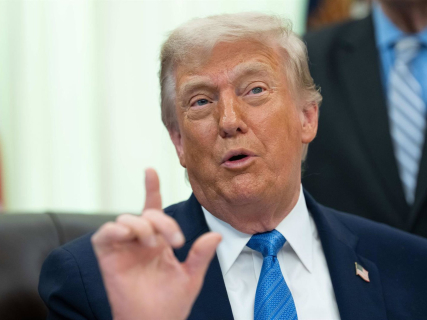
The President of the United States, Donald Trump, has communicated that he is suspending the attacks planned for Thursday night against Iran, arguing that, after holding "highest-level talks" with Iranian representatives, all parties involved have given their approval to the "final points" of the agreement aimed at ending the war that began on February 28.

"Given that talks with Iran have been held at the highest level of Iranian leadership, I, as President of the United States, have canceled the scheduled attacks and bombings against Iran tonight," he stated in a message disseminated on social media.

The Republican leader also stressed that the "final points" of the pact to conclude the conflict have been fixed "both in concept and detail" by all involved actors, including the United States, Israel, Saudi Arabia, the United Arab Emirates, Qatar, Turkey, Pakistan, Bahrain, Kuwait, Jordan, and Egypt.

"The naval blockade will remain in full effect until this transaction is finalized; the date and place of the signing will be announced shortly," said the US leader.

Later, in a press conference from the Oval Office, he insisted that a "great deal to end the war with Iran" has been reached and indicated that his administration is finalizing the text, "which should happen in the coming days."

Along these lines, Trump hinted that the signing could take place on European territory: "We will probably sign the agreement in Europe. The stock market went up 1000 points. That means they like the deal. It means they like it. Oil will start to go down (...) even more than before," he assured.

"And most importantly, we have an agreement that Iran will never have nuclear weapons, which was the main objective of everything we had to negotiate to achieve it," he added, before stating that he has spoken with the leaders of Israel, Qatar, the United Arab Emirates, Saudi Arabia, Bahrain, Kuwait, and "other" countries.

The White House chief made these statements while, in parallel, sources from the Iranian negotiating team denied that Tehran has ratified "any text" for an agreement with Washington, according to statements reported by the Iranian news agency Fars.

Trump had previously stated that US forces would again attack Iranian territory on Thursday night and had even mentioned that Washington, "at some point in the not-too-distant future, will take" the strategic island of Kharg and "other points of Tehran's oil infrastructure."

"We will take full control of their oil and gas markets, very much like we have done with Venezuela, which is working out wonderfully for both Venezuela and the United States," the White House chief stressed this Thursday.

These warnings come in a context of escalation, after Washington and Tehran have exchanged attacks for the second consecutive day. The Revolutionary Guard has claimed responsibility for launching a series of drone attacks against US bases located in Bahrain and other Middle Eastern enclaves, an operation it described as "retaliation" for US offensives against different positions of the Islamic Republic.

More key points, information and questions with FREN

AI-GENERATED CONTENT

What is the parliamentary status of the possible ratification of an agreement between the United States and Iran, and what procedures would be necessary if it were reached?

At this moment, there is no specific parliamentary procedure underway in the Spanish General Courts to authorize or ratify, on Spain's part, a concrete agreement between the United States and Iran; that is, there is no U.S.–Iran treaty in process whose text is being debated by the Congress or Senate. Consequently, the “possible ratification” is today only a hypothetical scenario from the Spanish point of view. However, the Constitution and the Law on International Treaties set out quite precisely the steps that would have to be followed if an agreement affecting Spain were reached (for example, in defense, sanctions, or cooperation). These steps include negotiation and signing by the Government, authorization by the Courts when appropriate, and finally, formal ratification by the Head of State and publication in the Official State Gazette (BOE).

1. Absence of a specific file in the Courts

As of today, no parliamentary initiative related to the authorization or ratification of a specific international treaty between the United States and Iran that must be approved by Spain is registered. When there is a treaty submitted to the Courts, it is processed as its own file (usually in the Foreign Affairs or Defense Committee) and is clearly identified in the agendas and bulletins of the Congress and Senate. Since no such file exists, the answer to “what is the parliamentary status” is: there is no parliamentary status because there is not yet a Spain-relevant treaty to authorize or ratify. Everything that follows therefore explains how the procedure would be if an agreement that legally affected Spain were reached.

2. Applicable constitutional and legal framework

The Spanish procedure for international treaties is mainly determined by the Constitution and Law 25/2014 on Treaties and Other International Agreements (referred to in the consulted information as the “Law on International Treaties”). The key constitutional provisions are:

Article 93 CE. Allows the delegation to international organizations or institutions of powers derived from the Constitution, subject to prior authorization by the General Courts. This is relevant if the agreement involves delegating powers to an international body that would manage, for example, a sanctions or verification regime.

Article 94 CE. Establishes which treaties require prior authorization from the General Courts. Among them are those that:

  • Involve the cession or limitation of sovereignty.
  • Affect matters reserved for organic law (fundamental rights, institutional organization, electoral regime, etc.).
  • Create significant financial obligations for the State or require modification of internal legislation.
  • Concern defense, military bases, or military cooperation, due to their special political significance.

Also relevant are Article 56 CE (the role of the King as Head of State) and Article 62 CE, which includes among the King's powers the expression of the State's consent to treaties, once authorized according to the Constitution.

3. Bodies involved

In a potential agreement between the United States and Iran affecting Spain, the institutional actors would be:

  • Government: negotiates the treaty and proceeds to sign it; prepares the submission of the text to the Courts when authorization is required.
  • General Courts (Congress and Senate): grant, when appropriate, prior authorization for the conclusion of the treaty and ratification through debate and voting in committee and plenary sessions.
  • Head of State (King): once parliamentary processing is completed, expresses the State's consent, sanctions, and orders the publication of the treaty in the BOE.

4. Procedure phases if a relevant agreement were reached

a) Negotiation and signing by the Government

The Spanish Government would negotiate, directly or within international organizations, the clauses of the agreement affecting Spain (for example, military presence, lifting of sanctions, or civil nuclear cooperation). Once a text is reached, it would sign it, usually warning that entry into force is conditioned on authorization by the Courts if required by Article 94 CE.

b) Submission to the General Courts

The Government would submit the full text of the treaty to the Congress and Senate. This submission is classified and sent to the competent committee (Foreign Affairs, Defense, or another depending on the content). The Law on Treaties establishes the obligation to inform the Chambers also of agreements that do not require authorization, although in these cases what exists is political control, not authorization voting.

c) Parliamentary processing

In the corresponding committee, the text would be examined, reports could be requested from Ministries or advisory bodies, and a report recommending whether to authorize the treaty or not would be prepared. That report would go to the Plenary (first of the Congress and, according to ordinary practice, also of the Senate), where a political debate and a vote would be held.

As a general rule, authorization is approved by simple majority. If the content implied cession of sovereignty or affected matters of special constitutional protection, a reinforced majority could be required under Article 93 CE or, if applicable, a prior legal reform.

d) Ratification, sanction, and publication

Once approved by the Courts, the King would express the consent of the Spanish State by signing the instrument of ratification. Subsequently, the treaty would be published in the Official State Gazette, from which moment it would be formally incorporated into the Spanish legal system, with the effectiveness and limits corresponding according to its nature.

5. Variations depending on the nature of the U.S.–Iran agreement

If the eventual U.S.–Iran agreement only had effects between those two States and did not generate obligations for Spain, there would be no Spanish parliamentary procedure beyond possible political control debates. If, on the other hand, Spain adhered to or assumed commitments derived (for example, on military deployments, cooperation in nuclear control, or lifting of sanctions), the described procedure would be activated totally or partially. In defense and military bases matters, parliamentary control and the requirement of prior authorization are usually especially strict, so any relevant step would almost certainly involve debate and voting in Congress and Senate.

What are the powers and attributions of the President of the United States in foreign policy and signing international agreements according to U.S. legislation?

Powers of the U.S. President in Foreign Policy and International Agreements

Summary answer

In the U.S. constitutional system, the president is the main person responsible for foreign policy and the “Commander in Chief” of the Armed Forces, but his powers are balanced by Congress, especially the Senate. The president directs diplomatic relations, recognizes states and governments, negotiates treaties and other international agreements, and represents the country abroad. However, formal treaties require the Senate's “advice and consent,” with a favorable vote of two-thirds of the senators present. Additionally, many agreements are channeled as “executive agreements,” which may be based solely on presidential authority or on laws passed by Congress, which significantly nuances their scope and democratic control.

Constitutional basis and general role in foreign policy

The United States Constitution does not contain a “closed catalog” of foreign policy powers but distributes key functions between the president and Congress. Article II designates the president as Chief Executive and Commander in Chief, granting him leadership in conducting foreign policy and defense. On this basis, practice and jurisprudence have consolidated the president as the nation’s “sole voice” abroad: setting broad strategic lines, defining geopolitical priorities, coordinating the State Department, Defense, Treasury, and intelligence agencies, and officially representing the U.S. at summits and international organizations.

Nevertheless, Congress retains significant material powers: declaring war, regulating foreign trade, approving the federal budget (including foreign aid and military spending), and creating or modifying legal frameworks that condition presidential action (for example, sanctions or arms export limits). U.S. foreign policy is therefore a shared power space where presidential initiative is dominant but not absolute.

Signing and negotiation of international treaties

Regarding treaties, the Constitution assigns the president the competence to negotiate and sign them but requires Senate participation for their perfection. Article II, section 2, establishes that the president may make treaties “by and with the advice and consent of the Senate,” provided two-thirds of the senators present vote in favor. In practice, the Executive negotiates with foreign governments, politically closes the text, and once signed, submits it to the Senate for examination.

The Senate may: approve the treaty as is; reject it; or approve it with reservations, interpretative declarations, or conditions limiting its application. Until this approval occurs, the treaty cannot be ratified and therefore does not bind the United States internationally under the internal constitutional order. Additionally, Congress may be necessary to implement the treaty through laws (for example, to adapt internal norms to newly assumed international obligations).

Executive agreements and simplified agreements

Alongside treaties, the president regularly uses so-called executive agreements, which are international agreements concluded by the Executive without following the reinforced two-thirds Senate procedure. They can be divided into two main categories:

First, congressional-executive agreements, based on a prior law or specific authorization from Congress. In these situations, Congress authorizes the president to negotiate and conclude agreements in a specific area (for example, trade), which can then be approved by simple majorities in both chambers, instead of the Senate supermajority required for treaties. Second, sole executive agreements, which the president signs relying solely on his own constitutional powers (such as recognition of governments, operational military agreements, or cooperation memoranda).

Although many executive agreements have practical effects similar to treaties, their legal basis is different and, absent express legal authorization, they cannot contradict existing federal laws nor modify powers reserved to Congress. Moreover, Congress maintains control capacity: it can require notification, approve laws limiting or conditioning their content, or even block their funding.

Powers as commander in chief and use of force

As Commander in Chief, the president directs the armed forces and may order military operations, deployments, or missions abroad. Historically, presidents have used this power to authorize interventions without a formal declaration of war by Congress. To rebalance this practice, Congress passed the War Powers Resolution of 1973, which requires the president to report promptly when introducing armed forces into hostilities and limits the duration of operations without express congressional authorization.

Although this resolution has been subject to debates about its constitutionality and practical application, it reflects that presidential power regarding the use of force is subject to political and ultimately budgetary control by Congress, which can withdraw funding or deny specific authorizations.

Recognition, diplomacy, and sanctions

Another key power is recognition: the president decides which governments and states the U.S. recognizes, where it establishes embassies, and with which actors it maintains diplomatic relations. He appoints ambassadors, who must be confirmed by the Senate, and can withdraw or downgrade relations as a political pressure instrument.

Regarding sanctions and economic measures, the president usually acts based on framework laws passed by Congress (such as export control rules or general sanctions regimes), which delegate powers to list persons or entities, restrict transactions, or block assets. This combination of congressional legislation and executive discretion allows agile action in foreign policy but within democratically set normative limits.

Balance of powers and internal control

Overall, U.S. legislation and constitutional practice configure a very powerful presidency in foreign policy but subject to constant checks and balances. The Senate intervenes in treaties and diplomatic appointments; both chambers control the budget, regulate trade, and can condition participation in international organizations. Courts, for their part, can review whether presidential action respects the Constitution and laws, especially when international agreements affect fundamental rights or internal powers.

From a comparative perspective, the U.S. model illustrates how a strong presidential system can coexist with intense parliamentary control over international commitments and the use of force, even though, in practice, initiative and rapid action capacity mostly reside in the White House.

What legal requirements and procedures must be fulfilled to dismantle a country's nuclear infrastructure according to international treaties?

Summary answer

The dismantling of a country's nuclear infrastructure is not regulated by a single international treaty but by a framework of nuclear security, non-proliferation, and safeguards agreements, complemented by each State's internal legislation. At the international level, the core is the Non-Proliferation Treaty (NPT), safeguards agreements with the IAEA, and conventions on nuclear safety and waste management. These instruments require ensuring safe, verifiable, and transparent dismantling but leave each country wide latitude to define its own technical and administrative procedure. In practice, the process combines international commitments with very strict national authorizations in safety, environment, radiological protection, and fissile material control.

Basic international framework

The Nuclear Non-Proliferation Treaty (NPT) is the starting point: it requires non-nuclear-weapon States to accept comprehensive safeguards from the International Atomic Energy Agency (IAEA) and to refrain from manufacturing nuclear weapons. Although the NPT does not describe step-by-step how to dismantle infrastructures, it does require that any closure or dismantling of civilian nuclear facilities maintain accounting and control of nuclear materials to prevent diversion to military uses.

These commitments are detailed in the Safeguards Agreements with the IAEA (often including Additional Protocols). If a country dismantles reactors, fuel plants, or other nuclear facilities, it must:

— Notify the IAEA of changes in the inventory of facilities and materials.
— Allow inspections and physical verifications during and after dismantling.
— Maintain detailed records of transfers, storage, treatment, and disposal of nuclear materials.

Nuclear safety and radiological protection

Alongside the NPT, nuclear safety conventions (for example, the Convention on Nuclear Safety and the Joint Convention on Spent Fuel and Radioactive Waste) establish mandatory or quasi-mandatory principles regarding:

Facility safety during dismantling (avoiding accidents, fires, leaks).
Radiological protection of workers, the public, and the environment, according to international standards from the IAEA and the International Commission on Radiological Protection (ICRP).
Safe waste management, including spent fuel, dismantling waste, and its possible geological storage or other long-term solutions.

These treaties do not impose a single model (for example, “immediate dismantling” versus “safe enclosure”) but require the State to have: an independent regulatory framework, a licensing system, and effective supervision of facility holders.

Typical legal procedures at the state level

Although each country designs its own regulations, the usual pattern of legal requirements and procedures includes several phases:

1. Political and strategic decision: the Government defines whether to partially or totally abandon nuclear energy (for example, through a law or a national energy strategy), sets closure schedules, and establishes institutional responsibilities (nuclear regulatory authority, competent ministries, state or private operators).

2. Dismantling plan: the facility holder must submit a detailed plan describing: sequence of operations, waste estimation, radiological protection measures, spent fuel management, schedule, and budget. This plan usually requires prior approval by the regulatory authority.

3. Specific authorizations and licenses: new licenses or modifications of existing ones are processed to move from “operation” to “dismantling.” This includes, in many countries, an environmental impact assessment procedure and public consultations, especially due to territorial and social implications.

4. Continuous regulatory supervision: during dismantling works, the regulatory authority conducts inspections, reviews periodic reports, and may impose additional conditions. International IAEA technical guidelines on dismantling and closure must be respected.

5. Management of nuclear materials and waste: legally a critical point. It is required to ensure traceability of all fissile material, its transfer to authorized storage facilities, and, if applicable, its export according to international export control regimes. Radioactive waste is conditioned and stored according to categories, with long-term commitments usually set out in specific radioactive waste laws.

6. Closure and site release: at the end of the process, the operator must demonstrate that residual radiation is below legal limits. The regulatory authority issues a closure resolution and, if applicable, releases the land for other uses, unless it is maintained as a waste repository or monitoring facility.

Transparency, public participation, and international dimension

Many countries are also subject to the Aarhus Convention, which requires guaranteeing access to environmental information, public participation, and access to justice in decisions with significant environmental impact, such as nuclear power plant closures. This translates into information processes, citizen claims, and, if applicable, appeals before administrative or constitutional courts.

From the international perspective, if dismantling affects reactors or facilities linked to military programs, the dimension becomes more complex: specific disarmament or verification agreements, generally bilateral or multilateral, come into play, setting inspection, destruction, or conversion modalities for sensitive facilities. In these cases, the principle of verifiability is reinforced to build trust among States.

In summary, dismantling a country's nuclear infrastructure requires articulating three levels: strict compliance with international treaties (NPT, IAEA safeguards, safety conventions), a robust internal legal framework regulating licenses, safety, and waste, and transparency and control mechanisms that ensure the renunciation or reduction of the nuclear program is real, safe, and verifiable.

Play

Test your knowledge with FREN!

How much do you know about this topic? Answer the following 3 questions.

Why did Donald Trump announce the suspension of military attacks against Iran?

Question 1 of 3

What has Iran declared about the existence of the supposed agreement with the United States?

Question 2 of 3

Which country has confirmed that it is not part of the memorandum of understanding according to the news?

Question 3 of 3

Hola, soy Fren. ¿Cómo te ayudo?