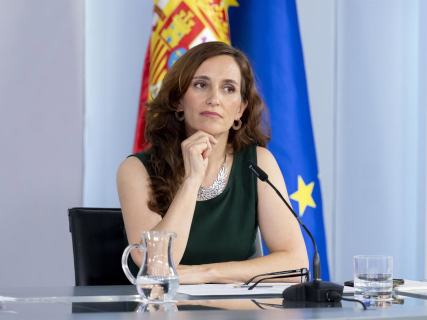
Health allocates more than 106 million to a new edition of 'Afternoons with Plan' to prevent childhood obesity

The new call will finance free extracurricular activities until 2029 to promote physical exercise, healthy eating, and emotional well-being among minors aged 6 to 16 years

2 minutes

fotonoticia 20260616110612 1920

fotonoticia 20260616110612 1920

Add DEMÓCRATA to Google

Ask FREN

Published

Last updated

2 minutes

Most read

The Ministry of Health has launched the second call for the Tardes con Plan program, an initiative aimed at financing free extracurricular activities to promote healthy habits among children and adolescents. The call will have a budget of over 106 million euros, of which 74 million will come from the European Social Fund Plus, within the State Program for Social Inclusion, Child Guarantee, and Poverty Reduction.

The program's objective is to promote activities related to physical exercise, healthy eating, rest, sleep, and emotional well-being, especially in areas where childhood obesity has a higher incidence. As the Ministry of Health recalls, in the most vulnerable contexts, the prevalence of this disease doubles the average.

The aim is to promote activities related to physical exercise, healthy eating, rest, sleep, and emotional well-being

Interested non-profit state entities can submit their applications through the Ministry's electronic headquarters between July 7 and September 30, 2026. The selected projects must be developed between September 1, 2026, and September 30, 2029. Additionally, the department headed by the Ministry will hold an online information session on July 9 to address questions about the call.

The new edition expands a program that already finances 95 actions spread across 28 provinces, in which more than 12,800 children and adolescents participate through extracurricular activities aimed at health promotion.

Among the main novelties of this second call is greater flexibility in the requirements to access the grants. Specifically, it will no longer be necessary for entities to carry out actions in several regional categories to be eligible for funding. With this change, the Ministry aims to facilitate the participation of organizations already working on healthy habit promotion programs and extend the initiative to the entire national territory.

Activities will preferably take place in public educational centers, community spaces, and other local facilities, always outside of school hours. The program seeks to encourage family participation and reinforce community involvement in acquiring healthy habits.

In addition to initiatives aimed at minors between 6 and 16 years of age, 'Afternoons with Plan' includes specific activities for mothers, fathers, and caregivers, considering that the family environment plays a decisive role in consolidating healthy lifestyles.

With this second call, the Ministry of Health maintains its commitment to the prevention and promotion of health in childhood and adolescence through a program jointly funded by Spain and the European Union, with the aim that economic situation or place of residence do not condition the health and well-being of minors.

More key points, information and questions with FREN

AI-GENERATED CONTENT

What is the parliamentary process required to approve the budget allocated to programs like 'Tardes con Plan'?

The budget for a specific program like “Tardes con Plan” is not approved in isolation, but as part of a budget law (state, regional, or municipal, depending on the competence). The corresponding Government drafts the preliminary draft, transforms it into a budget bill, and sends it to the legislative chamber (at the State level, first to the Congress). There it is processed as a law with specific rules: total amendments, section, program, and item amendments, intensive work in the budget committee, and final voting in Plenary. Once the law is approved and published, the program's credit can only be changed through regulated credit modifications (extraordinary credits, supplements, transfers, etc.).

1. Starting point: which budget are we talking about?

For a program like “Tardes con Plan,” the process depends on who holds the competence:

If it is a state program, its funding is included in the General State Budgets (PGE). If managed by an autonomous community or a city council, it will be in their regional or municipal budget. The scheme is analogous: the executive proposes and the legislature (state Parliament, regional Parliament, or municipal plenary) approves a budget law or ordinance.

2. Government phase: preliminary draft and bill

At the state level:

The Government drafts the preliminary PGE, where it already decides:

Which ministry is responsible for the program, in which section, service, and program it is framed, and with what initial credit (the amount of money assigned) it is endowed. After internal negotiation, the Council of Ministers approves the text as a General State Budget bill and sends it to the Congress of Deputies.

3. Processing in the Congress of Deputies

3.1. Admission and total amendments

The Congress Board qualifies and admits the bill for processing. A first period opens for total amendments, in which groups can:

Propose returning the bill to the Government or present a complete alternative text. If a total amendment succeeds, the budget (and therefore the program's credit) would not continue its processing and would have to be reconsidered. If the Plenary rejects these amendments, the total debate is overcome and the bill passes to the Budget Committee.

3.2. Work in the Budget Committee

In committee, the period for partial amendments opens, where it is really decided how much money each program will have. The following can be presented:

Amendments to a section (for example, a whole ministry); amendments to a specific program or service (like “Tardes con Plan” within a social policy); and amendments to specific items (detailing concepts: personnel, activities, subsidies, etc.).

The Budget Committee debates and votes on these amendments. Those approved are incorporated into the committee report, which is the budget text submitted to the Plenary. This is where the program's credit can be increased, reduced, or rearranged.

3.3. Debate and voting in the Congress Plenary

The Plenary debates the report by sections and votes on the amendments that remain “alive” (those not incorporated in committee but maintained by their authors). Finally, the Congress votes on the entire budget bill. If approved, the text is sent to the Senate.

4. Processing in the Senate and return to Congress

The Senate can:

Approve the text as is (in which case it is sent directly for sanction and publication), approve it with amendments affecting specific items (including the program in question), or propose a veto to the entire law.

If it introduces changes or vetoes, the text returns to Congress. Congress can accept or reject the Senate's amendments and can override the veto by absolute majority (or simple majority after two months). The final text approved by Congress is sent for sanction and promulgation by the King and published in the Official State Gazette (BOE).

5. Subsequent modifications of the program's budget

Once the law is approved, the credit for “Tardes con Plan” can only be altered through:

Extraordinary credits or credit supplements (to create or increase items by law or decree-law, depending on the case); credit transfers between items (respecting limits set by the budget law itself); and other technical figures (generations, incorporations, extensions) that allow adjusting expenditure. Many of these modifications must be authorized by the General Courts or, at least, reported to the Budget Committee.

6. Regional and municipal budgets

In an autonomous community or a city council, the scheme is very similar:

The regional government or the municipal government team drafts the preliminary draft; approves it and sends it to the regional Parliament or municipal Plenary as a budget bill or budget/ordinance project. The corresponding chamber discusses, introduces amendments, and approves the text. Only then is the program's annual credit fixed, with subsequent modifications subject to the rules of regional or local finance laws.

What specific types of amendments could modify the allocation of the “Tardes con Plan” program during budget processing? How do budget extensions affect the annual funding of a social program like “Tardes con Plan”? What leeway does a city council have to reorient, within the fiscal year, the already approved budget of a program similar to “Tardes con Plan”?

What specific competencies does the Ministry of Health have regarding the promotion of healthy habits in childhood according to Spanish legislation?

In Spanish legislation, the Ministry of Health does not appear as a “ministry of childhood,” but it does concentrate key functions of planning, regulation, and coordination in health promotion and healthy lifestyles that extend to children and adolescents. These competencies are mainly based on the Law 33/2011, General Public Health Law, the Law 14/1986, General Health Law, the Organic Law 8/2021 on comprehensive protection of children and adolescents against violence, and ministerial structure royal decrees. From these, one can distinguish between general health promotion functions, specific functions regarding childhood and adolescence, and inter-administrative coordination functions.

a) General health promotion functions

The Law 14/1986, General Health Law establishes as a principle that the means and actions of the health system must be oriented “primarily to health promotion and disease prevention,” and that public administrations must develop health education, comprehensive primary care (including health promotion), and programs aimed at higher-risk population groups. Although these obligations are directed at all health administrations, the Ministry of Health assumes state leadership and general coordination of the National Health System.

The Law 33/2011, General Public Health Law details these competencies much more:

  • Defines a system of comprehensive public health surveillance that covers “all health determinants and health status itself,” including behaviors and lifestyles (nutrition, physical activity, substance use, etc.).
  • Establishes that, with this comprehensive vision, “the core of coordination is the Ministry of Health (…) with the surveillance and information networks of the autonomous administrations,” and articulates a Public Health Surveillance Network coordinated from the State.
  • Regulates health promotion and disease prevention through health, environmental, labor, food policies, or promotion of physical activity, attributing to health authorities the promotion of screenings and prevention campaigns “with the highest possible quality and greatest possible accessibility for the population.”
  • Title III articulates the Public Health Strategy, which must define actions on the main health determinants and “identify synergies with policies of other departments and administrations,” placing the Ministry in a transversal planning role for healthy lifestyles.

In summary, in the general part, the Ministry of Health is the state body responsible for: designing and updating the Public Health Strategy, coordinating surveillance, setting basic promotion and prevention criteria, driving campaigns, and ensuring their evaluation.

b) Specific functions regarding childhood and adolescence

The most direct references to childhood appear in the Organic Law 8/2021, on comprehensive protection of children and adolescents against violence. In its preamble and Title III, violence is linked to physical health problems, mental health, and risk behaviors (substance abuse, suicide attempts, etc.) and administrations are obliged to deploy:

  • A state strategy to eradicate violence against children and adolescents, with special emphasis on family, educational, health, social services, sports and leisure, and new technologies environments.
  • In the health field, measures “oriented from the necessary collaboration of health administrations within the Interterritorial Council of the National Health System,” with the commitment to create a Commission against violence in children and adolescents mandated to develop a common health action protocol for eradicating violence against children and adolescents.
  • The guarantee of comprehensive and age-appropriate mental health care for all minors in situations of violence.

These obligations imply for the Ministry of Health specific competencies of:

  • Strategic planning (eradication strategy with a strong health and safe lifestyle component).
  • Technical regulation and development of common health protocols for early detection, care, referral, and follow-up of minors who are victims of violence.
  • Promotion of specific child and adolescent mental health resources related to these situations.

Organically, the Royal Decree 1047/2018 (partially repealed but illustrative) assigned the Secretary of State for Social Services functions in “child protection” and the Directorate General of Services for Families and Childhood the development and coordination of plans, strategies, and programs for promotion, prevention, and protection of children at risk, as well as drug policies through the Government Delegation for the National Drug Plan. Although the internal distribution has been updated (Royal Decree 454/2020 and more recently Royal Decree 718/2024, whose error correction is published in this reference), the functional scheme of state leadership in childhood, addictions, and prevention remains.

c) Coordination with autonomous communities, education, and other ministries

Coordination is one of the core competencies of the Ministry of Health:

  • Law 33/2011 establishes that the Interterritorial Council of the National Health System, through the Public Health Commission, must “ensure cohesion and quality in the management of public health surveillance systems” and guarantee interoperability of plans against health threats. The Ministry chairs and technically supports these bodies.
  • The Public Health Strategy must seek synergies with other sectoral policies (education, labor, environment, urban planning), so that the promotion of healthy eating, physical activity, or addiction prevention in minors is always done in collaboration with other departments.
  • Organic Law 8/2021 insists that health measures be articulated with education, social services, sports, and security forces; the Ministry of Health, through the Interterritorial Council and the new Commission against violence, acts as a technical meeting point with regional ministries and, interministerially, with the Ministry of Education and others.

Overall, the legislation configures the Ministry of Health as the state authority that plans, regulates, coordinates, and evaluates health promotion—including healthy habits in childhood—while direct execution (programs in health centers and schools, community interventions) falls to autonomous communities and, where appropriate, local and educational entities.

Could you specify what type of content should be included in that common health protocol against violence towards children foreseen by Organic Law 8/2021? What role does the Interterritorial Council of the National Health System play in the fight against childhood obesity and how does it translate into concrete measures? How are the competencies of the Ministry of Health articulated with those of Education in promoting healthy eating and physical activity in schools?

What legal requirements must non-profit entities meet to access funds from the European Social Fund Plus in Spain?

Non-profit entities wishing to access co-financed aid by the European Social Fund Plus (ESF+) in Spain must simultaneously comply with the specific European ESF+ regulations, the general state subsidy regulations, and the specific requirements of each state or regional call. In practice, this translates into: being a third sector or social economy entity when required, being properly constituted and registered, not incurring in the prohibitions of article 13 of the General Subsidies Law, being up to date with Tax Agency, Social Security, and reimbursements, and assuming reinforced obligations of justification, transparency, equality, and fraud prevention. Additionally, each call for proposals (for example, the state inclusion calls or regional basic material assistance calls) details additional requirements of technical capacity, experience, and internal controls. Below are summarized the main blocks of legal requirements.

1. Basic applicable regulatory framework

At the European level, the ESF+ is governed by Regulation (EU) 2021/1057 and Regulation (EU) 2021/1060, which set objectives, types of operations, control, information, and communication for all cohesion funds; both are expressly cited, for example, in Order TES/106/2024 on ESF+ eligible expenses (BOE-A-2024-2661) and in the 2024 state inclusion call (BOE-A-2024-14723) or in Order SND/716/2025, “Tardes con Plan” (BOE-A-2025-13998).

In Spain, the general subsidy regime is established in the Law 38/2003, General Subsidies Law (BOE-A-2003-20977) and its Regulation, approved by Royal Decree 887/2006 (BOE-A-2006-13371). For the optional tax regime of many non-profit entities, Law 49/2002 (BOE-A-2002-25039) and its regulatory development (Royal Decree 1270/2003, Royal Decree 1804/2008, etc.) are relevant.

2. General requirements as subsidy beneficiaries

2.1. Prohibitions of article 13 LGS

Non-profit entities must not incur in any of the prohibition causes of article 13 of Law 38/2003, which are systematically invoked by ESF+ resolutions. The 2024 state inclusion resolution expressly states that “entities in which any of the circumstances contained in paragraphs 2 and 3 of article 13 of Law 38/2003 concur shall not be considered beneficiaries” (BOE-A-2024-14723). Among these circumstances are, for example, having been convicted of certain crimes, being declared bankrupt, having been sanctioned for very serious subsidy infractions, or being subject to a specific prohibition to obtain public aid.

2.2. Tax, Social Security, and reimbursement status

The General Subsidies Law and its Regulation require proving, before granting, being up to date with tax and Social Security obligations, as well as not having debts for subsidy reimbursements. The LGS Regulation details the requirements to consider a beneficiary “up to date” with these obligations and allows, in certain cases, substituting certificates with responsible declarations (BOE-A-2006-13371). Recent ESF+ calls reaffirm this requirement, such as Order SND/716/2025, which requests a certificate of being up to date along with the application (BOE-A-2025-13998).

2.3. Obligations as beneficiary (article 14 LGS)

Law 38/2003 details general obligations of all beneficiary entities: execute the activity that justifies the aid, justify the use of funds, submit to national and community checks and controls, keep proper accounting, preserve documentation, and return funds in case of non-compliance. The legal text insists on holding accounting books and records and preserving receipts while they may be subject to control (article 14, reproduced in the law fragment provided).

3. Specific requirements for non-profit entities and third sector

Several state ESF+ calls limit beneficiary status to Third Sector Social Action entities, defined in Law 43/2015, and social economy entities. Order SND/716/2025 establishes that beneficiaries may be “Third Sector Social Action entities of state scope as established in articles 2 and 3 of Law 43/2015, […] and social economy entities covered in article 5 of Law 5/2011” (BOE-A-2025-13998). Other state calls (social innovation, inclusion, etc.) follow similar schemes, as reflected in the July 4, 2024 Resolution (BOE-A-2024-14723).

At the regional level, ESF+ program regulatory orders for basic material assistance, such as the Basque Country Order of June 23, 2025 (BOPV 2503064a) or Cantabria bases collected by the Cantabrian Institute of Social Services (ICS Cantabria), usually require the entity to have general interest purposes, proven experience in social intervention with vulnerable groups, and territorial implementation capacity.

4. Additional ESF+ obligations: expenses, control, transparency, and equality

The Order TES/106/2024 sets, at the state level, which expenses are eligible for ESF+ (personnel, unit costs, lump sums, etc.) and how they must be justified (BOE-A-2024-2661). Entities must adapt their accounting and filing to justify expenses according to these rules and the simplified cost options provided in articles 51–56 and 63 of Regulation (EU) 2021/1060.

Both Regulation 2021/1060 and national calls require fraud and conflict of interest prevention measures, as well as compliance with information and communication rules (EU and ESF+ logos, co-financing mention, posters, website, etc.), included in article 50 and annex IX of the RDC. ESF+ operation management manuals such as that of the INCYDE Foundation (INCYDE Manual) detail how these obligations must be applied.

Furthermore, Law 38/2003 obliges entities to publicize the subsidies received under the terms of Law 19/2013 on transparency, using, where appropriate, the National Subsidies Database (Royal Decree 130/2019). Many ESF+ orders also include the requirement of gender equality plans or measures, accessibility, and non-discrimination, in accordance with the principles of the European Pillar of Social Rights.

5. Additional references and general overview

Summary information about the Spanish ESF+ can be found on the General State Administration website, such as the State Research Agency page (AEI ESF+), the SEPE page (SEPE–ESF), the Ministry of Social Rights portal (DSCA ESF+), the state European funds portal (fondoseuropeos.gob.es), and European websites (European Commission – ESF+, Euroalert ESF+). Practical analyses can also be seen on portals like laadministracionaldia.inap.es.

In summary, any non-profit entity aspiring to ESF+ funding must start from this tripod: strict compliance with the General Subsidies Law and its regulation, adaptation to Regulations (EU) 2021/1057 and 2021/1060, and careful reading of each state or regional call for proposals, where entity eligibility, selection criteria, and management and justification obligations are specified.

Play

Test your knowledge with FREN!

How much do you know about this topic? Answer the following 3 questions.

What is the main objective of the 'Tardes con Plan' program promoted by the Ministry of Health?

Question 1 of 3

What is one of the main new features of the second call of the 'Tardes con Plan' program?

Question 2 of 3

What percentage of the program's funding comes from the European Social Fund Plus?

Question 3 of 3

Hola, soy Fren. ¿Cómo te ayudo?