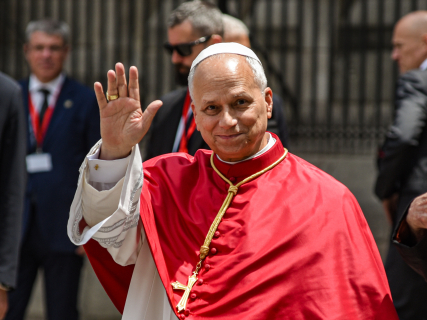
Spain bids farewell to Leo XIV after a tour framed by major social and political challenges of the moment

A seven-day trip through Madrid, Barcelona, and the Canary Islands with which Leo XIV, with allusions to the migratory challenge, mental health, polarization, or sexist violence

6 minutes

EuropaPress 7583894 papa leon xiv llegada homilia catedral santa cruz santa eulalia junio 2026

EuropaPress 7583894 papa leon xiv llegada homilia catedral santa cruz santa eulalia junio 2026

Add DEMÓCRATA to Google

Published

Last updated

6 minutes

Most read

A technical incident on Pope Leo XIV's plane has forced a change to his return plans to Rome. Until the last minute, there were many doubts about how and when the Pontiff would return home, although he finally ended up traveling on the Falcon offered by King Felipe VI.

The Pope's visit to Spain concluded this Friday after seven days of an intense tour that included Madrid, Barcelona, and the Canary Islands under an extraordinary reception by countless faithful.

His trip has transformed the country from top to bottom into a diplomatic and symbolic stage of the highest order, where the religious has coexisted with debates of strong political, social, and even geostrategic content.

Violence against women, polarization, mental health, abortion, euthanasia, and, above all, migratory pressure in the Atlantic, as well as Europe's role as a place of welcome for migrants. These have been some of the central axes addressed in the multiple speeches given by the Pontiff during his stay.

Issues that transcend the strictly pastoral, some of universal significance, and that connect with the main political tensions in Spain and also in the European Union.

Seven-minute ovation in Congress

The first political milestone of his visit took place in the Congress. For the first time, a pontiff spoke before the Spanish Lower House and, at the same time, addressed a Parliament for the first time in his pontificate.

Received by the President of the Chamber, Francina Armengol, the President of the Senate, Pedro Rollán, and the President of the Government, Pedro Sánchez, Pope Leo XIV delivered a speech on Monday lasting almost thirty minutes before a plenary hall with reinforced seating for about 700 people, including deputies, senators, regional presidents, and former government presidents.

The speech concluded with seven minutes of continuous applause in one of the longest receptions recorded in the recent history of the Chamber.

Leo XIV called for a culture of dialogue, railed against "permanent disqualification," and demanded institutional respect and a reduction in political confrontation.
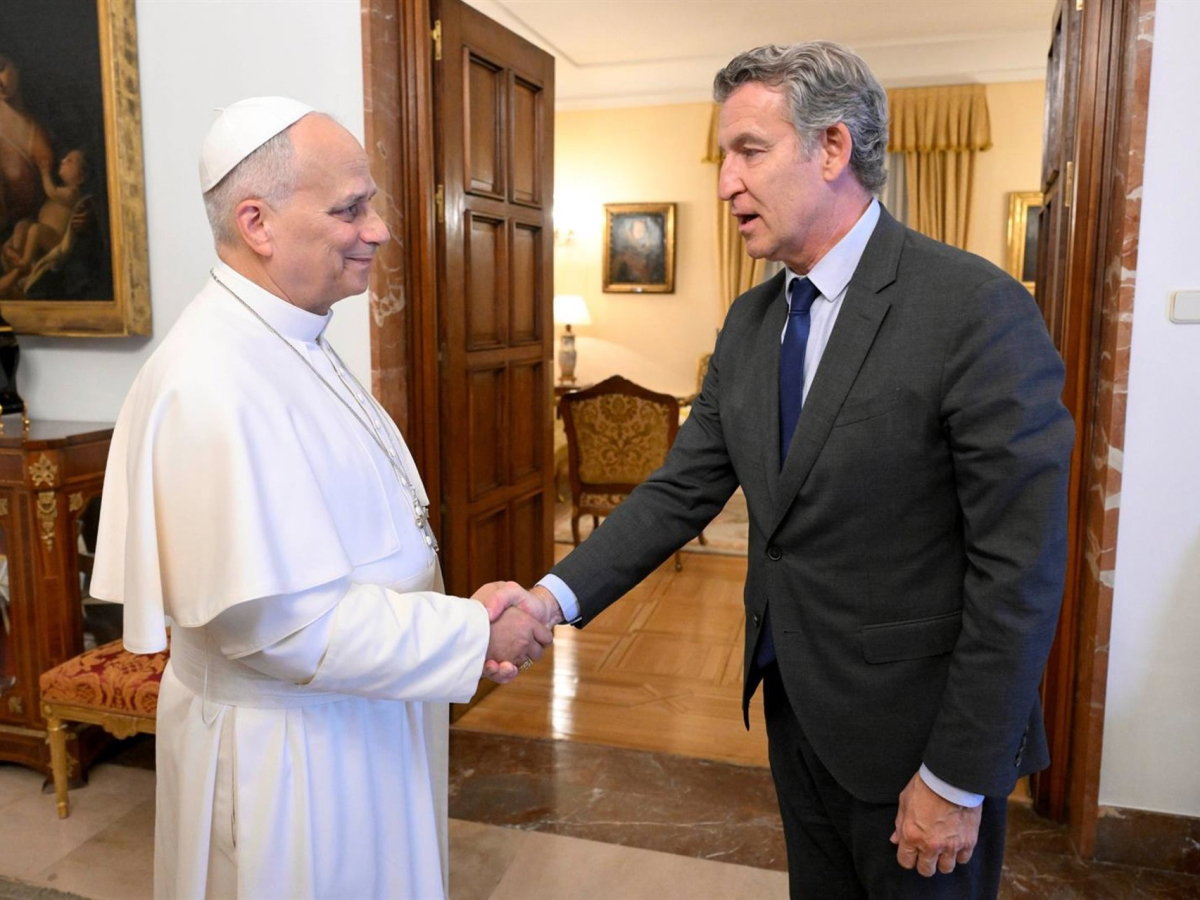
The leader of the PP, Alberto Núñez Feijóo, holds an audience with Pope Leo XIV at the Apostolic Nunciature. Madrid, June 8, 2026. PP
The leader of the PP, Alberto Núñez Feijóo, holds an audience with Pope Leo XIV at the Apostolic Nunciature. Madrid, June 8, 2026. PP -

Among other more delicate matters, the Pontiff defended that human life must be "guarded from conception to its natural end", in veiled allusion to issues such as abortion and euthanasia.

The day concluded with the generalized perception of an institutional milestone. All the formations present applauded the Pontiff's speech, and all made the Pope's words their own, from ERC to Vox. Only Podemos and BNG were absent from the Chamber.

Meeting with victims: "personal and ecclesial commitment"

That first day in Madrid, the Pontiff continued his visit by meeting with victims of sexual abuse within the Church, to whom he conveyed his "personal and ecclesial commitment" to move towards "comfort and healing."

The meeting took place at the Apostolic Nunciature headquarters and lasted for about an hour. Six victims participated, in an appointment that also generated controversy due to the absence of the main associations in the sector, who denounced a lack of representativeness and plurality.
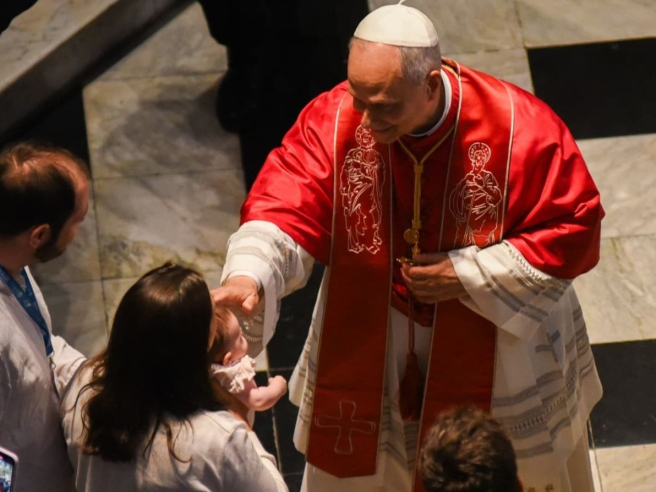
Pope Leo XIV kisses a baby at Montserrat Abbey | Europa Press
Pope Leo XIV kisses a baby at Montserrat Abbey | Europa Press -

As reported by the Vatican, the Pontiff assured those present of his personal closeness and that of the entire ecclesial community, and defended the need for the Church to become a space "truly safe and spiritually healthy".

Hours before the meeting, Leo XIV had met with the Spanish bishops at the Episcopal Conference, where he described the abuses as a "plague" and called for a response based on "listening, truth, justice, and reparation".

A Church based on "communion in diversity"

The visit entered its final stretch in Madrid with an event at the Santiago Bernabéu Stadium, where about 70,000 people participated in a religious celebration, with music and cultural and sporting references.

Before the dioceses of Madrid, Getafe, and Alcalá de Henares, the Pope shared a message focused on the need for the Church to adapt to large contemporary cities, questioning whether the Christian message managed to reach the "deepest cores" of modern metropolises.

Pope Leo XIV during the meeting with the diocesan community, at the Bernabéu Stadium, on June 8, 2026, in Madrid (Spain) | Carlos Luján
Pope Leo XIV during the meeting with the diocesan community, at the Bernabéu Stadium, on June 8, 2026, in Madrid (Spain) | Carlos Luján -

In his speech, Leo XIV defended the need to build a Church based on "communion in diversity", emphasizing that large cities demanded new ways of listening and dialogue.

From Barcelona's Raval

On the way to Barcelona. After an extraordinary reception, Leo XIV made a stop at the church of San Agustín, in the Raval neighborhood, where the Pontiff met with social organizations and charitable entities in an environment marked by cultural diversity and social vulnerability.

The meeting, the penultimate stop on his agenda in the Catalan capital, was particularly focused on the work of accompanying people in situations of exclusion, with the participation of entities such as Cáritas, the Amaranta Foundation, and associations linked to addiction care and human trafficking.

Leo XIV began his speech in a warm and relaxed tone, even stating that he felt at home there, referring to his connection with the Augustinian order.

The Pontiff even recalled a previous attempt to visit the temple in 1984, when it was closed, an episode he used to reinforce the personal nature of the reunion with the religious community.

Olympic Stadium, mental health, and gender-based violence

His agenda in Barcelona included a mass at the Sagrada Familia, where he received the main State authorities, including Kings Felipe VI and Letizia, as well as a visit to the prisoners of Brians 1.

But undoubtedly, the image that resonated most during his visit to the Catalan capital was a mass at the Olympic Stadium of Montjuïc.

Leo XIV participated in a massive vigil where some 40,000 people welcomed him on a day marked by music, Catalan culture, and a strong social component.

During the event, the Pontiff focused on the need for healthcare systems to prioritize mental health, warning of an "invisible and widespread malaise" that particularly affects young people in highly demanding societies.

Leo XIV also addressed gender-based violence, which he described as a "dramatic reality" that must be confronted by society as a whole. In his speech, he linked this problem with dynamics of abuse and domination within the family, pointing out that femicides represent the most extreme expression of a deteriorated social climate in personal relationships.

The event concluded with an atmosphere of strong emotional charge and with the perception among attendees of a celebration that combined spirituality, culture, and social debate in one of the city's most symbolic settings.

Migration and human dignity in the Canary Islands

Pope Leo XIV arrived in Gran Canaria in the final stretch of his visit to Spain, culminating with a message especially focused on the migratory drama in the Atlantic.

In a massive mass celebrated on the island's stadium, before almost 40,000 people, the pontiff began the celebration this Thursday with an invitation to pray for those who have "lost their lives at sea," underscoring the migratory tragedy affecting the Atlantic routes to Europe.
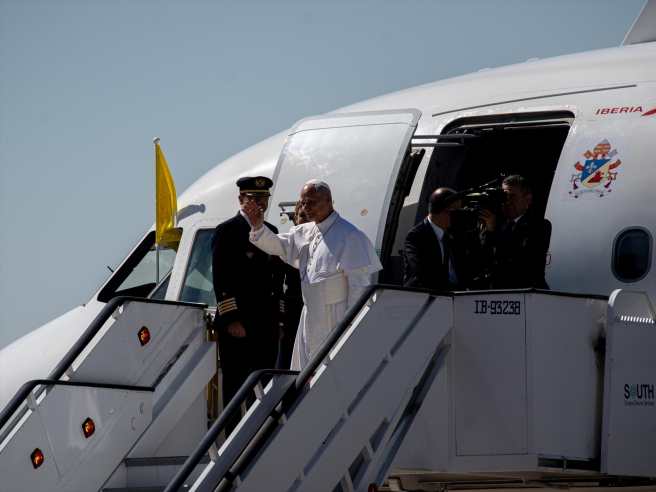
Air bridge Madrid-Barcelona for Leo XIV | Europapress
Air bridge Madrid-Barcelona for Leo XIV | Europapress -

Throughout his speech, he insisted on the need to "welcome" the most "defenseless", especially those who arrive in situations of extreme vulnerability.

The Pontiff had already started the day at the Arguineguín pier, where he listened to testimonies from migrants in one of the symbolic enclaves of the Atlantic route. There he reiterated that "human dignity has no passport" and warned against the contradiction of reinforcing borders while later lamenting deaths at sea.

Tenerife: end of the journey

The visit to Spain concluded this Friday for Leo XIV with a massive mass celebrated before about 35,000 people in the Dársena de los Llanos, in the port of Santa Cruz de Tenerife, a symbolic enclave marked by the memory of migratory routes.

In his final homily, the pontiff stated that "no human being is an island", emphasizing that the human condition is linked to encounter and openness to the other. In this regard, he insisted that life only acquires meaning when it becomes a gift, warning that, otherwise, "it spins in a vacuum."

The event marked the end of a trip that began in Madrid, continued in Barcelona, and culminated in the Canary Islands.

Before his return to Rome, the pontiff expressed his gratitude for the reception received throughout the visit, assuring that he was returning "moved" by the affection shown in Spain, in a farewell that, distressed at the last minute by technical incidents with his plane, closes one of the most extensive and symbolic tours of his pontificate.

More key points, information and questions with FREN

AI-GENERATED CONTENT

What procedures would be necessary for a pontiff to officially intervene in other European parliaments?

Official intervention of the Pope in European parliaments

Brief answer

For a pontiff to officially intervene in other European parliaments, generally an institutional invitation from the Chamber itself (at the initiative of its Presidency or Board) is required, coordinated with the Government of the host State through the Ministry of Foreign Affairs. This invitation must be formally approved according to the internal regulations (agreement of the Board and, if applicable, the Plenary) and channeled as a solemn session or institutional act, not as a religious act. In parallel, the Executive and the Parliament coordinate security, protocol, and logistics with the Holy See and the Apostolic Nunciature. All this is done respecting the separation of Church and State or religious neutrality, so that the intervention has a strictly institutional and political-diplomatic character.

1. Initiative and convening of the intervention

The formal invitation for the Pope — as Head of State of the Holy See — to speak before a European parliament usually comes from the political institutions of the host State themselves:

  • Boards or Presidencies of the Chambers: these are the bodies that, in practice, can propose the event based on the political agenda and foreign relations of the Chamber (Bundestag, Assemblée nationale, Italian Parliament, Cortes Generales, etc.).
  • Government of the host State: through the Ministry of Foreign Affairs, it can promote, suggest, or support the invitation as part of foreign policy and bilateral relations with the Holy See.
  • Parliamentary groups or committees: they can promote the idea, but the effective decision always passes through the governing bodies of the Chamber (Board/Presidency).

In the case of the European Parliament, this initiative is predominantly channeled through the Presidency and the Conference of Presidents of political groups, who decide on the convenience of inviting a Head of State to intervene in a solemn session.

2. Role of the Government and the Ministry of Foreign Affairs

Although the parliament decides to open its doors, the Government and, in particular, the Ministry of Foreign Affairs have a key role:

  • Diplomatic coordination: they manage the official invitation with the Holy See and the Apostolic Nunciature, framing the visit within the context of bilateral relations and diplomatic customs.
  • Protocol and security management: they organize, together with the Interior Ministry and the parliament's security services, the necessary measures for a Head of State with special characteristics such as the pontiff (dual religious and political dimension).
  • Logistics and inter-institutional communication: they facilitate coordination between the Executive, Parliament, Pontifical Household, and accredited diplomatic corps.

3. Internal parliamentary procedures

Within each Chamber, the invitation and intervention are articulated according to their respective regulations:

  • Formal approval: the most common is a agreement of the Board or Presidency authorizing the event. In some systems, a vote by the Plenary or a body such as the Conference of Spokespersons may also be required.
  • Configuration of the event: it is determined whether it will be a solemn session, an intervention without debate, or an intervention followed by a spokespersons' turn; duration, schedules, and rules on replies are also set.
  • Technical services: simultaneous translation, accreditation of guests, press and delegations, as well as institutional broadcasting, are provided.
  • Participation of both Chambers: in bicameral systems (Germany, Italy, Spain), it is decided whether the event is joint (for example, at the seat of one of them) or separate, which implies coordinated agreements between the Boards of both Chambers.

4. Security, protocol, and operational coordination

As it concerns a Head of State, the security and protocol dimension is especially relevant:

  • Security: collaboration of national security services (police, protection services), security of the Chamber, and the Pope's own security team, integrating access devices, attendee control, and contingency plans.
  • Protocol: definition of precedences (Heads of State, presidents of Chambers, heads of Government), symbols of the host State and the Holy See, greeting formulas, and treatment of the pontiff.
  • Coordination with the Nunciature: in the case of the pontiff, the country's Apostolic Nunciature acts as a permanent liaison for religious, liturgical, and representation profiles of the Holy See.

5. Separation of Church and State and material limits of the speech

In most European legal systems, some form of secularism or religious neutrality of the State applies, which conditions the form of the event:

  • Institutional, not confessional character: the intervention must be framed as a speech by an invited Head of State, not as a religious celebration or act of worship.
  • Respect for neutrality: the use of exclusively religious symbols or rites in the chamber is avoided, and the official language of the event (invitation, program) is formulated in institutional terms.
  • Guarantee of parliamentary pluralism: groups maintain freedom to attend or not the event and, if applicable, to intervene in the scheduled turns, safeguarding that the invitation does not imply mandatory ideological or religious adherence.

In States with a tradition of strict secularism, such as France, this framework is interpreted especially zealously, while in others with a historical relationship with the Holy See (Italy, Spain), the Pope's condition as Head of State is emphasized more than as a religious authority, for formal purposes.

6. Synthetic comparative overview

Although each parliament (German Bundestag, French Assemblée nationale, Italian Parliament, European Parliament, or Spanish Cortes Generales) has its own regulations, four common elements are repeated in all: institutional initiative from the Presidency/Board, diplomatic coordination by the Government, parliamentary agreement configuring the event, and respect for the religious neutrality of the State. Differences concentrate on the level of formality (whether a Plenary vote is needed), the tradition of secularism, and the degree of prominence of the Executive versus the Legislature in the organization. In any case, the pontiff's intervention is conceived as an exceptional act of high foreign policy, carefully bounded in protocol and legal terms.

What are the main powers and functions of the President of the Congress of Deputies in Spain?

Essential functions of the President of the Congress: initial summary

The President of the Congress of Deputies is the highest authority of the Lower House and, in practice, one of the three top authorities of the State (along with the King and the Prime Minister). Her functions are grouped into four major blocks: directing debates and internal order of the Plenary, institutional representation of the Congress, organization and functioning of the Chamber's bodies (Board, Spokespersons' Committee, committees), and key powers in critical political moments, such as the investiture of the Prime Minister or the dissolution of the Cortes. Additionally, she guarantees respect for the Rules and the rights of all groups, acting formally with institutional neutrality, although she comes from a specific parliamentary majority.

1. Highest authority and institutional representation

The President of the Congress holds the institutional leadership of the Lower House. This implies:

Firstly, the official representation of the Congress before the King, the Government, the Senate, the judiciary, and national and international organizations. She is the ordinary interlocutor when the Royal Household or the Executive address the Chamber, and she leads the Congress's presence at State acts, visits of foreign Heads of State, parliamentary summits, and international forums.

Secondly, she exercises the presidency of the Board of the Congress, the internal governing body of the Chamber, from which decisions are made on the admission of initiatives, the qualification of writings and documents, the organization of work, and the administrative and budgetary management of the Congress.

Due to her protocol relevance, the President of the Congress is usually considered the third authority of the State, ranking only behind the King and the Prime Minister in the official order of precedence.

2. Direction of debates and internal order of the Plenary

One of her most visible powers is the direction of parliamentary debates in the Plenary. Among her specific functions are:

She is responsible for opening, suspending, and closing plenary sessions, as well as setting, in agreement with the Board and the Spokespersons' Committee, the agenda to be debated in each session. During debates, she grants and withdraws the floor to deputies and Government members, controls speaking times, and ensures that turns and rules established in the Rules are respected.

She also exercises powers of order and discipline in the chamber: she can call deputies to order, withdraw their speaking rights, record calls to order in the minutes, and even order expulsion from the chamber in serious cases, always within the procedures set by the Congress Rules. Her goal is to ensure debates are orderly and develop without intolerable disorder or insults.

3. Internal organization and functioning of the Chamber

The President is a key piece in the internal framework of the Congress. In coordination with the Board and the Chamber's services, she participates in:

The planning of parliamentary activity (calendar of plenaries, pace of processing initiatives, coordination with committees) and guarantees the regular functioning of all bodies. She presides over Board meetings, where decisions are made on the admission of bills, non-legislative motions, questions, interpellations, and other initiatives; and also directs the Spokespersons' Committee, a key forum where the structure of debates, time distribution, and order of matters are negotiated.

Additionally, she supervises the compliance with the Rules in all parliamentary activity, interpreting them when there are doubts and ordering the application of the Board's decisions. Although the letter of the Rules is the same for all, its interpretation by the Presidency can influence the pace, visibility, and manner of processing certain initiatives.

4. Role in investiture, government formation, and the Cortes

In the strictly political and institutional sphere, the President of the Congress assumes decisive functions at key moments:

After general elections, she directs the constitutive session of the Congress, in which the Board itself is elected and the new legislature begins. Subsequently, once the King proposes a candidate for Prime Minister, it is the President who convenes and directs the investiture debate, sets its times, and orders the votes to determine if the candidate obtains the confidence of the Chamber.

She also certifies and officially communicates the results of these votes to the King, as well as other decisions of special significance, such as the approval of constitutional reforms, authorization of states of alarm, exception or siege, or activation of other constitutional mechanisms requiring the Congress's intervention.

Finally, when the dissolution of the Cortes occurs (whether ordinary at the end of the legislature or early), the President participates in the formalization and institutional communication of the process, and ensures that the Chamber complies with the necessary procedures until the effective closure of the legislature.

5. Neutrality and balance between majority and opposition

Although the President of the Congress usually belongs to the party or coalition supporting the Government, her institutional function requires a neutral and guarantor performance. She must protect the rights of all deputies and groups, both majority and opposition, ensuring they can exercise their powers of initiative, Government oversight, and participation in debates.

This balance materializes in decisions about speaking turns, time allocation, admission of initiatives, organization of appearances, and application of disciplinary sanctions. The way the Presidency exercises these prerogatives significantly influences the quality of parliamentary debate and the public perception of the institution's impartiality.

How is the President of the Congress elected and what majorities are necessary in each vote? What specific role does the President of the Congress have in the investiture procedure of the Prime Minister? In what cases can the President of the Congress expel a deputy from the chamber and what are the consequences?

What legal requirements must associations representing abuse victims meet to participate in official meetings with the Catholic Church in Spain?

Brief answer

In Spain, there is no specific law regulating the requirements that associations of abuse victims must meet to participate in official meetings with the Catholic Church: the key is, on one hand, that the association is legally constituted according to Organic Law 1/2002 on the Right of Association, and on the other, that it is recognized as an interlocutor by the Episcopal Conference itself or the ecclesiastical institution organizing the meeting. From the State's point of view, it is sufficient that the entity is a legally registered association (or, where appropriate, a foundation) and complies with basic fiscal and transparency obligations when applicable. The selection of which associations sit at the table with the Church is, however, an essentially political and organizational decision, not a legal one, both on the ecclesiastical side and — if the event is co-organized — on the part of the involved public administrations. In practice, criteria such as representativeness of victims, independence, track record, and absence of conflicts of interest are usually valued.

1. General legal framework for victim associations

The basic regime applicable to any association in Spain is established by Organic Law 1/2002, regulating the Right of Association. For an association of abuse victims to act as a recognizable interlocutor before public or private institutions (including the Church), it is normally required:

Firstly, formal constitution through a founding act and approval of statutes, which define the purpose (defense of abuse victims, psychological and legal support, etc.), governing bodies, and internal operating rules. Secondly, registration in the competent association registry (national or regional), whereby the entity acquires full legal personality and capacity to act. Thirdly, compliance with basic fiscal obligations (Tax ID, filing declarations when applicable, possible adherence to the non-profit entity regime if requirements of Law 49/2002 are met). Additionally, when handling public funds or significant donations, they are required to provide accountability and transparency, through activity reports and annual accounts.

From a strictly legal point of view, with these requirements an association is in a position to be recognized as a legitimate interlocutor by third parties, without needing specific authorization to dialogue with the Church.

2. Freedom of the Church to choose interlocutors

The relationship with the Catholic Church in Spain is framed within the Agreements between the Spanish State and the Holy See and the principle of religious freedom and autonomy of confessions recognized in the Constitution and in the Organic Law of Religious Freedom. This implies that:

In meetings that are exclusively initiated by the Church (for example, meetings organized by the Spanish Episcopal Conference or a diocese), it is the ecclesiastical institution itself that decides which victim associations it invites, provided it does not violate fundamental rights (for example, arbitrary discrimination based on religion, ideology, sex, etc., if the event has a relevant public dimension). There is no “official” state list of associations authorized to dialogue with the Church: the selection is based on internal criteria of the Episcopal Conference or the diocese, which may include assessment of the association's representativeness, its attitude towards reparation processes, or its willingness to participate in mixed commissions.

3. Co-organized meetings with public administrations

When meetings with the Church have a more marked official or institutional component — for example, working tables within investigation commissions, reparation processes promoted by regional parliaments or the Government — the filter of the public administrations themselves is added. In these cases:

The Administration usually applies criteria similar to those used to designate witnesses in commissions or working groups: being a legally constituted association, having a scope of action related to the subject matter (abuse victims, childhood, human rights), having accredited track record and experience and often plurality and diversity of profiles to avoid a single approach monopolizing victim representation. Additionally, if public funding is linked (for example, to participate in memory projects, studies, or support), additional requirements of technical solvency and project execution may be demanded, according to subsidy and contract laws.

In these scenarios, the Church can propose entities with which it feels comfortable, but the Administration has the capacity to broaden the range and incorporate critical associations or other victim platforms that meet formal requirements.

4. Substantive requirements of legitimacy and representation

Beyond the formal, some standards of legitimacy have been consolidated for victim associations that want to have a voice in official spaces with the Church:

On one hand, real representativeness of victims: that the association gathers a relevant number of affected persons or has presence in several territories or areas (parishes, religious schools, movements). On the other hand, independence and absence of conflicts of interest: special attention is paid to ensuring that governing bodies do not include persons responsible in institutions accused of cover-up or who could condition the victims' narrative. Also valued is the capacity for accompaniment and defense (legal advice, psychological support, case documentation), as this indicates the entity is not merely nominal.

Although these criteria are not codified in a single norm, they function as political and social references when both the Church and public institutions decide with whom to negotiate or dialogue about abuse and reparation.

What role do victim associations currently have in abuse investigation commissions in Spain? How does the Spanish Episcopal Conference influence the selection of associations for these official meetings? What control mechanisms exist to guarantee transparency and accountability of abuse victim associations?

Play

Test your knowledge with FREN!

How much do you know about this topic? Answer the following 3 questions.

What was one of the central topics addressed by Pope Leo XIV during his visit to Spain?

Question 1 of 3

What historical event did Pope Leo XIV protagonize in the Congress of Deputies?

Question 2 of 3

What message did Pope Leo XIV convey in his meeting with victims of sexual abuse in the Church?

Question 3 of 3

Hola, soy Fren. ¿Cómo te ayudo?