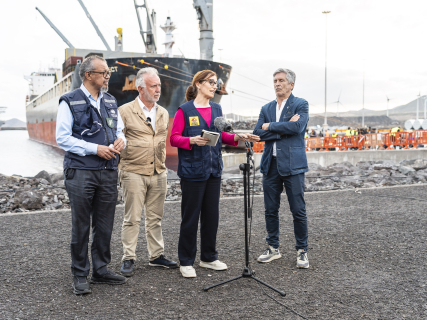

The Director-General of the World Health Organization (WHO), Tedros Adhanom Ghebreyesus, has praised Spain's management in the evacuation of the ship MV Hondius, assuring that "Spain has done it with class and as planned," and has highlighted the Government's leadership in coordinating the operation.
He also thanked the role of the European Union, the European Centre for Disease Prevention and Control and the solidarity of the people of Tenerife, calling the operation a "triumph of international solidarity".
42-day quarantine and health sovereignty
The head of the WHO has urged all countries to respect a period of 42 days of quarantine, which would begin to count from the start of the disembarkation, last Sunday.
He pointed out that these guidelines are based on scientific evidence, although he has acknowledged that each State maintains its "sovereign right" to decide how to apply them, whether in hospitals or at home.
Status of the affected French citizen
On the other hand, he has confirmed that the French citizen repatriated on Sunday after the hantavirus outbreak presents a "very critical" condition, although he has insisted on conveying a message of calm to the population.
In that sense, he has assured that the risk for the destination countries is "low" and has underlined that "this is not another covid", asking to avoid unnecessary alarms.
Cases of anxiety and psychological support on board
Tedros has also acknowledged that during the crisis some passengers on the ship MV Hondius suffered episodes of anxiety and emotional crises derived from prolonged isolation.
He explained that the confinement especially affected elderly people and patients with chronic illnesses, although he defended that the evacuation was the only viable alternative: "It was never considered to leave them on board, it would have been cruel," he stated.