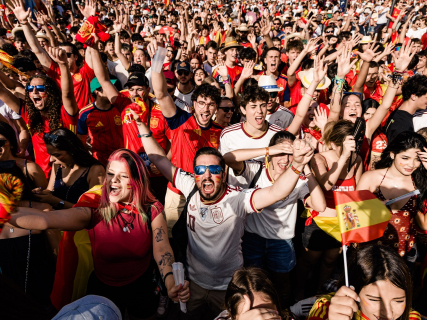

The start of the 2026 Football World Cup has turned the Spanish National Team into the epicenter of a conversation that goes far beyond sports. Since the debut against Cape Verde, the social and political climate has been reflected on social media and forums, where thousands of posts show how football intertwines with the concerns of the moment in Spain and on a global scale.
The National Team as a projection of collective identity
Messages of support for the national team have been overwhelming in number and diversity of voices, including political and institutional leaders and anonymous citizens. This collective outpouring speaks to the integrating function that football fulfills in the national imagination. References to "pride in La Roja," the importance of "going out for the second star," and the desire for "all of Spain to support their team" illustrate how the competition becomes an occasion to reactivate shared memories (like the victory in South Africa or the recent achievements of the women's national team) and project hopes for a common future. The use of anthems, symbols, and historical references is multiplied across all channels, reinforcing the idea of a cohesive community around a common goal and, at the same time, highlighting how sport acts as a catalyst for national sentiment.
However, this apparent consensus is nuanced by voices that question the homogeneity of the discourse. There are those who claim the same right to compete and be recognized as a nation for other territories, as happens with Catalan sectors, and those who use the debate to advocate for a more inclusive vision of what it means to be Spanish. At the same time, the national team is used as a symbol of plurality and diversity, highlighting the coexistence of players and fans from different origins, regions, and personal backgrounds.
Football, migration policies, and tensions over language
The fact that the World Cup is being held in the United States, Mexico, and Canada adds layers of complexity to public debate. Numerous messages question the political decisions related to the organization: from the problematic nature of immigration controls that have affected referees and national teams from African and Asian countries, to the temporary ban on the use of Spanish in press conferences and the controversy over the exclusion of referees for reasons of nationality or skin color. For many, all of this highlights the limits of the proclamation of a World Cup "open to all" and the role of the organizing powers in defining the rules of the game beyond sport.
The claim for Spanish gains special strength in the face of these incidents, reactivating the debate about the position of the language in an international environment. Public protest against the decision to momentarily ban Spanish in official appearances reflects the role of the language as a vector of identity and global presence. At the same time, other messages criticize the priorities of some political actors in this area, generating a certain polarization between those who defend a firm stance in defense of the language and those who accuse these voices of inconsistency or instrumentalization.
The World Cup as a market, a stage for inequalities, and a showcase for demands
Beyond symbolism, the World Cup is experienced as an event marked by consumption and global market dynamics. Following the event from Spanish homes translates into a noticeable increase in the consumption of food, beverages, and technology, while transportation costs and tickets at the American venues have drawn criticism regarding accessibility and the increasingly less popular nature of the event. There are messages that warn about the risk of football ceasing to be seen as a sport for everyone and becoming a luxury, with growing differentiation between big and small, both at the level of national teams and fans.
There is no shortage, moreover, of voices that use the World Cup as a platform to raise awareness of social issues: labor exploitation in the organizing countries, the media and political instrumentalization of the tournament, racial and gender discrimination, or the situations of violence and marginalization that emerge in the background of major sporting events. Parallel campaigns also emerge that take advantage of media attention to promote social causes, such as the protection of children and biodiversity or the defense of human rights.
Amidst this multifaceted scenario, the conversation recalls that football remains a common language capable of mobilizing millions of people, but that it also serves as a mirror of the tensions, challenges, and aspirations of contemporary society. The World Cup is a space for coexistence, advocacy, and also conflict, where much more than the result of a match is at stake.