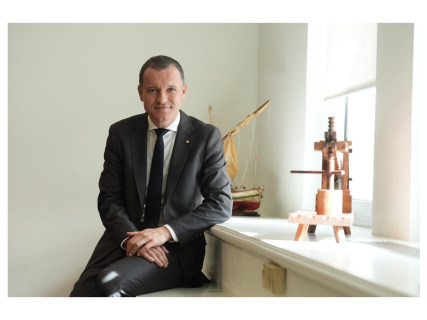










The Agriculture, Livestock, Fishing and Food Councillor of the Generalitat, Òscar Ordeig, expects a “de-escalation” of the measures applied to combat African swine fever (ASF) in the Collserola natural park (Barcelona), an episode that he has described as the most serious health crisis of the past two decades in Catalonia.
In an interview with Europa Press, the councillor has detailed that meetings have already been held with the European Commission, the affected town councils, the technical teams and the scientific community in order to set the safety criteria that will allow a “safe loosening of the measures”.
He has insisted that this relaxation will only be carried out if certain conditions are met: “It could only be that way if the good data is maintained, if the capture forecasts in the tracking are maintained, and if there is no epidemiological data or data on positives that alters this schedule”.
According to Ordeig, the partial lifting of restrictions will be implemented “at the beginning of next year or at the end of this one” and will be done gradually, without sudden changes. He has warned that “the crisis is not over and we cannot take false steps”, and he has said that, in a first phase, areas could be reopened where no positives have been detected for months and that have been tracked more than twice, which makes it possible to rule out the presence of contaminated remains.
The councillor has specified that there will be areas that remain closed and others that may be opened, noting that wildlife moves between different spaces, so the process “will not be for everyone nor will it be at the same time”.
POSITIVE BALANCE
Ordeig gave a favorable assessment of the management of ASF in Catalonia and highlighted that “the whole country has responded in an exemplary, rapid and effective way”, which has made it possible to contain the outbreak, prevent it from spreading to other areas of the territory, and protect pig farms.
He has said that 350 perimeter closures have been carried out and that, thanks to tracking, about 15,000 wild boars have been captured, of which 429 have tested positive. He has emphasized that, since August, “practically all positives are of buried remains”, because the virus can remain active for months, but he has reiterated that there is currently no circulation among live animals.
TWO YEARS
Asked whether the disease could be eradicated within a period of two years from the start of the outbreak, Ordeig has recalled that this was the period that Belgium and the Czech Republic needed to overcome their episodes of PPA, countries he has cited as a reference for good management.
He has clarified that, from an administrative point of view, once the last positive is detected, it will be necessary to complete an additional year without new cases for Catalonia to be declared free of the disease, which will imply the automatic reopening of all commercial borders.
The councillor has explained that, after a first phase of emergency response, a stable setup has been established with specialized teams, advanced methods, and technological support, in which local police, Mossos d'Esquadra, and town councils collaborate. He has emphasized that "it doesn't mean we have to maintain the current situation during the year in which there should be no positives," pointing to a possible gradual adaptation of the measures.
SWINE SECTOR
Ordeig has acknowledged that the PPA crisis "has had an effect" on the swine sector, with an immediate impact at the beginning of the outbreak due to the complete blockage of exports.
However, he has recalled that, after that first moment, regionalizations were being agreed upon and that, in 80% of the importing markets, it is possible to export all of Spain and Catalunya's pork meat, except that coming from the zero zone, and in the case of China, with the exception of meat originating from the province of Barcelona.
The councillor has added that the sector has also been pressured by the increase in pork meat production in Brazil and China, and he has urged the Catalan food industry to bet on exports of higher value added to guarantee its competitiveness and its future in the medium and long term.