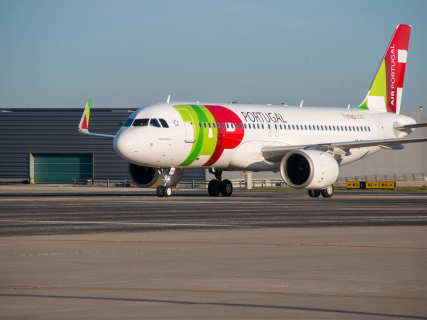

TAP Air Portugal closed the first nine months of the year with net losses of 37.9 million euros, compared with a profit of 55.2 million euros recorded in the same period of the previous fiscal year, thereby extending the “red figures” in 2026 mainly due to the increase in fuel prices, which involved an additional cost of 176.4 million euros (+23.7%).
Despite this, the airline’s operating revenues rose to 3,389.7 million euros between January and September, representing a year-on-year increase of 3.3%, as the company detailed this Friday in a statement.
Gross operating result (Ebitda) stood at 438.6 million euros, a decline of 20.8% compared with the previous year, while recurring Ebit fell sharply to 46.2 million euros, 79% less compared year-on-year.
In this period, TAP carried 13 million passengers, 2.4% more than a year earlier, with a load factor of 86.2%, which represents an improvement of 2.3 percentage points.
In the third quarter, TAP’s net profit fell by 50% versus the same stretch of last year, to 61.3 million euros, again conditioned by fuel. However, the company highlighted the effect of its mitigation measures, supported by its hedging policy, commercial actions, network optimization, and strict cost control.
"The third quarter confirmed the strength of TAP’s business model, in a context marked by the strong impact of the rise in fuel prices. The commercial measures we adopted began to pay off throughout the quarter, especially toward the end of the period, and we entered the fourth quarter with greater momentum in revenues," the airline’s chief executive officer, Luís Rodrigues, assessed.
After the close of the third quarter, the Portuguese Government chose the Lufthansa Group as the future shareholder of 44.9% of TAP Air Portugal, in an operation valued at 1,025 million euros and which will be financed entirely with available liquidity.
The contracts have already been signed, although completion of the transaction remains pending the relevant regulatory authorizations, according to the Lusitanian company.
Until the sale is finalized, TAP's priority is "clear": to execute the 2026-2035 Strategic Plan with "rigor," keeping the focus on the company's sustainability, operational reliability, fleet modernization, and product improvement.