The 29N is already just around the corner. There are 48 hours left, 24 of them for reflection, so that they open the ballot boxes and Spain draws up new General Courts from which a new Government will emerge. Since the President of the Government, Pedro Sánchez, officially announced the election call, at DEMÓCRATA we have worked hard to report in a serious, rigorous, and plural way on all the details. We have published more than a couple of dozen of interviews with all the perspectives of the political board, set up a comparison of programs, analyzed the race of the Poder Digital of the candidates, the projections of the polls, and even a simulator so that you could make your own bet.
Many things have happened during the pre-campaign and the election campaign and all of them we have counted. Here is a final thermometer, a radiograph of the paths of the candidacies so that you absorb all the information before taking part in the party of democracy.
The PSOE’s bright and dark sides: between echoes of a comeback, tragedies, and resignations
Pedro Sánchez, in his capacity as president, gave the starting signal by announcing the early calling of general elections after Congress rejected the housing decrees. His own side quickly responded to the trumpet call: "We trust in his sense of smell". Ferraz put on its work overalls and designed a campaign with a very recognizable tone, optimistic in style, with “the strength of love” very present, full of hope and appealing to an emotional mobilization of its electorate to continue for four more years in Moncloa. But its strategy was cut short by a rail accident, that of Urda, which forced the resignation of one of its most powerful profiles: the former Minister of Transport, Óscar Puente.
With caution, a slap to Trump in the U.S. midterms, and a general strike in between, the socialists were recovering their cheerful tone. The dancing continued, the viral videos with AI music shouting “yes, I am going to vote for you,” the cameos by Begoña Gómez, the cover in Lecturas of the President of the Government, and his parade across influencer channels such as Jordi Wild or Plex.
Throughout the campaign, the PSOE has ridden on the argument that "these are not run-of-the-mill elections", because what is at stake is not a mere political change of government, but an important rollback of rights (56, specifically, according to Amnesty International). According to the latest polls (new surveys cannot be published since last Tuesday), the Socialists have cut the PP by some points, but the scant bulk of the Broad Front reduces its ambitions. The Feijóo-Abascal pairing gains ground, and it remains to be seen how much damage the figure of Felipe González and his declared blank vote can do. Other former heavyweights, such as José Bono, have stepped in to contain a possible leak. The 29N will deliver the verdict: Sánchez yes or Sánchez no.

PP: "We're doing well, but we've got to reach the finish line"
"We're doing well, but we've got to reach the finish line". Probably this is the phrase that best sums up the election campaign of the Partido Popular, pending the big closing rally in Seville. Alberto Núñez Feijóo passed it on to the Zamora youtuber Plex during the interview that both of them recorded on the Jarama circuit in Madrid, a setting that lent itself to the car-racing comparison. After the massive rallies in Madrid, where he drew 10,000 people, Valencia, Santiago de Compostela, or Valladolid, the popular party are making a very satisfactory assessment of the campaign.
Within the party they talk about a "campaign", the best campaign they have run and the best program, drawn up over three years, with which they have contested an election, a program in which, they insist, all Spaniards fit. The popular candidates whom DEMÓCRATA has spoken with agree on highlighting the warmth they have found in the streets. They say they have seen a motivated citizenry, eager for change and oblivious to the fear that, in their view, the left of Pedro Sánchez has tried to whip up during these weeks. But satisfaction has not given way to complacency. The memory of the 2023 elections remains very much present in the ranks of the popular party and, despite the good results that the polls promise them, no one wants to take for granted what is still to be decided. In the PP they calculate that between 10% and 15% of voters may decide their vote in the last four days and they are aware that mobilization must be constant up to the very last moment.
That conviction explains the deployment that the Partido Popular has carried out over these past weeks. Mayors, councilors, presidents of the autonomous regions, national leaders, and Members of the European Parliament have thrown themselves into a campaign that has combined major rallies—some with double sessions to make room for those who had been left out on the street—with sector-specific events, meetings, interviews, and debates. The purpose has been to deliver to as many citizens as possible a message of change and national reconstruction that goes beyond the party’s insignia. Feijóo has raised the need to restore the functioning of infrastructure and the prestige of institutions, reindustrialize the country, improve employment and wages, facilitate access to housing, guarantee security and territorial integrity, and return to public services, especially education and healthcare, the quality that he believes they have lost. And he has wanted to do it with a political premise that has run through much of his interventions: in the Spain that Feijóo proposes, everyone fits and there will be no walls.
Perhaps the best way to understand the scope that the popular candidate wants to give to that change is to pause at the reflection that he has shared with the readers of DEMÓCRATA in the interview that we publish this Friday. Asked about the Spain he would like to leave to his son when his time at the head of the Government ends, Feijóo has answered: "Returning to the Spanish people harmony; to politics, the value of the word given and good management; to the institutions, their independence; to families, prosperity; to our borders, their security; and to the Nation, its dignity". It is the statement of intent with which the leader of the PP arrives at the end of a campaign in which he has tried to combine his management proposals with the claim of coexistence. Sevilla remains, the last call to mobilization remains, and above all, the pronouncement of the Spanish people at the ballot box remains.
Vox, a campaign against the tide
The party of Santiago Abascal has "danced alone" in this campaign. Vox was the only formation that did not suspend the campaign after the tragedy of Urda; its candidate also did not attend Jordi Wild’s interview; there were no posters stuck up… However, it seems that the attitude is liked among its voters and Abascal is heading toward his sixth election night as a candidate with the wind at his back.
Since the call for elections, the far-right formation made its objective clear: to fix the mistakes of 2023, when thousands of votes in the smallest regions did not translate into seats. To do so they have opted for a personalization-based strategy focused on the territory. "It has been the campaign with the highest number of events for Vox, both those carried out by Santiago and by the candidates in each constituency," sources from the party, DEMÓCRATA , point out. "National priority, deregulation and remigration" have been the most repeated words.
Although within the formation they reject sharing their forecasts, "we never talk about expectations", the fact is that internally they were working with an electoral floor of 16% and now the polls place it at around 19%. On 29N, the joy will vary by neighborhood, and in Bambú a good night is expected, especially at the expense of the last seats being contested with Frente Amplio, and which can make the difference between blocs.

Frente Amplio, or how to row to add up
The entire Frente Amplio campaign, the coalition of fifteen parties led by Ada Colau and Emilio Delgado, has been focused on rowing against the flight of the feared “useful vote” toward the PSOE, which has fought hard for the left-wing vote with measures from its own partner. The battle has been so intense that, within the candidacy itself, they even asked themselves whether the PSOE had given up on the elections and was trying to reach the opposition in the best possible way. Because, they insist, the numbers do not add up without a good result from Frente Amplio.
The message has been clear in strategic terms: no matter how strong a result the PSOE achieves, the numbers won’t work out if Frente Amplio does not reach the 10% threshold. Reaching, or surpassing, that barrier—especially in small and medium-sized provinces—the number of seats multiplies exponentially, and thus the chances of revalidating government. A message that could sound “for coffee people,” and yet it has resonated powerfully in the campaign.

In terms of programming, its slogan —'A vote like a house'— says it all. Housing, housing, housing. And a deep tax reform —here you can consult the range of proposals— to finance the rollout of a broad package of public services and social protection. In terms of discourse, class struggle comes back, if it ever went away. Constant appeal to the working class in the face of speculation by investment funds and those who abuse in the markets, whether real-estate or food, at the expense of households’ pockets.

ERC, Rufián’s bet that crosses Catalonia
Gabriel Rufián has put his personal stamp on the campaign of Esquerra Republicana. After months of trying to articulate a common front between the sovereignist lefts and those at the state level, the republican finally found in Irene Montero his main companion on the road. Under the slogan "Defend yourself", ERC has put the emphasis on housing, public services, and the need to condition the PSOE’s policies.
For its part, Oriol Junqueras has maintained significant regional prominence, with an eye on the 2027 municipal elections and the 2028 Catalan elections. The republicans want to move past the seven seats from 2023, when they lost six deputies compared to the previous general elections.
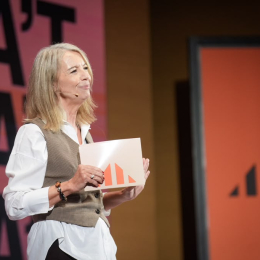
Junts, with Puigdemont back on the board
Junts was one of the protagonists from the very early electoral advance. Its rejection of the housing decrees lit a fuse that this coming Sunday, 29 November, leads to the ballot boxes. In an interview with DEMÓCRATA, Miriam Nogueras explains that it faces the appointment with a warning to seafarers: it will not go to Madrid to facilitate anyone’s governability, but rather to defend its Catalan agenda.
It guarantees that, if their votes depend on it, they will put the Catalan agenda on the table.
Its campaign has been closely tied to the judicial future of Carles Puigdemont, who will finally return to Spain on 12 December; and to the struggle with ERC. "To vote for ERC, it’s better to vote for the PSOE", the Junts candidate snapped at the republican spokesperson.

Featured story
Miriam Nogueras (Junts): "If our votes are decisive, we will put the Catalan agenda on the table"
10 minutes
EH Bildu, more deputies to prevent a PP-Vox government
Oskar Matute makes his debut as number one of EH Bildu and takes over from Mertxe Aizpurua. Polls assure him the six seats he already reached in 2023 (two in Gipuzkoa, two in Bizkaia, one in Álava and one in Navarra) and they bring him a bit more luck: up to eight deputies, some surveys say.
In his interview with DEMÓCRATA, Matute insisted on the need for his results in Congress to contribute to achieving a "global success" that will help to confront the PP and Vox model. Much of his campaign has pivoted on housing, pensions, and the rights of the working class as the main arguments, while facing criticism from a right wing that still uses 'ETA's joker', and which, according to Matute, "lacks arguments".

PNV faces the pressure from Bildu
Under the slogan Euskadi Zaindu (Caring for Euskadi), the nationalists have claimed their negotiating capacity in Madrid, with Maribel Vaquero as a parliamentary reference after Esteban's departure from Congress. The defense of self-government, industry, and an agenda of its own for Euskadi have shaped the discourse of a formation that has claimed its independence from the PSOE and the PP, even though it has ruled out facilitating the arrival of the far right to the Government.
But the jeltzales are also fighting a battle at home. They run the risk of ending up with 3 or 4 deputies versus EH Bildu's 6 and could end up losing their parliamentary group in Congress. During the campaign, Esteban has attacked the "follower mentality" that he attributes to the abertzale left regarding Sánchez's Government and has claimed the PNV as the guarantor of Basque interests, whoever governs in Moncloa.
Podemos and the Montero-Rufián tandem
Podemos faces its most delicate electoral test since 2014. With Irene Montero as the main asset, the purple party has pinned a large part of its strategy on the entente with Gabriel Rufián, an alliance that has unsettled Frente Amplio. Under the slogan «Peace, home and work», Montero has flown the flag for reducing rents by 40%, raising the minimum wage to 1,800 euros, and rejecting an increase in military spending.
A combined strategy with darts aimed not only at PP and Vox, but also at the PSOE and Frente Amplio, which she has reproached for a lack of political ambition. For the last day of the campaign, the purple party has reserved one of its most symbolic cards: the return of Pablo Iglesias, absent from electoral rallies until now, at the close of Moratalaz
Canary Islands Coalition, facing the challenge of surviving in Congress
Coalición Canaria has gone 33 consecutive years with representation in the Congress and aims to keep it this 29N. Between the two constituencies, the Canary Islands allocate 15 seats, and the nationalists aspire, at best, to maintain that of Cristina Válido for Santa Cruz de Tenerife. Although there are polls that place them in the new legislature as an extra-parliamentary force, the party trusts that the agreements they have won from the Government will serve them before citizens as a record of fulfilled duties.
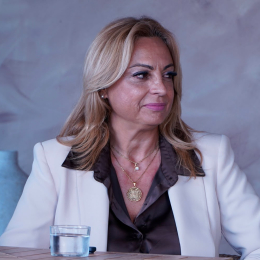
"Despite the media control of the major parties, we have found great receptiveness and affection in all the towns and islands we have visited and also with the sectors we met with, to whom we reported on our work and the commitments we assume with a view to this legislature", sources from the formation told DEMÓCRATA.
BNG, a historic opportunity
With the defense of the right to decent housing and the 'Galiza project' as a priority, the BNG aims to renew its representation in the Congress in the elections that could become the most important of its history. Noa Presas, head of the party list for Ourense —the only province together with Lugo that has never managed to win a seat in the Madrid Courts— explained to DEMÓCRATA that in these elections we are playing to take away the last seat from the PP in all constituencies.
Galicia will distribute 23 seats again next Sunday and although the polls give it between 2 and 3 seats, Presas is optimistic: "The balance of the other parties is full of lost opportunities; if anyone can change the script, it is the BNG".