

The new Public Employment Offer (OEP for 2026) has already been approved by the Government and arrives marked by two main elements: the reinforcement of technological profiles within the Administration and the rejection by the main trade unions of public service.
The Council of Ministers gave the green light to a call that exceeds 37,000 positions if those corresponding to the General Administration of the State (AGE), National Police, Civil Guard, and Armed Forces are added. The Executive defends that the offer will allow for the continued rejuvenation of staff and progress in the digitalization of public administration.
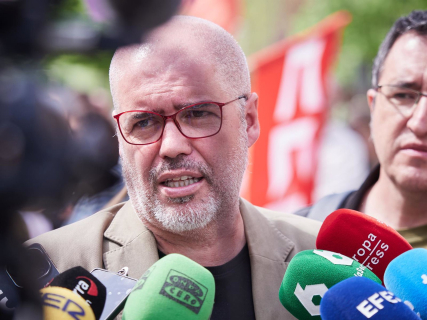
However, trade union organizations such as CCOO, UGT, and CSIF consider that the figures remain insufficient and denounce a lack of transparency during the previous negotiation.
How many positions does the Public Employment Offer include?
The approved call for the General Administration of the State contemplates 27,232 positions, according to the Ministry for Digital Transformation and Public Function.
Of them:
- 20,541 are from open call.
- 6,345 correspond to internal promotion.
- and 346 are part of an extraordinary offer related to climate emergencies.
To these figures are added the positions for the National Police, Civil Guard, and Armed Forces, reaching a total of over 37,000 positions announced by the Government.
What profiles does the Government want to strengthen?
The main novelty of this OEP is the weight given to technological profiles.
The Executive has announced 1,700 positions linked to information technologies, a figure higher than that of the previous year. According to the Ministry, the objective is to attract specialists in artificial intelligence, cybersecurity, data science, and digital transformation.
In addition, the Government wants to strengthen areas related to climate emergencies through new positions for meteorologists, forestry engineers, environmental agents, and other technical profiles.
Minister Óscar López defended after the Council of Ministers that the Administration needs to adapt to new technological challenges and improve the provision of public services.
Why do the unions reject the offer?
The main unions do not support the call.
CCOO and UGT have especially criticized the lack of information during the negotiation process and assure that the Government did not provide the complete data of the offer until shortly before its approval.
CSIF also expressed reservations and demanded to know the figures in detail before making a definitive statement.
The trade union organizations also consider that the number of new hires continues to be insufficient to cover the structural staff deficit existing in many public services.
Another of the recurring criticisms is the accumulation of offers pending execution from previous years.
Does the offer mean more public employment than other years?
The global figure is slightly higher than that of 2025, although lower than the record reached in 2024. The Government maintains that the call will allow the creation of around 6,200 net jobs within the General State Administration. Unions, however, consider that this increase does not fully compensate for the accumulated retirements and vacancies.
When will the competitive examinations be called?
The approval of the OEP does not imply the immediate opening of all competitive examinations. The specific calls for each body or specialty will be published progressively in the Official State Gazette (BOE). It will then be known when registration deadlines, syllabi, exam dates, and specific requirements for each selection process will be announced.
The Government has also announced that in the coming months it intends to accelerate pending calls from previous years.
What can happen now?
For the moment there is no announced change in the OEP approved by the Council of Ministers. There is, however, a scenario of tension between the Executive and public function unions, who maintain their criticisms about the negotiation and about the real staffing needs in the Administration.
Furthermore, part of the pending calls from previous years remain unexecuted, a situation that trade union organizations consider a priority.