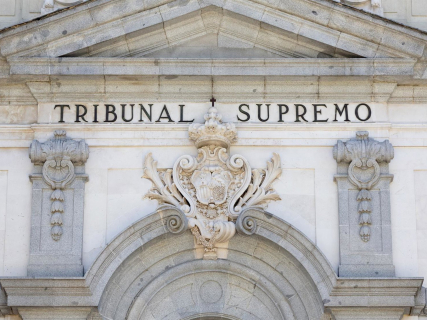

The Supreme Court has set a precedent on one of the work permits that had been generating the most doubts since its approval: the permit of up to four days a year for family emergencies.
The Social Chamber has established that these absences must be paid by the company even if the collective agreement or the company's internal agreement does not expressly include them. Simply put: if the case fits the family force majeure leave, the company cannot deduct those hours from the salary.
The ruling resolves a debate that had opened after the reform of the Workers' Statute approved in 2023 to incorporate reconciliation measures. Some companies argued that the leave should only be paid if the collective agreement so established. The Supreme Court rejects that interpretation and makes it clear that the remuneration arises directly from the law.
Which permit has the Supreme Court clarified
The affected leave is the one provided for in article 37.9 of the Workers' Statute. It recognizes the right of the worker to be absent from work due to force majeure when it is necessary to attend to urgent family reasons related to relatives or cohabiting persons, in case of illness or accident that makes their immediate presence indispensable.
It is not exactly the same leave as the five days for hospitalization, surgery, or care for family members. This four-day leave is intended for urgent, unforeseen, and immediate situations: an accident, a sudden illness, or a family circumstance that requires the worker to be absent at that moment.
The key is that the Supreme Court not only confirms the existence of the permit, but also its paid nature. That is, it is not enough to allow absence: the company must pay for the corresponding hours up to the legal limit.
How many days are there and how are they counted
The permit is equivalent to up to four days per year. In practice, the rule speaks of hours of absence equivalent to four annual days, which allows it to be understood as a pool of time that can be used when a justified family emergency occurs.
This is important because a family emergency does not always require missing a full day. It may require a few hours to go to a medical center, attend to a housemate, take care of an unforeseen situation, or resolve a specific emergency. The working person must, if applicable, prove the reason for the absence.
The four-day limit operates as a minimum paid legal right. Collective agreements or company agreements can improve that right, but not eliminate it or make it unpaid.
The company must pay it even if the agreement does not say so
This is the central point of the ruling. The Supreme Court concludes that the leave is paid by legal imperative. The expression is important: it does not depend on the company's will, nor on whether the collective agreement has expressly regulated it, nor on whether there is an internal agreement with the workers' representation.
The high court interprets that the wording of the Workers' Statute is clear when it recognizes the right to be compensated for hours of absence for these reasons. For the magistrates, that wording does not admit an alternative reading that would allow the payment to be left in the hands of the agreement. In other words: the agreement can order, specify, or improve the leave, but not make it free for the company. The minimum basis is already in the law.
The Supreme Court rejects that the right is at the expense of collective bargaining
The ruling arises from a collective dispute in a company in the customer service sector. The company argued that it was not obliged to pay for these leaves if the agreement did not expressly include them. The National High Court had already ruled in favor of the unions and the Supreme Court now confirms this criterion.
The court emphasizes that the permit is not suspended until the agreements develop it. The legal reference to what collective agreements may establish does not serve to deny remuneration, but rather to articulate how it is applied or to improve the minimum provided.
The difference is not minor. If the business thesis were accepted, the permit could formally exist but have no real effect for many workers: being absent in a family emergency would mean losing salary. The Supreme Court closes that avenue.
What situations allow requesting this permit
The permit is intended for urgent family reasons related to illness or accident of family members or cohabiting persons when the immediate presence of the worker is indispensable.
It can fit, for example, a medical emergency of a child, an accident of a cohabiting person, an unforeseen situation with a relative that requires immediate presence or an urgent need for attention that cannot be delayed. It is not conceived for any ordinary management nor to automatically replace other care permits.
That precision is important. The Supreme Court has delimited in other resolutions that this force majeure leave covers immediate family emergencies, but does not absorb all the reconciliation leaves agreed for medical accompaniments or other attentions that do not fit exactly into article 37.9 of the Workers' Statute.
What the worker has to do to justify it
The working person must be able to accredit the reason for the absence when appropriate. The law does not turn the leave into a free bag of days, but into a right linked to a specific cause: a family emergency due to illness or accident that makes immediate presence necessary.
The company can ask for reasonable justification, but it cannot deny the paid nature outright if the event fits the leave. There will predictably be a good part of the future conflicts: not so much in whether it is paid or not, which the Supreme Court already clarifies, but in whether the specific situation fits within the concept of family force majeure.
Therefore, it is prudent for the worker to keep medical certificates, urgent care documents, communications, or any proof that allows them to prove that the absence was linked to an immediate and necessary situation.